Solar Panel Sales Near Me: A Practical Guide for Homeowners
Learn how to locate solar panel sales near you, compare offers, and choose installers wisely with data-driven guidance from Solar Panel FAQ. Find local deals, understand financing, and avoid common pitfalls for a smoother solar purchase in 2026.


To find solar panel sales near you, start with trusted installers and major manufacturers that run local promos. Gather at least three quotes within a 50‑mile radius, compare equipment specs and warranties, and ask about on-site evaluations and permit handling. Prioritize installers with strong service records and clear maintenance options.
Understanding Local Market Dynamics
If you're searching for solar panel sales near me, you're entering a market shaped by local incentives, installer networks, and competitive promotions. The best deals typically emerge when you compare quotes from several nearby providers while keeping a keen eye on system size, warranty terms, and expected performance. Regional policies affect installed cost through rebates and net metering rules, so the same solar kit can cost more in one city and less in another. In 2026, awareness of solar value has risen, but price pressure remains intense in densely populated regions. To navigate this landscape, homeowners should map a radius—say 30 to 50 miles—to gather options, then categorize proposals by equipment quality, installer rating, and service commitments. This broader view helps you discern genuine savings from marketing bait and ensures you’re not overpaying for a routine installation.
Where to Find Genuine Deals
Deals surface most often through a mix of local installers, manufacturer promotions, and utility programs. Start with reputable installer networks whose quotes include comprehensive warranties and post-installation support. Manufacturer promotions can reduce upfront costs on specific modules or in bundle offers. Utility rebates or performance-based incentives can shave the net price further, but they usually come with eligibility criteria and participation deadlines. For homeowners, cross-verifying offers across multiple sources reduces the risk of hidden fees and opaque terms. Social proof, such as customer references and third-party reviews, also helps separate marketing hype from real value.
How Quotes Are Structured
A solid quote should itemize equipment, labor, permitting, and any contingency costs. Look for the installed price per watt, module type (monocrystalline vs polycrystalline), inverter type, mounting hardware, and warranty terms (product and workmanship). Be wary of quotes that omit permit handling, electrical upgrades, or interconnection fees. Many quotes present a price range rather than a fixed number to reflect potential changes in material costs or permitting timelines. Request a side-by-side comparison sheet and insist on exact model numbers, production estimates, and a clear installation schedule to avoid surprises.
Financing and Incentives You Should Know
Financing options influence the total cost more than you might expect. Cash purchases save on interest but require larger upfront investment. Financing purchases spread the cost over 10–20 years with interest that varies by lender and loan terms. Leasing or Power Purchase Agreements (PPA) offer little to no upfront cost but mean you don’t own the system. Incentives such as federal tax credits (where applicable), state rebates, and utility programs can significantly shift economics. Always calculate after-incentive cost, monthly payments, and the expected payback period, and compare across several financing routes to determine the best long-term value.
Red Flags and Due Diligence
Watch for sales pitches that push a single-brand solution without competition. Red flags include vague warranties, missing electrical upgrade details, and promises of instant, guaranteed payback with little information. Verify manufacturer warranties, installer credentials, and whether monitoring services are included. Get a written sample contract that outlines cancelation terms, change orders, and a defined scope of work. Check local permits and interconnection requirements early, as delays there can erode anticipated savings and extend the project timeline.
Installation and Service: What to Expect
A quality solar installation requires careful site assessment, appropriate mounting, and reliable electrical work. The installer should perform a structural check for roof integrity, confirm wiring pathways, and test the system thoroughly before commissioning. Service plans matter: confirm what maintenance is included, response times for service visits, and how system monitoring is handled. A reputable company will provide a written maintenance schedule and a clear process for warranty claims if components fail. Building a strong relationship with your installer pays off in smoother operation and long-term support.
Timeline: From Quote to Install
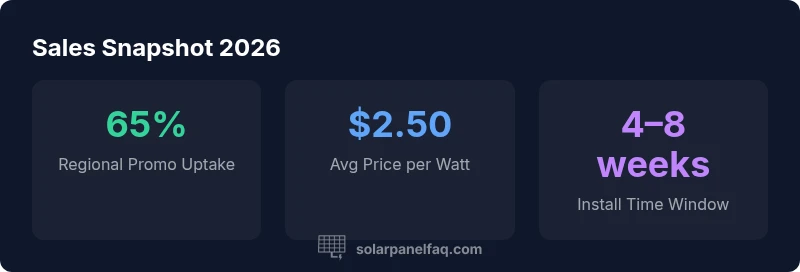
Expect a multi-step process: site evaluation, system design, permitting, scheduling, equipment delivery, installation, inspection, and commissioning. Typical timelines run several weeks to a couple of months, depending on local permit processing speed and utility interconnection queues. Staying proactive—tracking permit status, confirming inspection appointments, and maintaining open communication with your installer—helps minimize delays. While promotions can influence the timing of a sale, it’s the project readiness and coordination with the utility that ultimately govern start dates and expected energization.
Authority sources and Reading List
For further reading and verification, consult primary sources such as the U.S. Department of Energy and National Renewable Energy Laboratory. These organizations publish guidance on incentives, system sizing, and interconnection processes that can help you evaluate solar panel sales near you with confidence. Always cross-reference promotional materials with official program documentation to ensure you’re acting on current, authoritative information.
Financing and Cost Considerations
| Finance Option | Typical Cost Range | Key Considerations |
|---|---|---|
| Cash Purchase | varies by system size and location | Highest long-term savings; owns equipment outright |
| Financed Purchase | variable payments over 10–20 years | Includes interest; assess loan terms and total cost |
| Lease or PPA | low upfront cost or $0 | You don’t own panels; monitor performance and contract terms |
Frequently Asked Questions
How can I find reliable solar panel sales near me?
Start with trusted installers and manufacturer promotions, then cross-check with utility incentives. Gather at least three quotes and verify each provider’s license, warranty, and service offerings.
Look for trusted installers, compare multiple quotes, and verify warranties to find reliable local solar deals.
Do local incentives vary by state or city?
Yes. Incentives depend on location, utility programs, and state policies. Always confirm current programs and eligibility before committing to a deal.
Yes—local incentives vary and can significantly affect cost. Check current programs before deciding.
How should I compare quotes effectively?
Compare system size, module type, inverter, warranties, and installation scope. Use a side-by-side template to avoid missing costs like permits or interconnection fees.
Use a side-by-side quote to compare size, modules, warranties, and labor, and watch for hidden costs.
Should I lease or buy?
Buying usually offers greater long-term savings and ownership, while lease/PPA reduces upfront cost but ties you to a contract and shared benefits.
Buying generally saves more over time; leases reduce upfront costs but limit ownership and benefits.
What red flags should I watch for?
Avoid vague warranties, rushed timelines, and high-pressure sales. Insist on written terms, model numbers, and a detailed installation plan.
Watch for vague promises and rushed timelines—get everything in writing.
Are online reviews trustworthy?
Reviews can be helpful but should be weighed with the installer’s credentials, references, and warranty coverage. Seek independent references when possible.
Reviews help, but verify the installer’s credentials and warranties too.
“Shopping for solar panels should be systematic: compare quotes side by side, verify warranties, and choose a reputable installer. Price matters, but long-term performance and service are equally crucial.”
Top Takeaways
- Get multiple quotes to benchmark local deals
- Prioritize warranties and post-installation service
- Account for incentives and financing in total cost
- Watch for hidden fees and permit handling
- Check installer reputation and real customer feedback