Brisbane Solar Panel Quotes: A Practical Buyer's Guide
Discover how Brisbane solar panel quotes are priced, what influences cost, and how to compare offers. This guide from Solar Panel FAQ explains ranges, incentives, installation timelines, and questions to ask every step.


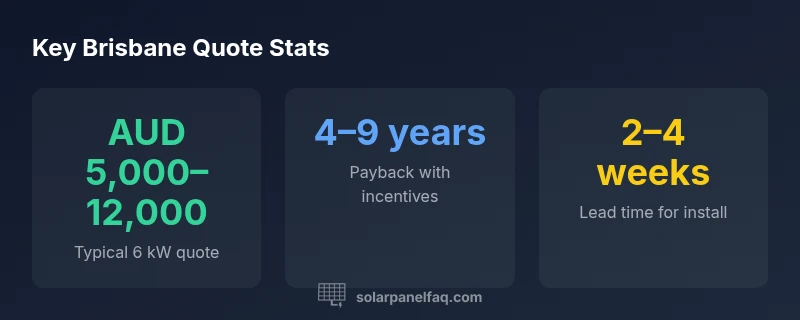
In Brisbane, a typical all-in quote for a standard 6 kW solar system ranges roughly from AUD 5,000 to AUD 12,000 before rebates, with price influenced by panel type, inverter, and roof complexity. Prices vary with installer, monitoring options, and electrical upgrades. This range excludes government incentives, which can further reduce upfront cost. The Brisbane market also shows regional differences due to roof access and permit fees. According to Solar Panel FAQ Analysis, 2026, expect variability but use it as a baseline when shopping around.
Brisbane pricing dynamics for solar quotes
Brisbane homeowners entering the solar buying process quickly discover that pricing is driven by multiple interacting factors. System size is the biggest driver, with larger arrays commanding higher upfront costs but offering greater long-term savings. Component choice—types of panels (mono vs poly, efficiency ratings), inverter technology, and monitoring options—also shapes the bottom line. Roof access, tilt, and shading influence labor hours and safety measures, which can shift quotes by hundreds to thousands of dollars. Climate in southern Queensland encourages efficient, low-temperature panels, but the exact orientation and mounting method required can alter hardware choices. According to Solar Panel FAQ analysis, 2026, price ranges in Brisbane reflect a competitive market where installers compete on both price and service. When evaluating quotes, ensure you are comparing like-for-like configurations: same system size, same panel and inverter brands, and similar mounting hardware. Request itemized line items to see where costs come from and to identify optional add-ons that may not be necessary.
Reading a solar quote: what to look for
A well-structured Brisbane quote should spell out every element of the system and all costs. Start with system size (in kilowatts) and the expected annual energy production. Then read the hardware details: panel model, inverter type, mounting hardware, and monitoring equipment. Warranties matter—note the duration for panels, inverters, and labor. Ensure the quote includes installation, electrical upgrades if needed, permit fees, and disposal costs. Exclusions are just as important: some quotes exclude roof repairs, electrical work beyond the scope, or post-installation maintenance. Look for a clear payment schedule and any conditions for price adjustments if site conditions reveal additional work.
What goes into a Brisbane quote
In Brisbane, a comprehensive quote typically includes: system size, panel brand and model, inverter model, mounting system, wiring, labor, and a standard installation warranty. It should clearly list optional add-ons (battery storage, smart monitoring, or optimizers) and their costs. In many cases, quotes include a fixed price for delivery, commissioning, and basic maintenance checks for the first year. Because incentives and STCs affect upfront cost, your quoted price may look lower once those credits are applied, but the installer should clearly show the post-incentive amount. Ask for a side-by-side comparison with a “like-for-like” configuration to avoid hidden upgrade costs.
Financing, incentives, and timing
A central factor in Brisbane quotes is how incentives are applied. Australia’s Small-scale Technology Certificate (STC) scheme reduces upfront cost by providing credits that installers transfer to you as a discount. The amount of discount depends on system size, location, and eligibility, and it varies over time. Some installers also offer finance options, including fixed-rate loans or power purchase agreements (PPAs), to spread payments. Installation timing depends on panel availability, permit processing, and the installer’s current workload. If you’re time-bound (e.g., a financial year incentive window), ask for a locked-in date and contingency plans if delays occur. Always request a written timeline and any penalties for late completion.
How to compare quotes effectively
To avoid confusion, create a comparison framework. List each quote side-by-side with: system size, panel and inverter brands, warranties, inclusions (monitoring, grid connection tests), add-ons (battery storage), and clear exclusions. Normalize costs by dividing the total price by expected annual production to obtain a $/kWh metric. Check the post-incentive price, not just the gross amount, since STCs and other discounts impact real cost. Verify installer certifications, past project references, and the quality of customer support. Finally, consider the installer’s claim on expected performance versus panel efficiency and temperature coefficients in Brisbane’s climate.
Case scenarios: panel type, inverter choices affect price
Different panel types and inverter configurations can cause meaningful price differences. Higher-efficiency mono-crystalline panels often cost more but generate more energy, particularly on roof space with limited area. String inverters are common and inexpensive, while microinverters offer modular scalability and performance in shaded conditions but at a higher upfront price. If you anticipate future expansion (adding more panels or storage), consider a scalable inverter and a modular layout. Your quote should reflect these scenarios with clear total costs and expected output implications, allowing you to forecast payback under your usage pattern.
Negotiation tips and best practices
Negotiation isn’t about chasing the lowest sticker price; it’s about value alignment. Obtain at least three quotes, then push each vendor to itemize line items, justify higher-cost components, and explain why a lower-cost alternative might reduce performance. Ask for package deals that bundle monitoring, warranties, and maintenance; request a price hold if you’re still evaluating. Don’t overlook installation timing; a cheaper quote that delays installation could cost more in the long run due to lost incentives or higher electricity costs. Finally, confirm the post-installation service expectations and response times.
Common mistakes and red flags
Beware quotes that lack detail or promise unusually fast installation with minimal cost. Red flags include vague warranties, hidden fees, or pressure to sign without a formal contract. Ensure you understand what happens if roof work or electrical upgrades are required and who covers those costs. If a quote omits energy production estimates or understates potential shading impacts, it’s worth requesting a re-evaluation. Always verify that the installer is licensed and insured, and check for local reviews or certifications that show consistent performance in Brisbane’s market.
Typical all-in quotes by Australian city for a standard 6 kW solar system
| City | Typical 6 kW Quote Range (AUD) | Inclusions | Notes |
|---|---|---|---|
| Brisbane | AUD 5,000–12,000 | Panels, inverter, mounting hardware, monitoring, warranties | Prices vary with roof type and installer |
| Sydney | AUD 6,000–13,000 | Panels, inverter, mounting hardware, monitoring, warranties | Prices influenced by demand and complexity |
| Melbourne | AUD 5,500–12,500 | Panels, inverter, mounting hardware, monitoring, warranties | Similar structure, regional differences apply |
Frequently Asked Questions
What is the typical price range for Brisbane solar quotes?
Prices vary by system size and components. For a standard 6 kW setup, expect ranges from AUD 5,000 to AUD 12,000 before incentives. Always compare like-for-like configurations and check if STCs have been applied.
Prices vary by system size and components. For a typical 6 kW setup, expect AUD 5,000 to 12,000 before incentives. Compare like-for-like configurations and check incentives.
What should be included in a Brisbane solar quote?
A good quote lists system size, panel and inverter brands, mounting hardware, monitoring, installation labor, and warranties. It should also specify what’s included for electrical upgrades, permits, and post-install maintenance, with clear exclusions stated.
A good quote lists size, brands, mounting, monitoring, labor, warranties, and clear inclusions/exclusions.
Are there incentives that reduce upfront cost in Australia?
Yes. Australia offers incentives that reduce upfront cost, primarily through the Small-scale Technology Certificate (STC) scheme. The discount varies by system size, location, and eligibility. Installers should reflect the post-incentive price clearly.
Yes. STCs reduce upfront cost; discount varies by size and eligibility. Look for the post-incentive price in the quote.
How long do quotes typically last?
Most quotes are valid for 30–90 days, depending on market conditions and material availability. If you need more time, request a price hold or updated quote to reflect current costs.
Quotes usually stay valid for 30–90 days; ask for a price hold if needed.
Should I consider battery storage when getting quotes in Brisbane?
Battery storage can increase upfront costs but improves energy resilience and self-consumption. Evaluate your daily usage, grid tariffs, and incentive eligibility before adding storage to a quote.
Consider your energy use and tariffs; batteries add cost but can improve resilience.
“Clear, itemized quotes and transparent warranties help homeowners in Brisbane make informed decisions without buyer's remorse.”
Top Takeaways
- Shop at least three quotes to benchmark value
- Read inclusions and exclusions carefully
- Consider incentives that reduce upfront cost
- Compare like-for-like configurations
- Ask for itemized line items and warranties