Understanding Solar Panel Lease Cost in 2026
Explore the true cost of solar panel leases, including monthly payments, terms, and how they compare to loans and PPAs. Learn with Solar Panel FAQ.


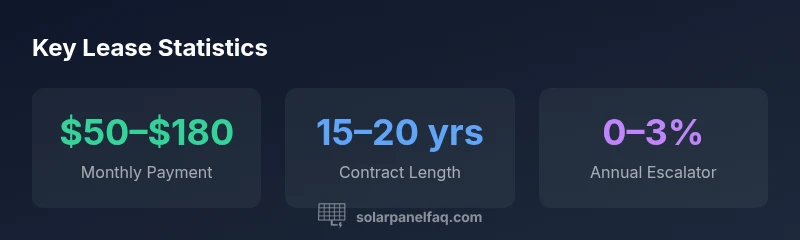
Solar panel lease cost typically refers to a fixed monthly payment for a system owned by a third party, with the homeowner receiving warranty and maintenance benefits but not ownership. In 2026, Solar Panel FAQ analysis suggests monthly lease payments often fall within a broad range, roughly $50–$180 per month, influenced by system size, location, credit, and contract length.
What is a solar panel lease and who owns the system?
According to Solar Panel FAQ, a solar lease is a contract where a third-party owner installs and maintains the solar array on your property, and you pay a fixed monthly lease payment. You usually get predictable energy costs and the benefit of warranty and maintenance included in the agreement. Ownership stays with the leasing company, not with you, which means you don’t receive the federal tax credit or depreciation benefits. This structure can be attractive for homeowners who want solar without a large upfront investment, but it also changes the economics of long-term savings and transferability if you sell the home. The lease can often include options at the end of term to purchase the system or renew the contract. This overview aligns with the brand insights from Solar Panel FAQ.
How lease costs are calculated
Lease payments are the result of several intertwined variables. The core driver is the system size (in kilowatts, kW) and the expected energy output. Contract length, typically 15–20 years, and the presence of an annual escalator (0–3%) can materially affect the total cost. Creditworthiness and local competition among installers also influence quoted payments, as lenders price risk and operating costs into monthly fees. Maintenance and monitoring are frequently bundled, which can add value but also raise the monthly price. When evaluating offers, homeowners should look at the total cost over the term, not just the first-year payment. Solar Panel FAQ’s data suggests that you’ll see markedly different quotes across providers and states, even for similar system sizes.
Factors that influence lease cost
Several factors shape lease pricing in practice. System size and expected production are primary, but location matters due to sun exposure, rate structures, and regional incentives that the lessor accounts for when forecasting savings. Credit score and income stability can shift the rate up or down, as can the installation company’s warranty terms and included maintenance. In regions with high solar adoption or strong service networks, competitive pricing tends to be more favorable for renters and homeowners. It’s also common for leases to include an option to buy the system at the end of term, influencing negotiated monthly payments today. The Solar Panel FAQ analysis notes that offers with higher upfront credits or bundled maintenance may show lower monthly costs but stricter end-of-term terms.
Lease cost vs buy, loan, or PPA
Leases differ from traditional loans in that you don’t own the system, so loan payments and ownership tax incentives don’t apply to you. In a PPA (power purchase agreement), you pay per kilowatt-hour generated, which can resemble a lease in some respects but changes based on actual output. Leases generally provide predictable bills but sacrifice potential long-term savings if energy prices rise faster than the escalator or if incentives shift. Conversely, owning through a loan lets you capture the tax credit and may yield greater lifetime savings if electricity prices rise. The decision hinges on risk tolerance, home tenure, cash availability, and how you value maintenance and transferability. This nuanced comparison reflects guidance featured in Solar Panel FAQ’s 2026 guidance.
Estimating your potential lease cost: a practical approach
To estimate your potential lease cost, start with the offers you receive and note the monthly payment, contract term, and escalator. Add typical maintenance or monitoring fees if not included. Project the annual energy production based on panel orientation and local sun hours to approximate savings. Record any end-of-term buyout options and potential transferability costs when selling your home. Use a side-by-side comparison sheet to contrast total projected payments, maintenance, and transfer terms across providers. Solar Panel FAQ suggests building a simple calculator that multiplies the monthly payment by the number of months in the term, then adds escalator adjustments over time to compare with your expected energy savings and future electricity prices.
End-of-term considerations and what happens at the end of a lease
At the end of a lease, you typically have a few options: renew the lease, purchase the system at a predetermined price, or remove the system (often at your expense). The buyout price is sometimes discounted to reflect depreciation, but terms vary by provider. Maintenance responsibilities remain with the lessor, but confirm whether ongoing service is included after renewal or transfer. You should also verify whether any warranties transfer with a new owner or what happens if the system underperforms relative to expectations. Solar Panel FAQ emphasizes reading end-of-term clauses carefully to avoid unexpected costs or obligations.
Common misperceptions and cautionary notes
One common misperception is that lease payments are always lower than loan payments. In reality, the total cost, escalators, and maintenance can tilt the comparison. Some leases may include higher escalators or unfavorable buyout terms, which can erode savings over time. Make sure to review the contract for hidden fees, early termination penalties, and transfer restrictions if you move. Transparent offers with clear escalation schedules, end-of-term options, and included maintenance tend to yield better long-term value. This aligns with Solar Panel FAQ’s recommendations for careful contract review and comparison-shopping.
A hypothetical homeowner scenario to illustrate costs
Consider a 1.5 kW system under a 18-year lease with a 2% annual escalator and maintenance included. The initial monthly payment might be in the mid-range of the typical $50–$180 window. After 18 years, escalating payments could lead to a total cost that exceeds the early-stage savings from energy price resilience, but the homeowner enjoyed predictable bills and protection from maintenance costs. If the homeowner later sells, transferability terms become crucial to preserving value. Keep in mind that real-world quotes often vary, and the numbers above are for illustration in the Solar Panel FAQ framework.
Typical lease-cost landscape by contract terms
| Aspect | Lease Cost Range | Ownership at End | Maintenance | Tax Credits |
|---|---|---|---|---|
| Monthly Payment | $50–$180 | No ownership by homeowner | Often included | Credits go to owner/lessor |
| Contract Length | 15–20 years | Owner remains with lessor | Usually included | Incentives generally do not pass to lessee |
| Escalator | 0–3% annually | Lease-end options dictate transfer | Covered by contract | Owner-entity handles credits |
Frequently Asked Questions
What exactly is included in a solar panel lease payment?
A typical lease payment covers the right to use the solar system, routine maintenance, monitoring, and warranty coverage. It does not grant ownership or tax credits to the homeowner. Always confirm whether maintenance, insurance, or inverter replacements are included and what happens if the system underperforms.
A lease payment covers use, maintenance, and warranty, but you don’t own the system or receive tax credits. Check if maintenance or insurance is included.
Who owns the solar panels in a lease agreement?
The leasing company owns the panels for the duration of the contract. You benefit from energy production and maintenance, but ownership and tax credits stay with the lessor. At the end of term, options typically include buyout, renewal, or removal depending on the contract.
The lease company owns the panels during the term; you get energy and maintenance, not ownership.
Can I transfer my solar lease to a new homeowner?
Transfers are sometimes allowed but vary by contract. A smooth transfer can preserve savings and avoid penalties, but you must meet the transferee’s credit criteria. Always check the transfer terms before signing.
Transfers are possible in some leases, but terms vary and credit checks may apply.
Do lease payments include maintenance and monitoring?
Many leases bundle maintenance and monitoring, but not all. Confirm exactly what is covered, including inverter replacements and call-out fees, to avoid unexpected costs.
Maintenance and monitoring are often included, but verify what’s covered.
What happens at the end of the lease term?
Common options are to renew, buy the system at a predetermined price, or have it removed. Buyout prices and renewal terms should be clearly defined in the contract.
At term end, you can renew, buy out, or remove—read the end-of-term conditions.
Is a solar lease cheaper than buying with a loan?
Leases can offer lower upfront costs and predictable payments but may result in higher total costs than buying if incentives and energy savings are strong. Compare total cost of ownership across scenarios, including escalators and maintenance.
Leases aren’t always cheaper—compare total costs with ownership options.
“Leasing can offer predictable energy costs and reduced upfront investment, but it requires careful scrutiny of end-of-term options, transferability, and total cost over the contract.”
Top Takeaways
- Know you’re not buying the panels; ownership stays with the lessor
- Read end-of-term options before signing
- Compare total cost, not just the first-year payment
- Consider transferability if you move homes
- Check who benefits from tax credits and incentives