Solar Panel Grants for Elderly: A Practical 2026 Guide
Discover how elderly homeowners can access solar panel grants and subsidies in 2026. This analytical guide covers eligibility, applying, and practical funding options to reduce upfront installation costs.


Solar panel grants for elderly are not a single universal program; instead, a mix of federal, state, local, utility, and nonprofit initiatives provide subsidies, rebates, and low-interest financing to eligible seniors. Eligibility, coverage, and application steps vary by program, but the core goal remains the same: lowering upfront costs and accelerating solar adoption for aging homeowners. According to Solar Panel FAQ, proactive program research often yields the best funding bundle and smoother approvals.
Why grants matter for elderly homeowners
The concept of solar panel grants for elderly is grounded in the recognition that retirement-age households often operate with fixed incomes and tighter budgets. The upfront cost of solar panels and installation can be a significant hurdle, even though long-term energy savings are compelling. Grants, rebates, and low-interest loans target this affordability gap, enabling more seniors to access clean energy without compromising essential expenses like healthcare or housing. The Solar Panel FAQ team has found that when funding options are clearly presented and easy to navigate, elderly homeowners are more likely to complete installations that lower monthly energy bills and increase home value. In practice, a well-structured grant plan can align with a household’s financial timeline, avoiding disruptive debt and accelerating return on investment. In short, grants for the elderly are not a one-size-fits-all solution, but a constellation of programs designed to fit diverse situations while prioritizing reliability and ease of use for seniors.
How grant programs typically work
Most programs follow a similar lifecycle, even though specific rules differ. First, you identify eligible programs through official portals, utilities, and trusted nonprofits. Next, you confirm eligibility—often a mix of residency, ownership, occupancy, income, and age criteria. Then comes documentation: proof of identity, income, property ownership, a home assessment, and a quote from an approved installer. Finally, you submit an application, await approval, and schedule installation if funded. Deadlines, verification steps, and required contractor participation vary, so it is essential to track dates and maintain copies of every document. The process can appear daunting, but structured steps and prepared paperwork dramatically increase the odds of success. For many households, a combination of grants and utility rebates yields a practical path to lower upfront costs while preserving financial flexibility for ongoing maintenance and insurance.
Eligibility and documentation: what elders should prepare
Eligibility for solar grants typically hinges on a mix of age, income, and residency status, with some programs prioritizing owner-occupied homes. Common documentation includes government-issued ID, proof of age, household income documentation, property deed or lease details, utility bills, and supplier quotes from licensed installers. Some programs require a short energy audit or a site assessment to estimate system size and savings. To streamline the application, prepare a consolidated packet with all required documents, consent forms, and a clearly itemized cost estimate. Keep digital and paper copies, note application deadlines, and consider seeking help from a local energy advisor or nonprofit that specializes in elder assistance and energy efficiency upgrades. These steps can shorten processing times and reduce back-and-forth communications with program administrators.
Where to look for grants: federal, state, local, and utilities
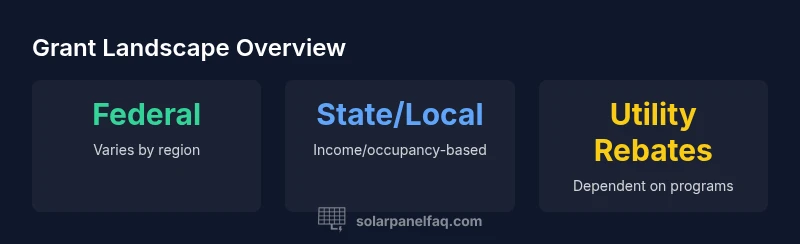
There is no single repository for all solar grants; instead, you must explore multiple channels. Federal opportunities are less common for individual homeowners but may exist through national energy initiatives or weatherization programs. State and local governments frequently administer grants or rebates, often tied to incentives for energy efficiency or solar manufacturing. Utilities sometimes run incentive programs for customers who install solar with approved equipment and installers. In many cases, nonprofit organizations provide additional subsidies or low-interest loans to seniors with limited income. The most effective approach is to check official government portals, your utility’s incentives page, and reputable local energy nonprofits. Being proactive and cross-referencing sources increases your chances of finding overlapping benefits and maximizing total funding. The Solar Panel FAQ analysis highlights that staying organized and applying to multiple programs can significantly improve funding outcomes for elderly homeowners.
Pros, cons, and practical considerations
Pros of accessing grants include lower upfront costs, faster project payback, and increased home value. Grants can also reduce or eliminate loan interest, making solar more affordable over the system’s lifetime. However, the application process can be time-consuming, and not every program will match your property type or income level. Some grants require ongoing compliance checks, regular reporting, or enrollment in energy-saving programs. Seniors should also be mindful of potential program sunset dates and funding limitations. An important practical step is to compare grant terms with alternative funding options like low-interest loans or manufacturer rebates. If grants are scarce in your area, combining subsidies with a solar loan and utility rebates can still make installation financially viable without compromising your monthly budget.
A practical funding checklist and next steps
- List potential grant sources by jurisdiction (federal, state, local, utility, nonprofit). 2) Verify eligibility criteria for each program and note deadlines. 3) Gather required documents: ID, proof of age, income, property records, and installer quotes. 4) Contact approved installers to obtain quotes that include system size, expected savings, and maintenance terms. 5) Submit applications with complete documentation and request written confirmations. 6) Track the status of each application and follow up promptly if additional information is needed. 7) Compare approved offers based on total funding, repayment terms, and installation timelines. 8) Schedule installation with a licensed installer when funding is confirmed. 9) Review post-installation guarantees, warranties, and any required monitoring. 10) Reassess energy savings after installation and adjust budget accordingly.
Overview of grant types and typical criteria
| Program Type | Typical Coverage | Eligibility Focus | Notes |
|---|---|---|---|
| Federal Grant/Subsidy | varies widely | Residence ownership and occupancy | Not all regions have federal grants; verify eligibility |
| State/Local Grants | varies by program | Income limits and property criteria | Check state energy office for current programs |
| Utility Rebates | partial cost back | Utility customer and approved contractor | Timing depends on program's funding cycle |
| Low-Interest Loans | financing option | Credit and income verification | Compare terms and total cost |
Frequently Asked Questions
What are solar panel grants for elderly?
Solar panel grants for elderly are a range of programs designed to help seniors cover installation and equipment costs. They come from federal, state, local, utility, and nonprofit sources, and terms differ by program. The goal is to reduce upfront barriers and enable sustainable, long-term energy savings.
Elderly grants are available from multiple sources; eligibility and coverage vary, but the aim is to lower upfront costs for seniors seeking solar.
Who qualifies for these grants?
Qualification depends on the specific program but often includes age, income level, residency, and home ownership. Some programs prioritize owner-occupied homes and long-term utility customers. Always verify each program’s rules before applying.
Eligibility varies; check each program for age, income, and residency requirements.
Where can I find grant programs?
Look on federal, state, and local government portals, your utility’s incentives page, and reputable energy nonprofits. Coordinating searches across multiple sources increases your chances of finding overlapping benefits.
Check federal, state, local portals, and your utility’s site for grants and rebates.
Do grants cover installation and equipment?
Yes, many grants cover part or all of the equipment and installation costs, but coverage varies by program. Some provide rebates rather than direct payments, while others offer loans or low-interest financing as a companion option.
Coverage varies; some grants cover equipment and installation, others offer rebates or financing.
What documents will I need to apply?
Common documents include ID, proof of age, household income statements, property ownership or lease details, utility bills, and installer quotes. Collect these early to streamline applications and avoid delays.
You'll usually need ID, age proof, income, property details, and quotes.
What if there are no grants in my area?
If local grants are scarce, explore alternatives like low-interest solar loans, manufacturer rebates, or energy-efficiency programs that lower overall project costs. Combining several funding sources often yields a viable path forward.
If grants are scarce, consider loans and rebates as alternative funding.
“Access to solar energy should not be limited by age or income. Grants for elderly homeowners help close the affordability gap and speed adoption.”
Top Takeaways
- Identify all eligible programs early
- Compare coverage and terms before applying
- Prepare and organize documentation in advance
- Consider alternatives if grants are scarce