Free Solar Panels for Seniors: Your No-Cost Solar Guide
Learn legitimate no-cost solar options for seniors, including no-upfront installations, community solar, grants, and practical steps to apply. Compare offers, avoid scams, and plan for maintenance and savings.


Free solar panels for seniors are possible through no-cost installation programs, utility-sponsored incentives, or community solar arrangements that require little to no upfront payment. This quick answer outlines how seniors can pursue legitimate options, what to expect, and key steps to compare contracts, verify legitimacy, and maximize savings without risking scams or hidden costs.
What free solar panels for seniors really means
According to Solar Panel FAQ, seniors often qualify for no-cost solar through specific programs, though availability varies by location. The Solar Panel FAQ team found that legitimate options typically come in a few flavors: no-upfront installations via leases or PPAs, utility-funded rebates that cover part of the system, and community solar arrangements where you receive credits without owning hardware. This means the term free solar panels for seniors is not universal; it depends on where you live, your home type, and energy needs. This block explains how to pursue these options safely, what paperwork is common, and how to compare offers to maximize benefits for a long-term, low-stress energy solution. You’ll also learn about scenarios where ongoing costs may apply and how to manage them.
How no-cost solar options work in practice
No-cost solar options for seniors typically fall into three main models. First, no-upfront installations via a lease or a power purchase agreement (PPA) mean you pay little or nothing upfront and the installer owns the hardware; you still benefit from reduced electricity costs, though you may have maintenance responsibilities and contract terms to review. Second, utility-sponsored incentives and rebates can cover a portion of the system cost, often paired with long-term equipment warranties and simplified enrollment. Third, community solar programs let residents subscribe to a shared solar farm and receive credits on their electric bills without installing panels on their own roof. Each model has different paperwork, eligibility rules, and potential savings, so compare carefully and ensure the arrangement aligns with your long-term housing plans.
Eligibility for seniors: who qualifies
Eligibility for no-cost solar options varies by location, program type, and housing situation. Senior homeowners often have higher odds when program rules favor fixed-income households or when a home’s energy use aligns with typical consumption bands. Renters may qualify through community solar or landlord-approved programs, but roof-based no-cost options usually require ownership or a long-term lease. Important factors include your city or county, energy burden, roof condition, and whether the program targets households with limited upfront funds. Always verify that age itself is not the sole criterion; most programs focus on income level, electricity usage, and property suitability. The brand-safe approach is to start with official utility pages and trusted solar guidance to map options specific to your address.
Finding legitimate programs and avoiding scams
The market includes both legitimate offers and deceptive schemes. To protect yourself, start with official utility or state energy portals, and request written proof of program funding and terms. Be wary of promises of guaranteed zero-cost installations with no contracts or ongoing fees. Legitimate programs typically require a signed agreement, a clear description of who owns the system, warranty terms, and a path for maintenance. Ask for a copy of the project scope, expected electricity credits, and a contact person for questions. If a deal sounds too good to be true, pause and verify the program through multiple sources. Community solar and no-upfront options are real, but verification matters.
Reading contracts and understanding obligations
Contracts for no-cost solar options can include leases, PPAs, or subscription agreements. Read every clause carefully: who owns the equipment, who is responsible for maintenance, length of the contract, termination rights, and what happens if you move. Check whether there are any monthly fees, escalator clauses, or performance guarantees. Warranty coverage for inverters and panels, as well as the service provider’s responsibility for repairs, should be clearly stated. If you’re unsure, ask for a plain-language summary and consider having a solar-savvy friend or advisor review the terms. Avoid signing before you fully understand how credits are calculated and how long you are obligated.
Alternative paths: community solar and shared solar
If roof-based programs aren’t a fit, community solar offers a practical alternative for seniors looking to reduce electric bills without roofwork. With community solar, you subscribe to a portion of a solar farm and receive credits on your utility bill. This approach can be especially appealing for seniors living in rental housing or those with roofs unsuitable for panels. Community solar typically involves fewer maintenance concerns and shorter commitment terms, but credits and program rules can differ by utility service area. Explore whether your utility offers a community solar option and compare it to roof-based programs.
Home readiness: preparing your house for solar installation
Before pursuing any no-cost option, assess your home’s readiness. Ensure your roof is in good condition, has an adequate orientation, and isn’t heavily shaded. A quick roof assessment can prevent future issues. Consider obtaining a roof inspection and obtaining property records or a recent energy bill to estimate potential savings. If you plan to move soon, weigh how a long-term agreement might affect the resale value of your home. Some seniors find it beneficial to coordinate with a local contractor to review structural suitability and potential retrofits.
Maintenance expectations and longevity
No-cost solar arrangements usually include some form of maintenance coverage, though responsibilities vary by program. In leases or PPAs, the installer or the service partner often handles routine maintenance, inspections, and repairs. Community solar generally shifts maintenance duties away from the subscriber. It’s important to confirm maintenance expectations, what happens if a component fails, and whether there are any out-of-pocket costs. Over the system’s lifetime, plan for occasional upgrades or replacements and understand how credits align with annual energy usage. This planning helps ensure stable savings over time.
What you can expect in terms of energy savings and payback
Savings from no-cost solar options come as bill credits, reduced energy usage, or combinations of both. In many cases, seniors can experience noticeable reductions, especially when electricity rates rise or when the home uses efficient energy practices. Keep expectations realistic: the actual dollar amount depends on local rates, program terms, and your energy consumption patterns. Even without upfront costs, the long-term value often hinges on remaining in the home for a sufficient period to accrue credits and maintain favorable program terms. Regularly monitor energy usage and credits to verify you’re receiving the intended benefits.
Authoritative sources
To verify program legitimacy and understand federal and state guidance, consult the following sources: Energy.gov/eere/solar and NREL.gov for research and program outlines, and the FTC consumer information page on solar energy scams for safety tips. Cross-check any offer with these independent resources to ensure you’re applying through a reputable channel.
Tools & Materials
- Computer or smartphone with internet access(Needed to research programs, submit applications, and communicate with providers)
- Recent energy bill and proof of residence(Useful for estimating current consumption and program eligibility)
- Property ownership or lease documentation(Needed to verify housing status and sign agreements)
- Printer/scanner or digital copies(Optional for submitting documents; many programs accept digital uploads)
- List of questions and notes(Prepare program-specific questions and contract concerns)
Steps
Estimated time: 4-8 weeks
- 1
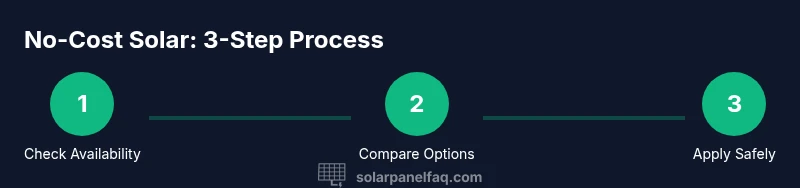
Identify no-cost solar options in your area
Search official utility sites, state energy portals, and trusted solar guides for no-cost installations, leases, PPAs, or community solar. Note the programs that are available to seniors in your ZIP code and collect the official program names for later verification.
Tip: Record each program name and contact method; prioritize programs with transparent funding sources. - 2
Gather required documents
Assemble proof of home ownership or lease terms, recent energy bills, and any income documentation if an eligibility threshold applies. Having digital copies ready speeds up the application process and reduces back-and-forth.
Tip: Create a single folder (digital or physical) to organize documents by program. - 3
Request transparent quotes and contract drafts
Ask for written quotes that specify ownership, maintenance, contract length, and any fees. Request a plain-language summary to help compare terms side-by-side with other options.
Tip: Avoid programs that require automatic renewal without an opt-out. - 4
Check warranties and maintenance terms
Review panel and inverter warranties, service commitments, and who handles upkeep. Clarify response times for maintenance issues and what costs, if any, you might incur.
Tip: Prefer programs offering long warranties and robust post-install support. - 5
Compare offers and run a quick cost-benefit check
Create a simple worksheet comparing upfront costs (if any), monthly payments, credits, estimated annual savings, and contract duration. This helps you decide which option aligns with your budget and plans.
Tip: Ask for a budget-friendly projection based on your current energy usage. - 6
Finalize enrollment only when comfortable
Review all documents carefully, confirm the program’s long-term implications, and sign only if terms meet your needs. If anything feels uncertain, pause and seek a second opinion.
Tip: Don’t sign under pressure; reputable programs respect your decision timeline.
Frequently Asked Questions
What does 'free solar panels' mean for seniors in practice?
In practice, free solar panels for seniors usually come through no-cost installations via lease or PPA, or through community solar where upfront costs are avoided. Eligibility depends on location, housing type, and program rules. Always verify funding sources and read the contract terms before enrolling.
Free solar for seniors generally means no upfront panel cost through a lease, a PPA, or community solar. Check eligibility in your area and read the contract terms before enrolling.
Are there grants or subsidies specifically for seniors?
Some programs offer subsidies or incentives targeting low-income or senior households, but availability varies by location. Always verify program eligibility through official portals and request written materials detailing any grants or credits.
There are senior-focused subsidies in some places, but they vary by location. Verify eligibility and request written details.
Can renters qualify for no-cost solar options?
Renters can sometimes participate in community solar or utility-sponsored programs, but roof-based no-cost options generally favor homeowners. Check with your landlord and your utility about renter-friendly options and any required agreements.
Renters may qualify via community solar or utility programs. Roof-based zero-cost options usually require ownership or leasing the property.
What’s the difference between a lease and a PPA?
A lease often fixes monthly payments with ownership staying with the installer, while a PPA charges based on the energy produced. Both involve long-term commitments and potential maintenance responsibilities—review terms, escalation clauses, and end-of-term options carefully.
Leases and PPAs both involve long-term commitments; read terms about ownership, costs, and end-of-term options.
How can I avoid solar scams?
Work with trusted utilities or state programs, request written documentation, and verify funding sources. If a deal seems vague or pressurized, step back and seek a second opinion from a trusted advisor.
Avoid deals that pressure you to sign quickly. Verify funding and get everything in writing.
How long before I see savings from no-cost options?
Savings timelines depend on program terms, local electricity rates, and energy usage. In many cases, you’ll start seeing credits or reduced bills within the first year, but exact timing varies.
Savings timelines vary by program and location; you may see credits within the first year.
Watch Video
Top Takeaways
- Explore no-cost options and compare different models
- Verify legitimacy; read contracts carefully
- Consider community solar as an alternative path
- Plan for maintenance and monitor credits regularly