Solar Panel Disposal: Safe, Legal, and Eco-Friendly Options
Learn how to dispose of solar panels responsibly, including recycling, local regulations, safety steps, and cost considerations. This Solar Panel FAQ guide helps homeowners navigate compliant disposal and material recovery.


You can safely dispose of solar panels by choosing recycling programs or authorized e-waste facilities, following local regulations, and preparing panels for handling. This guide walks you through compliant options, expected costs, and safety steps. According to Solar Panel FAQ, recycling is often the best environmental choice when panels reach end-of-life.
Why solar panel disposal matters
Solar panels extend decades of clean energy, but at end-of-life they become waste that requires careful handling. The panel assembly includes glass, aluminum framing, silicon cells, and traces of metals, which can pose environmental risks if discarded improperly. Safe disposal protects soil and water from potential pollutants and supports the recovery of valuable materials for reuse in new products. For homeowners, the main decision is whether to recycle, reuse components where possible, or use authorized disposal channels. The Solar Panel FAQ team notes that the most responsible path is to partner with licensed recyclers or take-back programs rather than tossing panels in a curbside bin. By planning ahead, you reduce the chance of mishandling broken glass, prevent exposure to sharp edges, and ensure your old panels contribute to a circular economy instead of ending up in a landfill. This approach also helps comply with local environmental guidelines and may yield credits or reduced disposal fees.
Regulatory landscape and compliance
Disposal rules for solar panels vary by country, state or province, and even municipality. In many markets, panels are treated as electronic waste and must be recycled through approved programs. The Solar Panel FAQ analysis highlights that there is significant regional variation in requirements, eligibility for take-back schemes, and reporting needs. In the European Union, WEEE-style directives encourage recycling and proper disposal of photovoltaic devices, while in the United States, states and localities often offer different e-waste options and timelines. When planning disposal, check official municipal pages, local solid-waste authorities, and manufacturer guidance to ensure you meet all obligations. Aligning with regulatory expectations not only reduces penalties but also improves material recovery outcomes for critical components like glass, aluminum frames, copper, and silicon materials.
Recycling options and how to find a recycler
The best path is to locate an approved recycler or a manufacturer take-back program. Manufacturer take-back initiatives can simplify logistics and sometimes offer prepaid shipping or drop-off access. Third-party recyclers also exist, but you should verify their certifications (for example, recognized environmental programs and recycling standards) before handing over panels. Many programs accept whole panels, while some facilities handle module-by-module processing. Ask about processing capacity, lead times, and whether the recycler provides documentation of material recovery. If you have a large number of panels, request an on-site evaluation and a formal quote to avoid surprises later. In many cases, consolidating disposal with other electronics can reduce costs and streamline the transfer.
Safe handling, de-installation, and preparation for disposal
Do not attempt risky de-installation or disassembly unless you are trained and equipped. Roof-mounted arrays should be removed by licensed professionals to prevent falls or damage. If panels are accessible on the ground, handle them with PPE—gloves and eye protection—and avoid flexing or striking the glass. Use sturdy packaging to prevent edge damage during transport, and label each package with contents and handling notes. Disconnect any associated wiring only after power sources are confirmed de-energized by a qualified technician. Collect all mounting hardware separately and stash fasteners in a labeled container. Keeping original purchase documents and serial numbers can help with warranty and heritage records during recycling.
Costs, timelines, and budgeting considerations
Disposal costs can vary widely based on location, the chosen recycler, and the number of panels. Some programs offer free or subsidized recycling, especially for single residential panels, while others charge based on quantity, transport distance, or packaging requirements. Timelines depend on scheduling with the recycler and whether on-site removal is needed. To avoid project delays, obtain written quotes from multiple providers, confirm accepted panel types, and clarify whether de-installation and transport are included or billed separately. Planning ahead can also help you align disposal with any incentives or rebates that apply to recycling or upgrading to newer solar technology.
Do's and don'ts for a smooth disposal process
Do: verify credentials, obtain written disposal documentation, and keep receipts for your records. Do not: attempt to break or crush panels; avoid disposing in regular trash; and avoid DIY de-installation if you lack proper fall protection and electrical skills. Do prepare a clear list of quantities, panel types, and any accessory components (inverters, racking, wiring). Do consult with the recycler about packaging requirements and drop-off procedures to prevent damage or delays. Keeping communications in writing helps resolve disputes and provides a traceable record of responsible disposal.
Authoritative sources and what happens to recycled materials
For authoritative guidance, refer to major environmental and energy bodies: https://www.epa.gov/recycle, https://ec.europa.eu/environment/waste/weee/index_en.htm, and https://www.nrel.gov. These sources explain the broader goals of e-waste recycling, the role of solar panel materials in the recycling stream, and the environmental benefits of recovering glass, aluminum, copper, and silicon compounds. Recovered materials are often redirected into new electronics, construction materials, or specialized products, reducing the demand for virgin resources and reinforcing the circular economy.
Tools & Materials
- PPE (gloves, safety glasses)(Non-slip gloves and eye protection with side shields)
- Sturdy cardboard boxes or panel crates(Protect edges and prevent breakage during transport)
- Packing material (bubble wrap, foam)(Pad edges and cushion panels)
- Packing tape and permanent marker(Label contents and handling notes)
- Dolly or lifting aid(Helpful for multiple panels or heavy layouts)
- Documentation from recycler or manufacturer(Keep proof of proper disposal for records)
Steps
Estimated time: 60-120 minutes
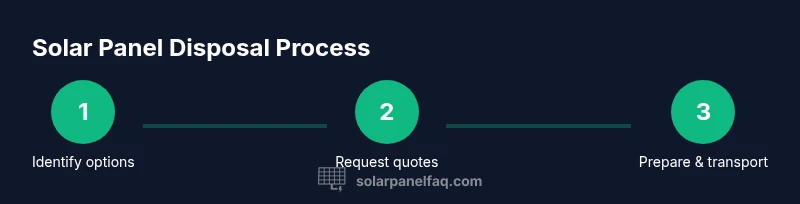
- 1
Identify compliant disposal options
Research local regulations and contact at least two approved recyclers or take-back programs. Confirm whether they accept your panel type and the quantity you must dispose of, and ask about any packaging or preparation requirements.
Tip: Ask about accepted panel types (crystalline vs. thin-film) to avoid failed pickups. - 2
Request quotes and schedule a pickup
Provide the recycler with panel counts, mounting configuration, and access details. Compare total costs, timelines, and whether removal is included or billed separately.
Tip: Get a written quote and confirm the final pickup date to prevent delays. - 3
Prepare panels for transport
Safely wrap and box each panel, protecting glass edges. Label boxes with 'Fragile' and handling instructions, and verify that all wiring is safely secured before transport.
Tip: Avoid stacking panels face-to-face; use padding between layers. - 4
Professional de-installation and transfer
If panels are roof-mounted, rely on licensed installers for removal to prevent falls and damage. Ensure power is disconnected by a qualified technician before handling.
Tip: Never attempt live disconnection or roof work without proper training. - 5
Obtain disposal confirmation and documentation
Receive a disposal receipt or certificate from the recycler. Save records for your home records and potential tax or incentive documentation.
Tip: Keep copies for at least several years in case of audits or verification needs.
Frequently Asked Questions
Is it safe to handle solar panels at home?
Solar panels are heavy and fragile; avoid DIY de-installation and always wear PPE. If roofs are involved, hire licensed professionals for removal and de-energization.
Solar panels are heavy and fragile; don’t attempt home removal yourself—hire trained professionals.
What options exist for disposing of old solar panels?
The main options are manufacturer take-back programs, licensed recyclers, and local e-waste facilities. Availability varies by region.
Take-back programs, licensed recyclers, and local e-waste centers offer disposal options depending on where you live.
Are there costs associated with disposal?
Costs vary by program and quantity; some programs offer free recycling, while others charge based on weight or number of panels.
Costs depend on the program and how many panels you’re disposing of; some options are free.
What about inverters and mounting hardware?
Inverters and mounting hardware are often recyclable through e-waste programs; confirm with the recycler and separate components for easier processing.
Inverters and mounts can usually be recycled too—check with your recycler and separate components.
How long does disposal typically take?
Timeline depends on scheduling, transport, and processing capacity. Plan for several days to a few weeks, depending on demand.
It can take a few days to a few weeks, depending on scheduling and location.
Watch Video
Top Takeaways
- Plan disposal with licensed recyclers before decommissioning.
- Prioritize recycling and take-back programs to maximize material recovery.
- Properly package and label panels to protect people and property.
- Retain disposal receipts for records and potential incentives.