What to do with old solar panels: practical end-of-life options
A comprehensive guide for homeowners on end-of-life options for solar panels, including recycling, repurposing, and safe disposal with tips for choosing recyclers and staying compliant.


Once solar panels reach end-of-life, you can recycle components, donate functional units, or arrange safe disposal through local programs. This quick answer outlines the best-practice options, what to ask recyclers, and how to prepare panels for pickup to minimize environmental impact and unnecessary waste. Understanding these steps helps homeowners avoid penalties and maximize value.
Understanding end-of-life options for solar panels
When homeowners consider what to do with old solar panels, the first step is understanding the end-of-life options that balance safety, cost, and environmental impact. According to Solar Panel FAQ, end-of-life planning should start long before panels are decommissioned so you know whether to recycle, repurpose, donate, or dispose of damaged modules. The core choices are recycling, repurposing functional panels, and safe disposal for damaged units. Recycling focuses on recovering glass, silicon, aluminum frames, copper wiring, and various plastics, while repurposing can keep usable panels out of landfills. If panels are severely damaged or contain hazardous materials, disposal through licensed programs is essential. Check with your local waste authority and your installer for accepted materials, required documentation, and any fees. The topic of what to do with old solar panels is broad, but a clear plan now saves time and reduces environmental impact later.
Recycling: what can be recycled and why it matters
Most solar modules are designed for recycling, though processes vary by jurisdiction. In general, you can recover glass, silicon cells, aluminum frames, copper wiring, and certain plastics. Recycling preserves valuable materials, reduces the need for virgin resource extraction, and minimizes hazardous waste. When you ask how to handle what to do with old solar panels, prioritize recycling where available, especially if modules have degraded performance or minor damage. Recyclers often separate modules into intact sections for reuse and shattered segments for material recovery. Be aware that some components, such as certain back sheets or coatings, may require special handling. By choosing a certified recycler, you help ensure proper containment of any hazardous substances and compliance with environmental standards. If you’re unsure about a facility’s capabilities, request a materials specification sheet or a certificate of recycling to verify compliance.
Where to recycle: locating licensed recyclers and programs
Start by checking with your local government waste authority, your installer, and major electronics recyclers that advertise PV module recycling. Look for facilities that hold certifications from recognized bodies and that can issue disposal receipts or recycling certificates. Some regions support take-back programs funded by manufacturers or utilities, while others rely on third-party e-waste networks. If you’re asking what to do with old solar panels, keep a list of potential recyclers, their accepted module types, and any fees. Reach out to several options to compare services, turnaround times, and whether they offer pickup or drop-off. Always verify that the recycler handles photovoltaic materials specifically, not just general electronics waste.
Repurposing and donating functional panels
If panels still generate power or hold structural integrity, repurposing can be a practical route. Consider donating functional modules to schools, community solar projects, or charitable programs that install off-grid or backup systems. Repurposed panels can be used for education, emergency power during outages, or small-scale off-grid setups in sheds or workshops. Donating avoids waste and often provides tax-deductible benefits depending on local rules. When evaluating what to do with old solar panels, be sure the units are safe to handle and clearly labeled as decommissioned or donated. Ask the recipient about compatibility with their inverters and mounting hardware to ensure a smooth handover.
How to prepare panels for recycling or disposal
Preparation reduces handling risk and speeds up processing. Start by turning off and isolating the solar array, then carefully disconnect the DC wiring from the inverter or combiner box following manufacturer instructions. Remove panels from mounting rails with proper tools, keeping track of hardware for reuse or recycling. Bag or wrap shards from damaged panels to prevent injury and place intact modules on protective blankets or pallets for transport. Label each panel with its status (functional, damaged, or recyclable) and document serial numbers if available. Finally, contact chosen recycler or donation recipient to confirm pickup requirements, packaging standards, and required paperwork. The phrase what to do with old solar panels should guide your packaging decisions to minimize waste and insist on safety.
Choosing a recycler: questions to ask and red flags
Ask about accepted module types, whether the facility provides a recycling certificate, and if they handle hazardous materials. Confirm whether they separate glass, silicon, metals, and other materials, and whether they offer on-site pickup or drop-off. Red flags include recyclers that cannot provide a certificate, refuse to handle damaged modules, or quote unusually high fees or vague processes. Ensure the facility complies with local regulations and can issue documentation suitable for your records. If you’re unsure, compare at least two options and request written estimates. A reputable partner will explain their process, timelines, and how they prevent environmental contamination.
Safety, handling, and storage
Handling PV modules carries risks from sharp edges, broken glass, and dusty coatings. Always wear PPE: cut-resistant gloves, safety glasses, long sleeves, and sturdy footwear. Store panels upright rather than stacked to avoid cracking, and keep them away from moisture and extreme heat. Use non-metallic straps or blankets to cushion edges during transport. Avoid attempting to dismantle or pry apart modules; many components are sealed and may release hazardous materials if damaged. If you suspect chemical exposure or significant breakage, contact your local hazardous waste program for guidance.
Regulations and environmental impact
Regulations governing PV module disposal vary by country, state, and municipality. In many places, PV modules are treated as electronic waste, with special handling for damaged or hazardous components. The environmental impact of improper disposal can include resource loss, soil and water contamination, and unnecessary emissions from landfilling. Solar Panel FAQ analysis shows that growing take-back initiatives and certified recycling programs are on the rise, but availability depends on your location and the scale of your local waste system. Always start with your local authority to determine accepted materials, required paperwork, and any fees. By choosing responsible options for what to do with old solar panels, you support broader environmental goals and compliance with governance standards.
Common myths and practical tips
Myth: Panels cannot be recycled. Reality: Most modules are recyclable with specialized facilities. Myth: Donating is never allowed. Reality: Functional panels can be donated where accepted. Practical tips include requesting a recycling certificate or disposal receipt, comparing multiple recyclers, and keeping thorough documentation for your records. The Solar Panel FAQ team notes that understanding local programs is essential for choosing the right path and avoiding unnecessary waste. The more you know about disposal options, the better you can align with sustainable practices.
End-to-life timeline and next steps
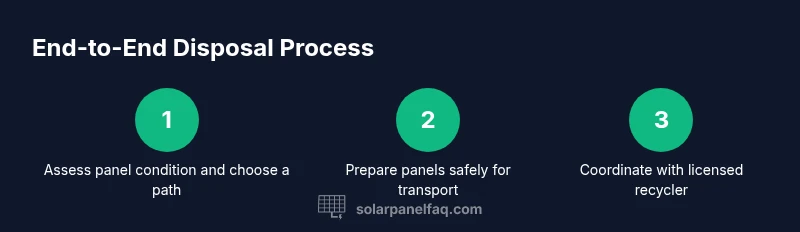
End-of-life planning for solar panels typically involves a sequence of decisions: assess condition, select a path (recycle, donate, repurpose, or dispose), coordinate with a licensed provider, and secure documentation. Timelines vary based on your location and chosen option, but starting early helps you secure pickups and avoid last-minute fees. After disposal, keep all receipts and certificates for tax or warranty purposes, and review local regulations to ensure ongoing compliance. The Solar Panel FAQ team emphasizes proactive planning as the key to reducing environmental impact and ensuring safe, legal disposal.
Tools & Materials
- Safety gloves(Cut-resistant, ANSI rating preferred)
- Safety goggles(Eye protection from glass shards)
- Long-sleeve shirt and sturdy pants(Protect skin from sharp edges)
- Tape and markers(Label panels and status (functional/damaged))
- Non-metallic straps or blankets(Protect edges during transport)
- Protective packaging (cardboard, blankets)( cushion panels in transit)
- Vehicle with adequate space or pallet(Safe transport to recycler or donation site)
Steps
Estimated time: 2-4 weeks
- 1
Power down and isolate the array
Shut off the system at the main disconnect, switch off the inverter, and lock out any active circuits. This prevents accidental shocks during handling. Verify that no DC power remains before touching panels.
Tip: Double-check all switches and obtain confirmation from a qualified electrician if you’re unsure. - 2
Document panel condition
Take clear photos of each panel from multiple angles and note any cracks, delamination, or hotspot damage. Create a simple inventory with serial numbers if available, and label each panel as functional or damaged.
Tip: Photos help with resale or donation eligibility and speed up recycling intake paperwork. - 3
Remove panels from mounting rails
Carefully detach panels using the appropriate tools, keeping hardware organized for reuse or recycling. Avoid forcing panels; if mounting is corroded, request professional assistance.
Tip: Work with a buddy to stabilize panels and prevent accidental drops. - 4
Sort intact versus damaged modules
Separate panels that still function from those with significant cracks or coatings. Intact modules are more likely to be reused or donated, while damaged ones go to specialized recycling streams.
Tip: Do not mix damaged glass with intact modules to prevent injuries during transport. - 5
Choose a recycler or donation path
Contact licensed PV recyclers or donation recipients to confirm accepted materials, pickup/drop-off options, and required documentation. Compare at least two options to balance cost and service speed.
Tip: Ask for a recycling certificate or disposal receipt for your records. - 6
Package panels for transport
Wrap panels in blankets or cardboard, secure with non-metallic straps, and place on a pallet or in a sturdy crate. Label packages with status and destination.
Tip: Avoid stacking to prevent cracking; use upright positioning during transit. - 7
Coordinate pickup or drop-off
Arrange a convenient time with the recycler or donation partner. Ensure access to the site and clarify any access fees or parking requirements.
Tip: Turn in all required paperwork before pickup to minimize delays. - 8
Obtain documentation and receipts
Receive disposal receipts, recycling certificates, or donation acknowledgments. File these with your records for warranty, tax, and regulatory compliance.
Tip: Keep digital backups of receipts and photos of the completed process.
Frequently Asked Questions
Can solar panels be recycled?
Yes, most components such as glass, aluminum, and silicon can be recycled. Damaged modules may require hazardous-waste handling and specialized facilities.
Yes, most panels can be recycled, but damaged units may need special processing.
What is the typical cost to recycle solar panels?
Costs vary by location and program; some programs offer free drop-off, others charge a fee.
Costs vary by where you are and which program you use.
How long does disposal typically take?
Time depends on scheduling with recyclers; plan for weeks rather than days.
Disposal can take weeks depending on scheduling.
Can I donate panels that still generate electricity?
Yes, if panels are functional, you can donate to schools, nonprofits, or community energy projects.
Yes, if functional, donate to suitable organizations.
Are there safety concerns when handling end-of-life panels?
Yes, broken glass and hazardous coatings require PPE and professional handling.
There are safety concerns; use proper PPE and professional help if needed.
What paperwork should I expect?
Keep recycling receipts, certifications, and proof of ownership to document proper disposal.
Keep receipts and certifications for your records.
Watch Video
Top Takeaways
- Plan end-of-life steps early to avoid delays.
- Prioritize certified recycling for environmental safety.
- Keep documentation for compliance and tax records.
- Different paths (recycle, donate, repurpose) suit different panel conditions.