How to Get Rid of Broken Solar Panels: Safe Disposal Guide
Learn how to safely remove and dispose of broken solar panels, reduce environmental impact, and navigate recycling options with guidance from Solar Panel FAQ.


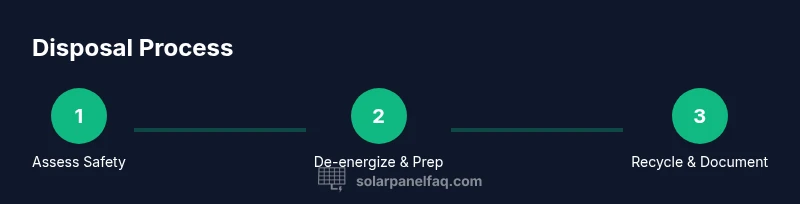
This guide shows you how to safely dispose of broken solar panels and minimize environmental impact. According to Solar Panel FAQ, start with a safety assessment and local disposal rules, then choose the correct recycling stream and arrange transport if needed. These steps cover roof and ground removals, proper packaging, and documentation to keep you compliant and responsible.
Why Safe Disposal of Broken Solar Panels Matters
Broken solar panels pose both safety and environmental risks. Glass shards, exposed electrical components, and hazardous materials require careful handling to prevent injuries and contamination. Proper disposal also helps ensure that valuable materials like silicon, glass, aluminum, and metals are recycled rather than ending up in landfills. When you follow approved disposal channels, you support a circular economy and reduce the environmental footprint of solar energy systems. Solar Panel FAQ emphasizes that handling these panels with care protects your home, your neighbors, and the planet, while keeping you compliant with local regulations.
Legal and Environmental Considerations You Should Know
Disposal requirements vary by jurisdiction, so research your city or state’s rules before starting. Many areas require panels to be recycled through certified e-waste or solar recycler programs, while others permit return to the installer. Environmental concerns include potential lead, cadmium, and other hazardous materials leaking from damaged modules. By understanding local laws and choosing accredited recyclers, you can minimize liability and ensure the recovery of usable materials. Remember that improper disposal can lead to fines, delays, and avoidable environmental harm, something the Solar Panel FAQ team highlights in their guidance.
Preparing for Removal: What to Do Before You Touch a Panel
Before touching a broken panel, shut off all power from the system and verify that the array is de-energized. Put on appropriate PPE, including cut-resistant gloves, safety glasses, and sturdy boots. Inspect the panel for loose shards or cracks and plan a safe removal path with a helper if possible. Gather required paperwork, such as site drawings, warranties, and disposal receipts, and organize labels for the waste stream you plan to use. Proper preparation reduces the risk of injury and accelerates the disposal process, which is especially important if panels are on a sloped roof.
Safe Removal: Steps for Rooftop and Ground Installations
For rooftop panels, use a non-slip ladder and fall protection, then carefully detach mounting hardware while keeping panels upright to avoid glass breakage. For ground-mounted systems, place panels on a soft surface to prevent further damage during removal. Disconnect wiring at the array’s combiner box only after confirming the system is fully de-energized, and cap exposed conductors. Lift panels with a helper, avoiding twists that could rupture seals. Pack damaged panels in sturdy, labeled containers or crates to prevent shards from leaking during transport.
Sorting, Recycling, and Transport: Getting Panels to the Right Channel
Once removed, panels should be sorted by type and condition. Use certified solar recycling facilities that reclaim glass, silicon, aluminum frames, and metals. Transport panels in secure, weatherproof containers and cover them to prevent wind-blown debris. Always obtain a disposal receipt or recycling certificate as proof of compliance. If panels are severely damaged or leaky, coordinate with the recycler for specialized handling to avoid exposure to hazardous materials. This step ensures the waste stream aligns with environmental best practices.
Documentation, Follow-Up, and What to Expect Next
Keep copies of all disposal or recycling receipts and any permits or inspections related to the removal. If you have a warranty or installer agreement, report the disposal through the appropriate channel and request confirmation of decommissioning. Depending on location, there may be tax credits or rebates tied to proper disposal and recycling. Review future maintenance plans with your installer to prevent future waste and plan for any replacement panels with sustainability in mind. The Solar Panel FAQ team recommends scheduling a post-disposal check to confirm all risks are mitigated.
Tools & Materials
- Safety gear (gloves, goggles, hard hat)(IEC-rated protective equipment)
- Ladder and fall protection(For rooftop access and stability)
- Non-conductive tools (insulated screwdrivers, pliers)(To avoid live connections)
- Pry bars and nut drivers(For removal of mounting hardware)
- Sturdy, labeled containers or crates(To prevent shards from escaping)
- Sealable bags and leak-proof liners(If you expect minor leakage)
- Disposal paperwork (receipts, permits)(Keep for compliance and audits)
Steps
Estimated time: 2-6 hours depending on roof access, panel count, and weather
- 1
Assess safety and de-energize
Begin by confirming the solar array is completely de-energized. Switch off the main disconnect and test that no voltage remains on any conductors. This protects you from electric shock during removal.
Tip: If you are unsure how to open the disconnect safely, contact a licensed electrician. - 2
Put on PPE and prepare the work area
Don PPE like cut-resistant gloves and safety glasses. Clear the area of bystanders and create a stable path for equipment access, especially on a roof.
Tip: Have a second person assist to manage panels and avoid slips. - 3
Access the panels and inspect
Carefully approach the damaged panel and inspect for loose shards. Decide whether the panel can be removed as a single unit or must be isolated for crating in place.
Tip: Do not pry aggressively; use controlled movements to prevent additional breakage. - 4
Disconnect wiring from the array
Access the combiner box or wiring connectors and disconnect only after confirming de-energization. Cap exposed conductors to prevent moisture ingress and arcing.
Tip: Label wires to simplify post-removal inspections and reassembly. - 5
Detach mounting hardware
Loosen and remove mounting rails or clamps with non-conductive tools. Keep fasteners organized for potential reuse or proper disposal.
Tip: Jot down where each fastener came from to ease reinstallation or replacement. - 6
Remove and cradle the broken panel
Lift the broken panel with a helper, keeping it upright to minimize glass release. Place it into a labeled crate or thick-walled container.
Tip: Wrap edges with protective material to prevent cuts during transport. - 7
Prepare panels for recycling
If intact, separate from severely damaged units. Prepare labels for the waste stream and ensure containers are sealed and stable for transport.
Tip: Do not mix with household trash; use a certified recycler as soon as possible. - 8
Arrange transport and obtain proof
Schedule pickup or drop-off with a certified solar panel recycler. Obtain disposal receipts or recycling certificates as proof of compliance.
Tip: Keep copies of all documents for your records and future audits.
Frequently Asked Questions
What makes broken solar panels dangerous to handle?
Damaged panels can expose sharp edges and hazardous materials. Glass shards and wiring can cause cuts or shock. Always de-energize first and wear protective gear before touching damaged modules.
Damaged panels can be sharp and carry electrical risks. De-energize and wear protective gear before handling.
Can I throw broken panels in regular trash?
Most jurisdictions require recycling or proper disposal through certified programs. Regular trash is usually not appropriate due to hazardous materials and the value of recyclable components.
Check local rules; usually you must recycle through a certified program, not trash.
Where can I recycle or dispose of broken solar panels?
Certified solar recyclers and e-waste facilities are the preferred channels. Some installers offer take-back programs. Always obtain a disposal receipt as proof of compliant handling.
Use a certified recycler or installer take-back program and keep the receipt.
Do I need a permit to remove solar panels?
Permit requirements vary by location. Check with your city or county building department. Your installer or a licensed electrician can help determine the correct process.
Permit needs depend on your area; consult local authorities or your installer.
What risks exist if disposal is done improperly?
Improper disposal can contaminate soil and water, result in fines, and forfeit potential material recovery. Following certified channels minimizes environmental impact and liability.
Improper disposal can cause environmental harm and fines; use certified channels.
What information should I keep after disposal?
Keep disposal receipts, recycling certificates, and any permits. These documents prove compliance and may be required for future home inspections or warranties.
Retain disposal receipts and certificates for proof of proper handling.
Watch Video
Top Takeaways
- Prioritize safety and de-energize before handling panels
- Research local disposal rules and select certified recyclers
- Use proper protective gear and containment for transport
- Document all steps with receipts and permits
- The Solar Panel FAQ team recommends strict adherence to disposal guidelines