What Solar Panels Are The Most Efficient: A Homeowner's Guide
Discover which solar panels offer the highest efficiency, how efficiency is measured, and practical steps to choose panels that maximize output for your home.


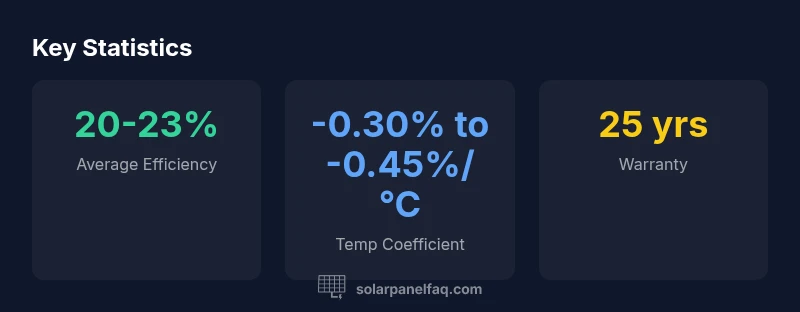
The most efficient solar panels today are high‑efficiency monocrystalline designs, typically around 20–23% efficiency under standard test conditions, with premium products reaching the high 20s. For homeowners, high efficiency matters most when roof space is limited, but overall system size, cost, and warranties still determine value. Remember, efficiency is about space‑normalized output, not just raw wattage.
What efficiency means for solar panels
If you're asking what solar panels are the most efficient, you're asking about how much of the sun's energy a panel converts into electricity under standard laboratory conditions. In practice, efficiency is one metric among many, including cost per watt, degradation rate, and performance in real weather. The most efficient real-world panels today are typically high-efficiency monocrystalline designs, which convert a larger share of sunlight into electricity on the same roof area. Understanding these numbers helps homeowners decide how to maximize output in a fixed space. When comparing options, remember that 'efficiency' describes performance per square foot, while overall system energy depends on total wattage, orientation, shading, and inverter efficiency. In other words, if space is limited, higher efficiency panels can produce more power per square foot, but you still need enough total wattage to cover your energy goals.
Efficiency categories and panel types
Panel efficiency is largely driven by silicon quality and cell architecture. Monocrystalline panels typically offer the highest efficiency, followed by polycrystalline, with thin-film technologies trailing in most markets. Within each category, manufacturers may achieve incremental gains through surface texturing, anti-reflective coatings, and panel layout. When evaluating options, consider the efficiency rating, light‑to‑power loss under shading, and the absolute wattage—the product of efficiency and panel area. For homeowners with limited roof space, prioritizing higher efficiency can meaningfully increase yearly energy production.
The on-roof reality: space, shading, and orientation
On the roof, the theoretical efficiency of a module competes with real-world factors. Even the most efficient panel loses output if shaded by a chimney, a neighboring tree, or a partially obstructed roof plane. Orientation toward true south (in the northern hemisphere) or true north (in the southern hemisphere) maximizes annual energy yield, but shading from early morning sun or late afternoon shadows can reduce production more than minor efficiency gains would suggest. High-efficiency panels help where space is the bottleneck, but a clear, unobstructed installation with properly sized inverters and monitoring yields the best long-term results.
Cost, payback, and value: is higher efficiency worth it?
Higher efficiency panels often carry a premium price per watt. The payback period depends on your roof size, energy usage, local incentives, and system design. In many cases, buyers balance per-watt cost against space constraints: in a small roof with heavy shading, a few high‑efficiency panels may outperform more panels with lower efficiency simply due to physical space. Use a fresh cost-per-watt calculation, factor in inverter and mounting costs, and compare tariffs or incentives in your area to determine total value over the system life.
Climate and temperature: how weather affects performance
Temperature impacts panel output: as cell temperature rises, voltage drops, reducing overall power. The typical temperature coefficient means that every degree Celsius above 25°C can shave a small percentage off output. In hot climates, this effect is more noticeable, though modern high‑efficiency panels are designed to mitigate some losses with better cell design and airflow. In cooler climates, panels can perform closer to their nominal efficiency, especially if they are well ventilated on the back side. Shading and soiling compound these effects, underscoring the need for site-specific assessment.
How to choose the most efficient panels for your home
Start with your roof space and energy goals. If space is tight, favor high efficiency (monocrystalline) panels with strong warranties and robust performance data. Compare the panel area, wattage rating per module, and annual degradation rate. Read the datasheet for the temperature coefficient and bifacial capabilities if applicable. Check certifications (IEC/UL) and consider the installer’s track record with similar systems. Finally, weigh the incremental energy gains against upfront costs and financing options to determine the best fit for your home.
Efficiency comparison by panel type
| Panel Type | Typical Efficiency Range | Notes |
|---|---|---|
| Monocrystalline | 20-23% | Highest efficiency per area; space-efficient |
| Polycrystalline | 15-20% | Solid performance at lower cost |
| Thin-film | 10-13% | Flexible, lightweight, lower efficiency |
Frequently Asked Questions
Are monocrystalline panels always the most efficient?
In most markets, monocrystalline panels offer the highest efficiency under standard conditions, but real-world results depend on shading, temperature, and installation. For homes with ample space, efficiency alone may not justify higher upfront costs if the overall system size and performance align with goals.
Monocrystalline panels are typically the most efficient, but real-world performance also hinges on shade, temperature, and system design.
How much does efficiency affect real-world output?
Efficiency translates to watts per square meter, which matters when roof space is limited. However, total energy over a year depends on system size, orientation, shading, and inverter efficiency. A slightly less efficient panel on a larger roof can outperform a higher efficiency module on a small, constrained space.
Efficiency helps with space, but total output also depends on roof size, shading, and system design.
Is it worth paying more for the highest efficiency?
If roof space is the constraint, higher efficiency can reduce the number of panels needed and improve outputs. If you have ample space, cost per watt and warranty often drive the decision more than marginal efficiency gains.
Higher efficiency helps with small roofs; otherwise, focus on value, warranty, and total system cost.
Do temperature and shading change efficiency?
Yes. Temperature increases reduce voltage and power output, while shading reduces current. Both factors can dramatically reduce real-world performance, sometimes more than modest efficiency differences imply.
Temperature and shade affect real-world power output significantly.
What should I read on a solar datasheet?
Look for efficiency, temperature coefficient, wattage per panel, degradation rate, certifications, and warranty. Also check the inverter compatibility and the panel’s physical dimensions to ensure a proper fit.
Read the efficiency, temperature coefficient, wattage, and warranty, plus certifications.
Can bifacial panels offer real gains for efficiency?
Bifacial panels can produce more energy when installed with high albedo surfaces and proper spacing, but their advantage depends on mounting, climate, and system design. They are typically a specialized option rather than a universal upgrade.
Bifacial panels can add output in the right conditions, but not for every install.
“Efficient panels can unlock more energy per square foot, but true value comes from the whole system: layout, inverter choice, and installation quality.”
Top Takeaways
- Prioritize high-efficiency panels when roof space is limited
- Real-world output depends on shade, orientation, and temperature
- Balance efficiency with total system size and cost for value
- Check certifications and warranty to gauge long-term performance
- Consider climate and installation specifics to maximize gains