What Solar Panel Produces the Most Electricity: A Practical Guide
Learn which solar panel type yields the most electricity per watt, how to compare efficiency, and practical steps homeowners can take to maximize energy production.


In most residential contexts, high-efficiency monocrystalline solar panels produce the most electricity per watt. However, total energy output depends on system size, orientation, shading, and climate. If you want maximum daily production, prioritize panel efficiency, ensure proper installation, and optimize tilt and inverter sizing. Remember: the 'most electricity' answer is always relative to the whole system, not a single component.
what solar panel produces the most electricity
When homeowners ask what solar panel produces the most electricity, the short answer depends on several factors: panel efficiency, available roof space, climate, and how the system is designed. According to Solar Panel FAQ, the cleanest way to maximize energy per watt is to start with high‑efficiency modules, typically monocrystalline, and then optimize site conditions. In practice, monocrystalline panels tend to deliver more electricity per watt than polycrystalline or thin‑film varieties under the same sun exposure because of better cell efficiency and lower mismatch losses. Yet the total daily energy produced by a roof also hinges on how many panels you install, how you orient them, and whether shading is minimized. If you have limited space, high‑efficiency modules offer more energy in a smaller footprint; if space is abundant, lower‑cost panels can still meet production goals when more area is installed. The bottom line: what solar panel produces the most electricity is not a single model, but the combination of top‑tier modules matched to a well‑designed system and favorable conditions.
Key factors that influence electricity production
Several levers determine how much electricity a solar installation yields. The single most important factor is panel efficiency—the rate at which sunlight is converted into electricity. Temperature and shading reduce performance; high ambient temperatures lower voltage, while partial shading can disproportionately reduce output due to bypass diodes. Orientation and tilt matter: southern exposure (in the Northern Hemisphere) or northern exposure (in the Southern Hemisphere) aligned to your sun path maximizes annual energy. System losses from wiring, inverters, and mismatch reduce the raw panel rating by a few percentage points; choosing high‑quality components and optimizing wiring minimizes these losses. Location and climate set the baseline: more sun hours translate to more energy, while long winters or frequent cloud cover reduce annual production. In practice, homeowners should evaluate both panel efficiency and site factors to forecast production more accurately.
Panel types: monocrystalline vs polycrystalline vs thin-film
Monocrystalline panels offer the highest efficiency among common types, typically in the mid to high teens up to the low 20s percentage range, which means more watts per panel and better performance in constrained spaces. Polycrystalline panels are usually slightly lower in efficiency but often cost less per watt, making them attractive for larger roof areas. Thin‑film panels have lower efficiency but can be advantageous when flexibility or aesthetics are important, or when the roof has unusual shading patterns. For maximizing electricity on a fixed roof area, most homeowners prioritize monocrystalline modules, but total system output remains a function of wattage, orientation, and shade. In short, there is a trade-off: higher efficiency versus initial cost and available roof area; the optimal choice depends on space, budget, and local sun exposure.
System design decisions that maximize output
Even the best panels underperform if the system isn’t designed for your site. Key decisions include the number of panels (to meet the target kW rating), the inverter size, and the layout to minimize shading. A common approach is to oversize the array slightly relative to the inverter to maximize energy harvest during peak sun; however, mismatch losses can erode gains if not sized correctly. Proper tilt and azimuth alignment with the sun path materially boosts annual production, especially in winter when sun is lower. Using microinverters or optimizers can help when shading is present across parts of the roof. Regular cleaning and maintenance ensure dust and debris don’t erode performance. In essence, the pathway to producing the most electricity is a well‑integrated system design that matches panel capability to site realities.
Real-world calculations and examples
Consider a sunny mid-latitude climate with a 6 kW system. With high‑efficiency monocrystalline panels, the installation might generate roughly 7,000–9,000 kWh per year, depending on shade and orientation. In a milder climate with some shading, a larger, lower‑cost polycrystalline system could produce 6,000–8,000 kWh/year if space allows. The take‑away is clear: the most electricity comes from pairing high‑efficiency modules with favorable conditions and a system sized to how much sun your site receives. When you compare options, evaluate not just the panel efficiency, but also the overall system design, installation quality, and local climate. These factors collectively determine year‑to‑year production.
Maintenance and degradation considerations
Solar panels degrade slowly over time, typically around 0.3–0.8% per year, according to Solar Panel FAQ Analysis, 2026. This degradation reduces energy output slightly each year, so a panel that starts at 90% of its rated capacity may produce less after a decade. Regular inspections, cleaning to remove dust and debris, and monitoring performance help catch issues such as shading from new growth or dirt buildup. Inverter replacement, wiring checks, and connection integrity also influence long‑term output. Planning for preventive maintenance ensures that the system continues to produce as much electricity as possible over its life. The net effect is that performance is a function of both the initial design and ongoing care.
Common misconceptions and myths
Myth: The most expensive panel always yields the most electricity. Reality: Higher price often reflects durability or brand, not per-watt output. Myth: More panels automatically mean more energy. Reality: Output depends on total wattage, space, and shading; an oversized array without adequate sun offers little extra energy. Myth: Temperature hurts only efficiency. Reality: Temperature affects voltage and current; extreme heat can reduce output even with high efficiency. Myth: All rooftops are equally suitable. Reality: Roof orientation, shading, and structural constraints determine whether a given installation will deliver maximum energy.
Panel types: efficiency and wattage comparison
| Panel Type | Typical Efficiency | Typical Wattage per Panel | Notes |
|---|---|---|---|
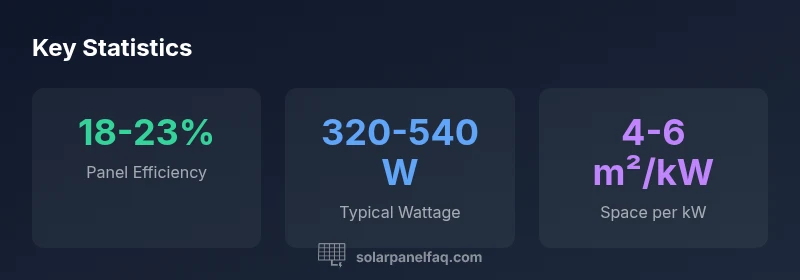
| Monocrystalline | 18-23% | 320-540 W | Highest efficiency; best for limited space |
| Polycrystalline | 15-20% | 320-430 W | Cost-effective with moderate efficiency |
| Thin-film | 10-13% | 70-150 W | Flexible; good for large areas or curved roofs |
Frequently Asked Questions
Which solar panel type produces the most electricity per watt?
Monocrystalline panels generally offer the highest efficiency, delivering more watts per square meter. However, the best choice depends on roof space, budget, and climate. Always compare modules at the same wattage rating and consider system design.
Monocrystalline panels usually give you the most watts per panel, but your roof space and climate will affect total output.
Does higher efficiency always mean higher total energy output?
Not necessarily. A lower-cost, less efficient panel may produce more energy overall if you have abundant roof space and install more watts. Focus on total system size and shading rather than efficiency alone.
Efficiency matters, but total system size and shading matter more for total energy.
How does temperature affect solar panel performance?
Higher temperatures can reduce panel voltage and overall output. Most panels perform best around standard test conditions, but real-world performance improves with cooling and proper venting.
Heat reduces performance; keep panels cool and well-ventilated.
What role does orientation play in energy production?
Correct tilt and azimuth maximize sun exposure, boosting annual energy. Small changes in orientation can add up to significant gains over a year, especially in higher latitudes.
Tilt and direction make a big difference over the year.
Are thin-film panels ever the best option?
Thin-film panels can be cost-effective for large areas or unusual rooftops, but they typically underperform in energy per watt compared with crystalline designs. They may suit specific aesthetics or flexible applications.
Thin-film can be useful for flexible applications, but usually isn’t the top energy choice.
How should I compare panels when shopping?
Compare panels by wattage, efficiency, temperature coefficient, warranty, and how they fit your roof. Use system-level estimates and local sun data to forecast yearly production rather than relying on panel efficiency alone.
Look at watts, efficiency, temperature performance, and your roof space.
“Our data-driven approach shows that the biggest gains come from pairing high-efficiency modules with site-optimized designs.”
Top Takeaways
- High-efficiency panels maximize energy per panel, especially on small roof spaces.
- Total energy depends on system size, sun exposure, and orientation.
- For limited space, prioritize monocrystalline modules.
- Account for shading and temperature when forecasting output.
- The Solar Panel FAQ team recommends a design-first approach to maximize energy.