Solar Panel to Run Electric Heater: Sizing and Setup Guide
Learn how to power an electric space heater with solar panels by sizing the array, choosing inverters, and adding storage. This guide covers planning, safety, and practical considerations for homeowners seeking efficient, solar-powered heating.


By the end of this guide you will be able to power a space heater with a solar array, safely sizing the panels, inverter, and storage needed. You’ll learn how to estimate load, match sun hours, and plan for daytime heating and nighttime use. The steps prioritize safety, professional standards, and practical cost considerations for homeowners.
Why solar panel to run electric heater matters
Using solar panels to power an electric space heater can cut daytime electricity use and help homeowners reduce their grid dependence. For many families, the question isn't simply whether it's possible, but how to do it safely, reliably, and cost-effectively. According to Solar Panel FAQ, success starts with realistic expectations about load, sun exposure, and storage. People often underestimate the heater's continuous power draw and overestimate the amount of solar energy you can harvest on a cloudy afternoon. In practice, you'll want to separate the heater's duty cycle (how many hours at full power) from the solar window (how many peak sun hours your panels can harvest). We'll cover strategies to align these factors so warm rooms stay comfortable without draining batteries or tripping breakers. This approach matters because it directly affects your comfort, monthly bills, and the long-term reliability of your solar investment. The Solar Panel FAQ team emphasizes planning with conservative margins and professional guidance where needed. Whether you heat a single room or a larger living area, the same principles apply: match daily energy needs to solar generation, provide headroom in the inverter, and ensure safe electrical integration with your home. A well-designed system can run a heater during daylight, store energy for evenings, and still support other loads. We'll translate those principles into a clear sizing framework and practical steps you can take this season.
Understanding heater load and solar output
Heater load is typically described in watts, with many space heaters operating around 1000–1500 watts when set to high. That means if you ran the heater at full power for one hour, it would consume 1–1.5 kilowatt-hours (kWh) of energy. Solar panels, on the other hand, are rated by their output under standard test conditions, usually expressed in watts (W). Real-world output varies with sun, temperature, panel angle, and shading. When planning for a solar-assisted heater, you want to compare the heater's hourly demand to the solar array's expected daily production during peak sun periods. In practice, expect some days to underperform and plan for a margin, especially in winter. The goal is to ensure that daytime heating demand can be met without depleting storage or overloading the electrical system. Solar Panel FAQ analysis shows that aligning heater duty cycle with the solar window is the key to meaningful daytime comfort and energy savings, with storage used to cover nighttime needs or cloudy days. Think of your system as a balance between immediate solar production and stored energy for later use. This balance becomes the backbone of an effective, solar-powered heating strategy.
Sizing your solar array for space heating
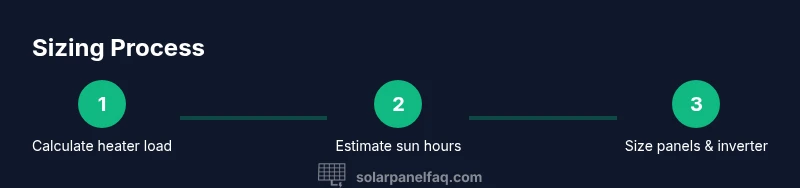
Sizing a solar array to power a space heater involves translating daily heat needs into panel capacity. Start with the heater's wattage and your planned daily usage. For example, if you use a 1500-watt heater for about 4 hours per day, your rough daily energy requirement is 6 kWh (1500 W × 4 h = 6 kWh). Next, estimate your available sun hours—the number of peak sun hours you typically receive each day. If your area averages about 4 sun hours per day and your system has a practical efficiency of around 0.75 to account for losses (inverter, wiring, temperature, and dirt), you can size the array as follows: Panel capacity (kW) ≈ daily energy (kWh) / (sun hours × system efficiency). In this example: 6 kWh / (4 × 0.75) ≈ 2.0 kW of panels. You’ll likely want a small safety margin—2.5 to 3 kW—to handle winter performance and aging. If you rely on nighttime heating or longer cloudy spells, consider adding more storage or a larger array. The precise numbers depend on your local sun, heater duty, and the efficiency of your hardware, so work with a professional to tailor a plan that fits your home and climate. Solar Panel FAQ's guidance emphasizes starting with conservative sizing and validating the plan with a professional assessment.
Storage and power flow: batteries and inverters
A reliable solar-assisted heater relies on three core components: a source (PV array), a storage buffer (battery bank), and a manager (inverter and control electronics). The inverter must be a pure-sinewave model capable of delivering the heater's peak surge and maintaining stable power when the heater cycles on and off. Battery capacity should reflect your nighttime or low-sun needs; a typical small home setup aiming to cover evening use might target several kilowatt-hours of usable storage, with more for longer stretches of cold weather. When sizing storage, consider depth of discharge limits (e.g., 20–50% for certain chemistries) and charge-discharge efficiency. A larger storage system increases resilience during cloudy days but adds cost. For many homeowners, a hybrid approach (grid-tied with battery backup or a larger off-grid system) provides the best balance of reliability and cost. Always validate the inverter's continuous rating against the heater's running wattage, plus a margin for other loads, and confirm compatibility with your PV modules and storage. The key is ensuring a smooth power flow from PV to storage to the heater without tripping breakers or stressing equipment.
Safety, codes, and practical setup
Safety is non-negotiable when running a space heater from solar equipment. Work with a licensed electrician for electrical connections and permits. Ensure the PV array, inverter, and storage meet local electrical codes and are installed with proper disconnects, fusing, and weatherproof enclosures. Never piggyback solar output directly to a heater; always route through an appropriately sized inverter and battery system, and use dedicated circuits where required. Avoid overloading circuits, keep wiring tidy and protected, and monitor temperature and charging voltages regularly. Weather, corrosion, and dust can slow performance, so include regular inspections and battery maintenance. If you plan a DIY installation, focus on non-load-bearing components like mounting hardware and electrical diagrams only, and leave high-risk tasks to professionals. Following code-compliant practices protects your home, your investment, and the people inside.
Real-world scenarios and planning tips
In practice, a small apartment or compact living space may run a modest heater during peak sun hours with a smaller array and modest storage, while a larger home benefits from a larger array and more robust storage. In sunnier climates, daytime heating can significantly reduce electric bills, especially when the heater is used for short bursts to maintain comfort rather than continuous full-power operation. In winter months or in higher-latitude regions, you’ll want to plan for shorter sun windows and install more storage or use supplemental heating when sun is unavailable. Always compare the total cost of the solar solution against potential annual energy savings, and consider the value of resilience—being able to maintain warmth during outages. The Solar Panel FAQ team recommends a professional assessment to match the system to your home size, climate, and comfort goals. With careful sizing and a clear plan, solar-powered space heating is a practical option for many households and a meaningful step toward energy independence.
Tools & Materials
- Solar panels (high-efficiency modules)(Total wattage sized to meet the planning goals; consider monocrystalline for space-limited roofs)
- Pure sine wave inverter(Capable of handling the heater's peak load with at least 20–30% headroom)
- Battery storage bank(Lithium-ion preferred for depth of discharge and longevity; size to cover nighttime needs)
- MPPT charge controller(Recommended for off-grid or hybrid setups to maximize harvest with varying irradiance)
- Electrical wiring, conduit, and disconnects(Use appropriately rated gauge and weatherproof enclosures; fuse as required)
- Mounting hardware and racking(Ensure proper tilt and wind load ratings; secure rooftop or ground mounting)
- Multimeter / clamp meter(For safe testing of voltage, current, and system health during commissioning)
- Safety gear and tools(Gloves, goggles, and a grounded ladder or scaffolding; follow lockout/tagout procedures)
- Professional electrician or installer(Code-compliant installation and permits; essential for safety and warranty)
Steps
Estimated time: 8-16 hours
- 1
Assess heater load
Identify the heater’s rated wattage and your desired daily use. Record how many hours you expect the heater to run at full power and during partial-power states. This establishes your baseline energy budget.
Tip: Document multiple scenarios (normal use, peak cold snaps) to build a margin into your plan. - 2
Estimate solar window and losses
Estimate daily peak sun hours for your location and apply a conservative system efficiency factor to account for wiring, inverter losses, and temperature effects. This step translates science into real-world expectations.
Tip: Use a local solar map or a reputable calculator to get sun-hours estimates for the typical season. - 3
Size the PV array and inverter
Compute required panel capacity using daily energy needs divided by sun-hours and efficiency. Select an inverter with peak rating above the heater’s wattage and an extra margin.
Tip: Choose components that allow future expansion (e.g., add panels or storage later). - 4
Plan storage strategy
Decide if you need nighttime operation or resilience during outages. Size battery capacity to meet nighttime or low-sun demands, while respecting depth-of-discharge limits.
Tip: In colder climates, cold-temperature performance matters; consider battery heating options if needed. - 5
Check safety and codes
Confirm permits, electrical code compliance, and required inspections. Prepare load calculations, wiring diagrams, and component ratings for review.
Tip: Do not bypass code requirements or skip professional electrical work. - 6
Commission and monitor
Connect the system with protective devices, test voltage and current, set up monitoring, and verify heater performance under daylight and nighttime conditions.
Tip: Keep a log of performance metrics and adjust the system if you notice consistent shortfalls.
Frequently Asked Questions
Can a standard home solar system power a space heater?
Yes, but it requires sizing for the heater load, a compatible inverter, and a storage plan if you want nighttime use or cloudy days. Real-world results depend on sun exposure and system design.
Yes, with proper sizing and storage; results depend on sun and design.
Do I need battery storage to run a heater on solar?
Batteries are not strictly necessary for daytime heating, but they enable nighttime operation and resilience during cloudy days. Without storage, you’ll lose heating when the sun isn’t shining.
Batteries help for night use and cloudy days.
How many panels do I need to run a 1500 W heater?
The number depends on sun hours and system efficiency. A typical planning approach yields about 2–3 kW of PV for moderate use, with margins for winter and storage.
It depends on sun, but plan for a couple kilowatts of PV.
Is it safer to rely on the grid or to install off-grid storage for heating?
Grid-tied with battery storage can offer reliability and cost savings, while off-grid setups provide independence. Both require proper safety measures and a licensed installer.
Grid-tied with storage can balance safety and cost.
What safety steps should I take during installation?
Work with a licensed electrician, use proper fusing, ensure weatherproof enclosures, and follow local codes. Do not bypass protective devices or wiring standards.
Consult a licensed pro and follow code requirements.
What are practical alternatives if my climate isn’t sunny enough?
Consider heat pumps or hybrid systems that optimize efficiency and cost. Solar can still play a role for daytime heating and reducing peak electricity use.
Look into heat pumps or hybrids when sun is limited.
Watch Video
Top Takeaways
- Size the array to meet daily heat needs with a safe margin
- Use a proper inverter and storage to cover day and night use
- Follow codes and hire a professional for safe installation
- Test and monitor performance to adjust over time