Solar Panel Hail Damage: Urgent Guide to Assessment and Repair
Urgent guide for homeowners to assess, repair, and prevent solar panel hail damage after storms in 2026. Learn signs, safety, costs, warranties, and insurance tips.


Most likely, hail damage shows as visible cracks, chips, or micro-cracks in the glass or seals, with possible cell delamination. Do a safe, ground-level visual check soon after a storm, avoid touching the panels, and stay off the roof. If cracks, water intrusion, or a drop in production are present, shut down the array and call a certified solar technician for evaluation.
Why Solar Panel Hail Damage Demands Urgent Attention
Hail storms can leave invisible and visible damage that lowers energy output and compromises panel longevity. According to Solar Panel FAQ, homeowners should treat hail-related panel damage as a safety and performance issue and begin with a careful inspection after storms. Solar arrays are built to withstand some impact, but large hail can crack glass, loosen seals, and create micro-cracks that propagate over time. If left unattended, moisture can enter, accelerating corrosion and reducing warranty coverage. After a hail event in 2026, prioritize safety, document conditions with photos, and schedule a professional assessment if you notice any cracking, discoloration, or a sudden drop in production.
How Hail Affects Solar Cells and Glass
The glass on solar panels is designed to protect fragile photovoltaic cells, but hail impacts can create several failure modes. Cracks can let moisture into laminated layers, leading to delamination and degraded insulating properties. Even small chips at the edge can loosen seals and loosen mounting hardware under wind loads. In many cases, the efficiency drop mirrors the extent of damage and the age of the panel. Hail can also cause micro-cracks that are invisible to the naked eye but measurable via infrared or performance testing. The takeaway: visible damage is not the only concern; unseen micro-damage can accumulate and shorten system life if not addressed by a professional.
Signs of Damage You Can See Right After a Storm
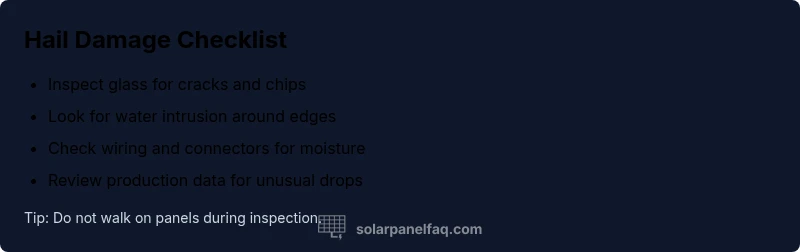
Cracks and chips on the glass surface; visible delamination near edges; discoloration or haze on the pane; unusual production drop captured by monitoring software; water droplets or moisture at panel seams; misalignment or rattling in mounting frames after a hail hit. These signs warrant a closer inspection and professional assessment to prevent further degradation and warranty issues.
Immediate Safety Steps and What Not to Do
- Power down the system at the main disconnect and, if accessible, the PV breaker; 2) Do not climb onto the roof or step on glass panels; 3) Keep children and pets away from panels and avoid wet surfaces; 4) Document damage with photos but do not touch or press on cracked areas; 5) Do not attempt DIY repairs on cracked glass or exposed wiring. If there is standing water around the array, contact a licensed electrician. Safety first in every hail-related scenario.
How to Assess Damage: DIY Checks vs Professional Evaluation
Begin with a ground-level visual check and review inverter monitoring data for unusual drops in production. Take clear photos of any cracks, chips, or edge damage and note the date of the hail event. If you observe moisture, discoloration, or thermal hotspots via infrared testing, a professional evaluation is essential. A licensed technician will inspect glazing integrity, lamination, wiring, junction boxes, and mounting hardware to determine repair versus replacement and confirm warranty eligibility.
Costs, Warranties, and Insurance Considerations
Costs for hail-related repairs vary with the extent of damage, panel age, and part availability. Warranties differ by manufacturer and may exclude hail damage or require proof of weather-related impacts. Check your policy and file a claim promptly if eligibility is clear. Insurance coverage can help offset repair or replacement costs, especially when damage affects performance or structural integrity. Always document the hail event and repair records for future claims.
Prevention and Aftercare: Protecting Your System
Invest in hail-rated panels and secure mounting systems, consider wind deflectors and protective shields for extreme events, and schedule annual inspections to catch evolving damage. Keep panels clean to minimize occlusion and ensure there is no shading from debris. After any hail event, review monitoring data for performance gaps and contact a professional if any anomalies persist into the next billing cycle.
The Takeaway for 2026
After a hail event, prioritize safety, document conditions, and seek professional evaluation promptly. Regular maintenance and a solid warranty/insurance plan can protect your investment and maintain peak performance.
Steps
Estimated time: 60-90 minutes
- 1
Power down safely
Locate the main disconnect and PV breaker; switch off per the manufacturer instructions. Ensure all personnel are clear of the array before proceeding.
Tip: Wear insulated gloves and eye protection. - 2
Conduct a visual exterior check
From ground level, inspect for visible cracks, chips, or edge damage. Do not climb onto the roof or press on damaged glass.
Tip: Capture high-resolution photos for the technician. - 3
Review production data
Compare current production to historical baselines in the monitoring app and note any sudden drops, spikes, or fluctuations.
Tip: A significant drop warrants professional evaluation. - 4
Decide on repair vs replacement
If damage is cosmetic or minor, a repair may suffice; extensive cracking or moisture requires replacement and warranty review.
Tip: Do not attempt DIY glass repairs. - 5
Schedule professional assessment
Arrange a licensed solar technician visit to inspect glazing, lamination, wiring, and inverter integration; confirm warranty eligibility.
Tip: Document all communications and repair plans.
Diagnosis: Post-storm solar array shows reduced output or visible damage after hail
Possible Causes
- highVisible structural damage to glass or frame (cracks, chips)
- mediumWater intrusion through cracked glazing leading to microelectronics exposure
- lowShading from debris or spilled insulation causing production drop
Fixes
- easyPerform a safe, ground-level inspection for cracks or chips; do not step on panels; keep people away
- easyIf cracks or moisture are found, shut down the array and contact a certified technician for assessment and potential warranty claim
- hardSchedule a full system evaluation (glazing, wiring, inverter) and plan for replacement if damage is extensive
Frequently Asked Questions
What counts as hail damage on solar panels?
Hail damage includes cracks, chips, delamination, or frame damage. Even small cracks can affect performance and warrant inspection by a professional.
Hail damage includes cracks or chips in the glass and can affect performance; a professional inspection is advised.
Will hail damage be covered by warranty?
Warranty coverage varies by manufacturer and policy. Some hail-related damage may be excluded or prorated; check your warranty and file a claim if eligible.
Warranty coverage for hail damage depends on the policy; check terms and file a claim if eligible.
Is it safe to inspect hail-damaged panels myself?
Do not climb on the roof or press on damaged glass. Perform only ground-level checks and rely on a professional for a full assessment.
Ground-level checks are okay, but avoid climbing; a professional should inspect damaged panels.
How soon should damage be assessed after a hailstorm?
Assess as soon as it is safe to do so and after you’ve ensured no immediate hazards. Prompt assessment helps protect warranties and optimize repairs.
Assess promptly after hail when safe to do so; early checks help with warranty and repair decisions.
What factors affect repair costs after hail damage?
Costs depend on damage extent, panel age, and part availability. Major damage may require full panel replacement and system recalibration.
Repair costs vary with damage and parts; large damage might require replacement and recalibration.
Watch Video
Top Takeaways
- Inspect after hail and document findings
- Identify both visible and hidden damage to prevent future losses
- Shut down the array if damage is suspected and call a pro
- Check warranties and insurance for coverage
- Plan proactive maintenance to minimize future risk