Should Solar Panels Face East or West? An Analytical Comparison
An analytical comparison of east vs west solar panel orientation, covering energy production, usage patterns, climate considerations, and practical steps to choose the best option for your home.


When deciding should solar panels face east or west, the choice hinges on your daily energy use and roof layout. East-facing arrays capture more morning sun, while west-facing arrays deliver more afternoon energy; in many homes, a balanced approach or split orientation offers the best overall production. According to Solar Panel FAQ, orientation matters, but total daily output can be similar with proper tilt and system sizing.
How Orientation Impacts Solar Output
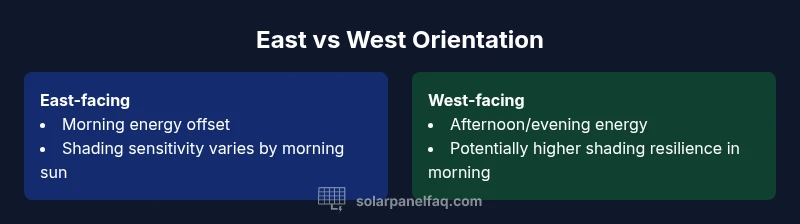
For homeowners asking should solar panels face east or west, orientation fundamentally shapes when you generate electricity, not just how much. East-facing panels tend to produce more energy in the morning as the sun climbs in the eastern sky, while west-facing panels peak in the late afternoon and early evening. The difference in daily output often depends on the roof’s tilt, shading, and local climate. Solar Panel FAQ analysis shows that, in many locations, total daily production can be similar between east and west orientations when the system is properly tilted and sized to your usage pattern. This is why a simple “one-size-fits-all” rule rarely applies; the best orientation aligns with your home’s energy consumption profile and the layout of your roof. In practice, the decision should consider your utility rate structure, possible net metering benefits, and any constraints from shading or roof orientation. According to Solar Panel FAQ, framing the choice around usage patterns rather than a generic peak hour yields better long-term savings.
"text":"placeholder"
Comparison
| Feature | East-facing panels | West-facing panels |
|---|---|---|
| Best alignment with usage patterns | Morning-heavy usage | Evening-heavy usage |
| Daily production comparison | Similar total daily output when tilt and shading are optimized | Similar total daily output when tilt and shading are optimized |
| Peak production time | Early morning to mid-day | Mid to late afternoon |
| Impact of shading | Morning capture can be more sensitive to morning shading | Afternoon capture can be more sensitive to afternoon shading |
| System design implications | Pairs well with load-shifted or morning-dominant loads | Pairs well with load-shifted or evening-dominant loads, may benefit from hybrid |
Strengths
- East orientation improves morning energy offset and can reduce daytime grid purchases
- West orientation aligns with after-work usage, potentially lowering evening grid purchases
- Hybrid east-west layouts offer flexibility and resilience
- Microinverters or optimizers maximize performance in mixed orientations
- Hybrid with storage can smooth daily energy curves
Drawbacks
- Single-direction systems may not maximize total daily production for all households
- Installing a hybrid east-west system can increase upfront cost
- Shading or rooftop constraints may favor one direction over the other
- Battery storage adds complexity and ongoing maintenance costs
Orientation is situational; there is no universal winner between east and west—match orientation to your daily energy use, roof geometry, and financial goals.
East or west can both work well when paired with proper tilt, system sizing, and, if possible, storage or hybrid layouts. The best choice depends on when your home uses electricity most and how the roof presents sun exposure throughout the day.
Frequently Asked Questions
Should I always choose east or west panels for every home?
Not necessarily. The best orientation depends on your specific energy usage pattern, roof geometry, and local climate. East or west can both be viable, and a hybrid approach often yields the most balanced production for many households.
In most homes, there isn’t a one-size-fits-all answer—orientation should match your daily energy use and roof conditions.
Can I install both east- and west-facing panels on the same roof?
Yes. An east-west hybrid setup with suitable inverters or optimizers can maximize daily energy production and improve ramping from morning to evening. This approach often comes with higher upfront costs but offers better load matching.
Yes—hybrid east-west layouts are common, especially when load patterns vary throughout the day.
How does shading affect east vs west orientation?
Shading reduces production on the affected panels, and the impact can differ by direction. Because morning and afternoon sun follow different paths, shading on one side may disproportionately affect that side’s output. Microinverters or optimizers help mitigate this.
Shading matters, and direction can influence which panels suffer more.
Do inverters or storage change which orientation is better?
Yes. Microinverters or power optimizers can optimize each panel individually, improving performance for mixed orientations. Batteries add value by storing excess energy for later use, potentially leveling the advantage of east or west.
Inverters and storage can tilt the decision toward hybrid layouts.
How should I estimate production for east vs west on my roof?
Work with your installer to model both orientations and a hybrid option using your roof geometry, shading, and local sun path. Compare projected annual energy, bill savings, and payback under your rate structure.
Ask for a side-by-side model of east, west, and hybrid configurations.
Are there incentives that affect orientation choice?
Incentives and time-of-use rates can influence the economic appeal of one orientation over another. Some programs reward daytime generation or energy storage contribution, which can tilt the decision toward east or toward west depending on your usage.
Financial programs can tilt the economics toward a specific direction.
Top Takeaways
- Map your daily energy use by time of day to choose orientation
- East-fronted systems favor morning energy offsets; west-fronted favor evenings
- Hybrid east-west configurations can maximize daily production
- Shading, tilt, and roof geometry strongly influence outcomes
- Consult with an installer to compare east, west, and hybrid models