Know If Moultrie Solar Panel Is Working: Practical Guide
Learn how to know if moultrie solar panel is working with simple tests, voltage checks, and maintenance tips. Solar Panel FAQ explains safe methods for homeowners.


With practical checks and simple measurements, you can confirm whether a Moultrie solar panel is working. Key steps include verifying open-circuit voltage, inspecting connections, testing under load, and comparing readings against the panel’s spec sheet. This guide outlines safe testing methods and maintenance tips for homeowners.
How a Moultrie solar panel works and what to expect
A Moultrie solar panel converts sunlight into DC electricity by using photovoltaic cells connected in series and parallel configurations. When exposed to sunlight, electrons are excited and flow through the circuit, producing a measurable voltage and current. For homeowners, understanding the basic output helps in diagnosing whether the panel is operating as intended. According to Solar Panel FAQ, routine checks of wiring, connectors, and mounting ensure stable performance and safe operation. Recognizing the signs of degradation early can save money and extend the life of your system. In 2026, ongoing monitoring remains a best practice for reliable energy generation and to protect the investment in your solar setup.
Ground rules for testing: safety first and accurate readings
Before you start, ensure you are working in good weather, wearing insulated gloves, and using properly rated tools. Do not touch exposed copper connections with wet hands. Read the manufacturer’s spec sheet for your Moultrie panel and keep a log of readings. This section focuses on safe, repeatable steps to determine if the panel is performing within its expected range. The Solar Panel FAQ team emphasizes documenting each test to compare results over time.
Reading the open-circuit voltage (Voc) and short-circuit current (Isc)
Open-circuit voltage is the panel’s voltage with no load connected. Short-circuit current is the maximum current the panel can deliver when connected directly to a very small, low-resistance load. Use a digital multimeter to measure Voc with the panel disconnected from the load. Then briefly connect a known load to measure Isc. These readings help you gauge whether the panel produces power in bright sun and if its internal paths are intact. Solar Panel FAQ notes that Voc should exceed the nominal rating while Isc should align with or exceed the label’s current rating.
Testing under load: how to verify real-world performance
After confirming Voc, test under a known load to simulate real usage. Connect a safe DC load (like a small resistor or a dedicated load tester) and observe voltage under load. If the voltage drops dramatically or remains stagnant, the panel or connections may be compromised. Use a log sheet to record voltage, current, and environmental conditions (irradiance, temperature). The goal is to see how the panel behaves under actual operating conditions, not just in no-load scenarios.
What to compare against: the spec sheet and manufacturer guidance
Your Moultrie panel’s spec sheet provides nominal voltage and current ratings, temperature coefficients, and connectivity instructions. Compare Voc and Isc against those figures, accounting for sun angle and shading. A healthy panel often shows stable readings within a reasonable margin of the spec, especially on a clear day. Solar Panel FAQ recommends aligning expectations with real-world conditions and avoiding over-interpretation of single readings.
Common signs of a failing panel and quick fixes
If you notice unusually low Voc, erratic current, or visible damage on the frame or glass, the panel may be compromised. Loose connections, corroded terminals, or damaged diodes are frequent culprits. Re-seat connectors, clean corrosion with appropriate cleaners, and inspect mounting hardware for secure grounding. In many cases, gradual degradation is normal with age, but sudden drops warrant professional inspection.
Inspect wiring, connectors, and mounting hardware
Wiring should be intact with no exposed copper and connectors firmly seated. Look for cracked insulation, bent leads, and loose screws. Clean connectors with contact cleaner if needed. Mounting hardware should be secure, with no movement that could loosen cables under wind or vibration. Poor mounting can cause shading and micro-cracks, reducing performance over time.
Shading, dirt, and age: invisible enemies of performance
Even partial shading from trees, chimneys, or nearby structures can drastically reduce output. Clean panels regularly to prevent dirt buildup which blocks light. Consider replacing a panel showing significant delamination or discoloration, as aging can reduce efficiency. Solar Panel FAQ highlights that consistent maintenance helps maintain predictable performance and longer panel life.
Safety and when to call a pro
If you encounter high voltages, damaged wiring, or signs of overheating, stop testing and consult a licensed electrician or solar technician. Never work alone on a live system, and always disconnect the regulator or battery before inspecting wiring. For complex diagnostics or warranty concerns, a professional assessment is the safest route.
Maintenance checklist to keep your Moultrie panel healthy
Create a simple monthly routine: inspect for damage, check connections, clean the surface, log Voc and Isc readings, and verify mounting integrity. By tracking performance over time, you’ll spot gradual declines early and plan maintenance or replacement accordingly. Solar Panel FAQ recommends a yearly professional check if your system is part of a larger array.
Tracking performance over time: turning data into decisions
Maintain a running log of daily Voc, Isc, and under-load voltage. Use charts to visualize trends and identify abrupt changes. If readings drift beyond expected ranges, investigate potential micro-cracks, soiling, or aging components. The goal is to create a baseline and watch for deviations, ensuring you act before efficiency losses become costly.
Quick-start checklist and next steps
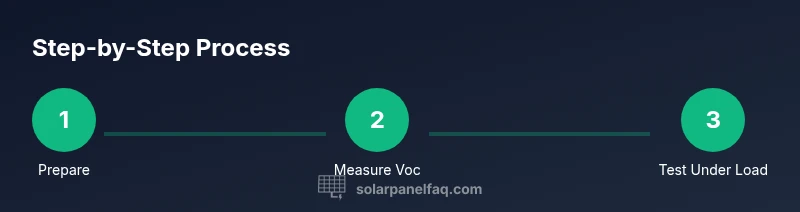
- Gather the recommended tools and the spec sheet. 2) Safely measure Voc and Isc in direct sun. 3) Test under a known load and compare to specs. 4) Inspect wiring, connectors, and mounting hardware. 5) Maintain a maintenance log and schedule a professional check if needed.
The path forward: when to seek more help
If testing confirms consistent under-performance or if you observe physical damage, contact a solar technician. A professional can perform advanced diagnostics, verify warranty status, and advise on replacement or repairs. Regular monitoring will help you maintain a reliable solar source for your Moultrie panel.
Tools & Materials
- Digital multimeter(Measure open-circuit voltage (Voc) and short-circuit current (Isc).)
- Test leads and probes(Ensure compatibility with your multimeter and panel connectors.)
- Moultrie solar panel spec sheet(Have the nominal voltage/current ratings and wiring diagram handy.)
- Safe load resistor or DC load tester(Use a known, appropriate load to test under real conditions.)
- Non-conductive gloves and eye protection(Personal safety gear for handling panels and connectors.)
- Soft brush or microfiber cloth(For gentle cleaning of surface dust; avoid abrasive materials.)
Steps
Estimated time: 60-90 minutes
- 1
Prepare safety and tools
Put on gloves, verify sun exposure, and lay out the required tools. Read the panel spec sheet to locate the correct terminals. This ensures your measurements will be accurate and safe.
Tip: Confirm direct sunlight before measuring Voc for valid results. - 2
Inspect physical condition
Check the frame for cracks, glass for chips, and wiring for wear. Note any corrosion on terminals and ensure all mounting hardware is secure.
Tip: Address visible damage before electrical testing to avoid inaccurate results. - 3
Measure open-circuit voltage
Connect the multimeter in parallel with the panel’s output while the panel is under sun. Record Voc and note ambient conditions.
Tip: Voc should exceed the nominal rating; a very low value indicates a problem. - 4
Measure short-circuit current
Briefly connect a low-resistance load and measure Isc. This indicates maximum current under load conditions.
Tip: Be ready to disconnect quickly if readings spike or wires heat up. - 5
Test under a known load
Attach a safe load and observe voltage drop. Compare with spec for under-load performance.
Tip: If voltage collapses, suspect wiring, diode, or panel issues. - 6
Compare with spec sheet
Match your readings against the manufacturer ratings, considering sun angle and temperature effects.
Tip: Document any deviation to guide maintenance decisions. - 7
Check wiring and connectors
Inspect all connectors for corrosion and ensure secure, clean contact. Re-seat any loose connections.
Tip: Use contact cleaner if connectors show oxidation. - 8
Document and plan next steps
Log all results and plan maintenance or professional evaluation if readings remain outside the expected range.
Tip: Create a baseline for future comparison.
Frequently Asked Questions
What is a normal voltage reading for a functioning Moultrie solar panel?
A healthy panel generally shows a Voc higher than its nominal rating when tested in direct sun. Compare Isc and Voc to the manufacturer spec to determine if readings are within expected ranges. Always consider sun intensity and temperature when interpreting results.
A healthy Moultrie panel usually shows a Voc above its nominal rating in direct sun. Compare both Voc and Isc to the spec, accounting for sun and temperature.
Why would my panel show little to no voltage under load?
Low voltage under load can indicate shading, dirty contacts, loose wiring, or panel damage. Start with a surface clean, re-seat connectors, and verify there is no shading before conducting a test under load.
If voltage drops under load, check for shading, dirty contacts, or loose wiring. Clean and reseat connectors before re-testing.
Can shading affect performance even when a panel looks clear?
Yes. Even partial shading from nearby objects can drastically reduce output. Inspect for temporary shading during tests and consider trimming obstructions or relocating the panel if feasible.
Shading can dramatically reduce output even if the panel looks clear. Check for temporary shade during tests and address obstructions.
When should I replace my Moultrie solar panel?
If readings consistently fall far below the spec, or there is visible damage that can't be repaired, replacement is recommended. Age and repeated exposure to the elements also reduce performance over time.
If performance stays well below spec and there’s visible damage, consider replacement. Age and wear also matter.
Is it safe to test the panel without removing it from its mount?
Testing on-mount is possible if you follow safety precautions, ensure the area is dry, and use insulated tools. If unsure, unplug any connected storage or controllers and test with the panel disconnected.
Testing on the mount is possible with care. Use insulated tools and dry conditions, and disconnect storage or controllers if unsure.
What should I do with data from testing over time?
Maintain a log of Voc, Isc, and under-load voltage. Look for trends: gradual declines suggest aging or dirt buildup; sudden changes may indicate wiring or panel damage.
Keep a test log and watch for trends. Gradual drops point to aging or dirt; sudden changes warrant a closer inspection.
Watch Video
Top Takeaways
- Start with safe, documented tests.
- Compare readings against spec sheets and environmental conditions.
- Inspect wiring and mounting for hidden issues.
- Track performance over time to catch early decline.