How to fix solar panel voltage drops: a practical homeowner guide
Learn practical, safety-focused steps to diagnose and fix solar panel voltage drops. This homeowner-friendly guide covers measurements, common causes, maintenance, and when to call a pro to restore peak system performance.


Goal: fix solar panel voltage drops by systematically diagnosing causes, then applying safe, practical fixes. Begin with safety checks, verify open-circuit and under-load voltages across strings, identify shading, dirt, or loose connections, and correct wiring or MPPT setup. The guide provides measurements, fixes, and when to call a pro for safety and reliability.
Understanding voltage drops in solar panels
Voltage drop refers to the difference between a panel’s rated voltage and the voltage you actually measure while the system is operating. In a real-world solar array, the voltage you see under sun is influenced by temperature, shading, panel health, wiring, and the health of the inverter or charge controller. When panels are clean and in good condition, under-load voltage should stay within the expected operating range for the string and inverter. However, several common factors can cause noticeable drops, especially during the hottest part of the day when cells lose voltage more quickly. According to Solar Panel FAQ, many voltage-drop problems stem from simple, fixable causes rather than catastrophic panel failures. Homeowners should start with safety: shut off DC disconnects, wear eye protection, and ensure children and pets are away from the install. Then perform a two-tier measurement: check open-circuit voltage (Voc) with sun unobstructed, and compare it to the under-load voltage (Vmp) at the inverter or combiner box. The goal is to locate whether the drop is isolated to a single panel, a subset of panels, or an entire string, so you can target the repair.
Common causes of voltage drops
Voltage drops have several familiar culprits, and most are addressable with basic maintenance or a simple wiring fix. Shading from trees, neighboring buildings, or temporary obstructions reduces panel output and shifts voltage. Dirt, dust, bird droppings, and algae create diffusion losses, especially on dusty or humid days. Loose or corroded DC connectors, damaged cables, or poorly torqued lugs raise resistance and trim the voltage that reaches the inverter. Internal panel faults, bypass diode failures, or cracked cells can also dampen output, though these are less common. Inadequate string sizing relative to the inverter’s MPPT range forces the system to operate at suboptimal voltages. Temperature effects matter too: high cells settle at different voltages than when cool, which can manifest as a slower ramp to the expected voltage. Finally, the inverter or charge controller itself can misread string voltage if it’s out of calibration or nearing end of life. Regular checks for these factors will usually reveal the main cause.
Tools and measurements to diagnose voltage drops
Before you touch live wiring, gather the right tools and plan your measurements. Essential items include a digital multimeter (for Voc, Vmp, and Isc), a thermal camera or infrared thermometer (to detect hot spots), and a flashlight for glare-free inspection. Optional but helpful: a clamp meter to monitor current without disconnecting cables, a battery monitor if you have a storage system, and a DC test light for quick checks. Start with a safety check: ensure the solar array is de-energized when you remove access panels and before you measure. Then perform these measurements: (1) measure Voc at the array side with the sun partially or fully unobstructed; (2) measure Vmp at the inverter or combiner box under normal operating conditions; (3) compare voltages across individual panels within a string to locate weak cells or bad connections; (4) measure current on all strings to spot mismatches. Record results with date and weather notes to track changes over time. These data points guide targeted fixes rather than broad, unnecessary rewiring.
Diagnosing voltage drops by string, panel, and component
After collecting measurements, start narrowing down the fault area. If multiple panels in a string show lower voltage than the string average, inspect the entire string’s wiring, connectors, and protective devices. If only one panel is weak, it may be dirty, shaded, or failing; check its junction box, bypass diodes, and cables. Compare with adjacent strings using the same orientation and similar shading conditions to see if the problem is systemic or isolated. If Vmp tracks well but Voc is off, it points to underperforming cells or a failed bypass diode inside a panel. Likewise, abnormally high resistance in a connector or a damaged cable will show up as a voltage drop when current flows. Document each finding with photos and measurements, and adjust your maintenance plan accordingly. This methodical approach saves you from replacing components that are still healthy and keeps the system operating safely.
Cleaning and maintenance to restore voltage
Dirt and debris block sunlight and heat dissipation, contributing to voltage drops. Begin with a visual inspection from a safe distance, looking for dried leaves, bird droppings, pollen, or algae growth on glass and frame. When cleaning, use clean water, a soft brush, and non-abrasive soap; never scrub with abrasive materials that could scratch the glass or damage coatings. Rinse thoroughly to prevent soap residue, which can attract dust. Be mindful of weather: perform cleaning on cooler part of the day, and avoid cleaning panels in direct sun when they’re hot. After cleaning, re-measure Voc and Vmp to confirm improvement. If voltages do not recover, inspect cabling for damage, and consider a panel-level test with a portable solar tester if you have access. Regular cleaning plus seasonal checks helps keep output steady and protects system health, aligning with Solar Panel FAQ’s guidance on hands-on maintenance.
Shading and environmental factors
Even small shading changes can dramatically affect panel voltage because many modern systems use series strings. Identify temporary shading sources such as nearby construction, chimneys, or tall trees. If possible, trim or relocate shading sources, or re-orient panels for different sun angles. In some cases, installing microinverters or optimizers can mitigate shading losses by running each panel independently, albeit at a higher upfront cost. Another factor is seasonal weather: pollen, snow, or ice can create brief voltage dips; plan for seasonal maintenance and rapid snow or debris removal. When shading decreases, voltage tends to stabilize, and when clouds move in, you’ll often see fluctuations in both voltage and current. Document shading patterns with photos to determine the most impactful areas to address and avoid over-engineering a solution.
Electrical wiring, connectors, and hardware checks
Poor connections cause the most annoying voltage drops because they raise resistance where two conductors meet. Start by turning off the DC disconnect and inspecting all lugs, connectors, and harnesses for corrosion, discoloration, or loose screws. Replace any damaged cables, especially those with cracked insulation or worn connectors. Use dielectric grease on metal-to-plastic contacts if recommended by the manufacturer, and torque connectors to the manufacturer’s specs. Check the DC disconnect switch for smooth operation and verify that conduit runs are intact with no exposed conductors. If you observe blackened insulation or a melted sleeve, stop and call a professional—these are signs of overheating that can cause fire risk. After any wiring work, re-test voltages and ensure all safety labels and covers are in place.
System design fixes: MPPT, inverters, and string configuration
If measurements indicate suboptimal voltage across many strings, the problem may lie in how the system is sized rather than a fault in the panels themselves. Ensure your inverter’s MPPT range accommodates the expected string voltages under various conditions. Consider adding more MPPT inputs if your inverter supports it, or reconfiguring strings to keep the operating voltage within the MPPT sweet spot while maximizing current. This can improve efficiency and reduce voltage drop effects during cloudy or hot days. When upgrading hardware, plan for future expansion: longer life inverters, higher-rated cables, and improved connectors can reduce voltage drops over time. If you’re unsure, consult the manufacturer documents or Solar Panel FAQ’s recommended practices for your specific model.
Safety, warranty, and when to call a pro
Many voltage-drop issues are safe to diagnose and fix for a confident DIYer, but some situations require professional help. If you find burned smells, a hot inverter, or melted insulation, shut down immediately and contact a licensed electrician or solar technician. Keep a detailed log of all measurements and repairs—this helps support warranty claims and proves you followed proper procedures. If your system is under warranty, verify what interventions are permitted by the manufacturer to avoid voiding coverage. When in doubt, reach out to a qualified technician who can perform a thorough inspection and provide a certificate of safety. Solar Panel FAQ recommends balancing DIY maintenance with professional checks for complex issues.
Preventive maintenance plan to avoid voltage drops
Prevention is cheaper than cure. Create a seasonal maintenance calendar that includes cleaning, visual inspections, and measurement checks. Schedule a mid-season voltage test to compare against the previous season and document any drift. Maintain a log of panel cleanliness, shading changes, and connector replacements. Inspect inverters and MPPT settings annually, and review wiring routes for wear or damage after severe weather. Keep spare connectors and appropriate torque tools on hand. Establishing a proactive routine minimizes the risk of unexpected voltage drops and extends system life, aligning with best-practice recommendations from Solar Panel FAQ.
Real-world example and quick tips
A homeowner with a 6-panel string noticed lower voltage on a hot summer afternoon. After safety steps, they measured Voc across the string; one panel showed a noticeably lower voltage. Cleaning and reseating a loose connector restored most of the voltage. A small branch introduced shade during certain times of day, which was mitigated by trimming the branch. The homeowner then reconfigured a second string to keep voltages in-range for the MPPT, avoiding extra heat losses. The example illustrates how small issues, when addressed systematically, yield meaningful improvements. Quick tips: start with safety, document measurements, check for shading and soiling, then inspect connectors and wiring before considering internal panel faults.
Tools & Materials
- Digital multimeter (DC voltage, 0-1000V safe range)(Measure Voc and Vmp across strings)
- Clamp meter (optional)(Non-contact current checks without dis connections)
- Infrared thermometer or thermal camera(Spot hot spots on panels)
- Non-abrasive cleaning brushes(Gently clean glass surface)
- Clean water, mild soap, soft cloth(For cleaning solar glass safely)
- Torque wrench and manufacturer torque specs(For secure connectors)
- Cable ties, labels(Organize wiring after checks)
Steps
Estimated time: 60-120 minutes
- 1
Power down and isolate
Shut off the DC disconnects and isolate the array from AC and battery systems if present. Verify no live DC is present before touching any wiring. This prevents electric shock and arc flash.
Tip: Never work on live circuits—double-check the main disconnects before starting. - 2
Gather tools and safety gear
Assemble the required tools and PPE: gloves, eye protection, and non-slip footwear. Prepare documentation for notes and photos.
Tip: Label cables as you disconnect to ease reassembly. - 3
Measure Voc with unobstructed sun
Use the digital multimeter to measure open-circuit voltage on representative strings when sunlight is not blocked. Record readings and conditions.
Tip: Take multiple readings at different times of day if possible. - 4
Measure Vmp under normal operation
Power the system back on and measure the under-load voltage at the inverter/combiner box. Compare across strings to identify weaker sections.
Tip: Note any fluctuation with shading or cloud cover. - 5
Inspect for shading and dirt
Visually inspect panels for shading sources and surface soiling. Clean gently if dirty and reassess voltages.
Tip: Avoid cleaning in direct sun and use soft brushes to prevent scratches. - 6
Check wiring and connectors
Inspect all lugs, connectors, and cables for corrosion, loose screws, or damaged insulation. Tighten/replace as needed.
Tip: Use torque specs and avoid over-tightening. - 7
Evaluate bypass diodes and panel health
Open panel junction boxes if safe and inspect bypass diodes for signs of failure. Look for cracks, discoloration, or overheating.
Tip: Do not force any component; replace only with compatible parts. - 8
Reassess MPPT and string configuration
If several strings underperform, verify MPPT range compatibility and consider reconfiguring strings or adding MPPT inputs if supported.
Tip: Plan for future expansion and avoid overloading the inverter. - 9
Re-test and document
Re-measure Voc and Vmp after fixes and compare to baseline measurements. Update your maintenance log with results.
Tip: Documentation helps with warranties and future maintenance.
Frequently Asked Questions
What causes voltage drops in solar panels?
Voltage drops are commonly caused by shading, dirt/soiling, wiring issues, degraded components, and improper string sizing. Diagnosing with Voc and Vmp measurements helps pinpoint the source.
Voltage drops usually come from shading, dirt, or loose wiring. Measure voltages to identify the exact source.
Can shading really reduce voltage materially?
Yes. Shading can significantly reduce voltage in series strings, especially when multiple panels are affected. Mitigate with trimming, reorientation, or microinverters/optimizers.
Shading can cut voltage a lot in a string; removing shade or using microinverters helps.
Is cleaning the panels enough to fix voltage drops?
Cleaning improves output if dirt is the cause, but other issues like loose connections or faulty diodes may persist. Always re-measure after cleaning.
Cleaning helps, but if voltages stay low, check wiring and panel health.
What is Voc vs Vmp, and why does it matter?
Voc is the open-circuit voltage with no load; Vmp is the voltage at maximum power under load. Comparing them to datasheet values helps identify aging or faults.
Voc is no-load voltage; Vmp is under load. See if numbers match datasheets.
When should I call a pro?
If you smell burning, see overheating, or cannot safely diagnose using basic measurements, hire a licensed solar technician. They can assess safety and warranty implications.
If you notice heat or smells, stop and call a pro.
Can upgrading the inverter help with voltage drops?
An inverter upgrade or additional MPPT inputs can improve performance when voltages fall outside the MPPT range, but it involves cost and planning.
Upgrading can help, but it’s a larger investment—consider it after diagnosis.
Watch Video
Top Takeaways
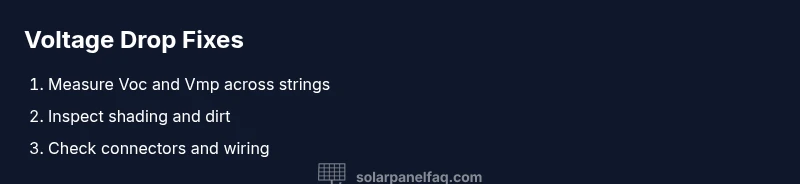
- Diagnose voltage drops with Voc and Vmp measurements.
- Address shading and dirt first to recover output.
- Inspect wiring and connectors for corrosion or looseness.
- Ensure MPPT range matches expected string voltages.
- Document measurements for warranty claims and future maintenance.