How to Check Solar Panel Efficiency: A Homeowner's Guide
Learn practical, safe methods to measure solar panel efficiency at home, interpret results, and optimize performance with simple tools and step-by-step guidance for homeowners.


To check solar panel efficiency, measure real-world power output against the system’s rated capacity and accounting for conditions. In short, you’ll compare your inverter’s AC output to the DC rating, review performance over several sunny days, and verify that shading, wiring, and panel cleanliness aren’t dragging performance. According to Solar Panel FAQ, a systematic, safe approach yields reliable results.
Understanding Solar Panel Efficiency
Efficiency is the ratio of electrical energy produced by solar panels to the solar energy that hits the panels. In practice, it reflects how effectively a panel converts sunlight into usable electricity and how system losses reduce that output. When homeowners talk about efficiency, they’re usually comparing the DC power rating of the panels (Pdc) with the actual electrical power delivered to the home (Ac). This involves multiple factors: cell technology, temperature, shading, soiling, wiring losses, and the inverter’s performance. The Solar Panel FAQ team notes that while lab-tested efficiency can be high, real-world efficiency often varies with weather, orientation, and maintenance. Understanding these concepts helps you read data correctly and avoid chasing unreliable readings. By aligning expectations with how efficiency is defined in your system, you’ll interpret measurements more accurately and plan practical improvements.
Baseline Measurements You Need
Before you start, establish a baseline so you can track changes over time. Record the system’s nominal DC rating (Pdc), the inverter’s AC rating, and the current weather conditions. Note the date and time, the panel orientation and tilt, and any shading or soiling observed on the modules. Baseline measurements also include your inverter’s reported current power output (Pac) and, if available, the data from a monitoring app. The goal is to compare apples to apples: the same conditions, same time window, and the same data source. This baseline helps you recognize genuine efficiency changes rather than daily fluctuations caused by clouds or temperature.
Tools and Resources to Check Efficiency
To check efficiency accurately, you’ll need a few essential tools and data sources. A digital multimeter or solar-safe meter lets you capture DC voltage and current on the array side, while a clamp meter can measure current on the AC side for a quick read of inverter output. An inverter manual or data sheet provides rated values to compare against. A solar irradiance meter or reliable local weather data helps you adjust expectations for sun intensity. Don’t forget a notebook or log app to document readings with timestamps, and a safe access plan for roof or rails if you need to inspect the panels up close.
Environmental and System Factors That Impact Efficiency
Solar panel performance is not constant. Temperature, shading from trees or buildings, and dirt or snow on the panels can significantly reduce output. Wiring losses, aging panels, and degraded bypass diodes also contribute to lower efficiency. Environmental conditions such as angle of sunlight, time of day, and seasonal changes affect the difference between rated DC power and actual AC power. Understanding these factors helps you interpret readings more accurately. If you notice persistent, unexplained drops, it’s time to inspect for shading, soiling, loose connections, or potential equipment faults.
Step-by-Step Approach to Check Efficiency at Home
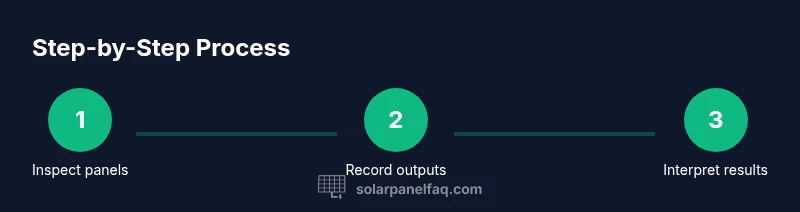
A practical, at-home approach combines measurements and data interpretation. Start with safety checks and data collection, then measure open-circuit voltage and short-circuit current on the DC side when safe. Next, record the inverter’s AC output and compare it with expected values based on irradiance data. Consider temperature and shade-adjusted expectations, then calculate a rough performance indicator. Finally, document results and decide on follow-up actions, whether cleaning, pruning shading, or professional inspection if readings remain significantly off.
Interpreting Readings and Taking Action
Interpreting results means distinguishing weather-related dips from systematic losses. If readings are consistently lower than expected under similar irradiance, investigate shading, soiling, or potential system faults. Use the data to plan actions such as panel cleaning, trimming nearby foliage, or scheduling a professional check for wiring, inverters, or microinverters. Remember that performance can naturally vary with weather, so use multi-day averages for a clearer picture. Your goal is to identify realistic, actionable adjustments that improve real-world output without overreacting to a single sunny or cloudy day.
Maintenance Practices That Sustain Efficiency
Regular maintenance helps preserve solar efficiency. Clean panels when dust, pollen, or bird droppings accumulate (avoid harsh methods that scratch glass). Keep modules free from shade-causing debris and ensure mounting hardware remains tight to prevent micro-movements that increase losses. Periodically review monitoring data to catch gradual declines that indicate aging components or degraded cells. If your system has microinverters or optimizers, ensure firmware is up to date and that sensors are reporting correctly. Sustained upkeep aligns with the goal of reliable, long-term performance.
Common Mistakes to Avoid and Safe Practices
Avoid common pitfalls such as measuring when panels are hot, which can skew readings, or attempting risky rooftop work without proper fall protection. Don’t rely on a single data point; rely on multi-day averages under consistent conditions. Never disconnect panels or tamper with wiring while the system is energized. When in doubt, involve a licensed professional, especially for high-voltage or roof-access tasks. Safety should always come first when performing efficiency checks or maintenance.
Tools & Materials
- Digital multimeter (DC capable)(Measure DC voltage and current on the DC side; follow safety guidelines)
- AC clamp meter(Quick check of inverter output (AC side) without opening the panel box)
- Inverter manual or data sheet(Reference ratings (Pdc, Pac) for comparison)
- Solar irradiance meter or reliable weather data(Helps adjust expectations based on sun intensity)
- Notebook or digital log app(Record timestamps, readings, and conditions)
- Safety gear (gloves, eye protection, non-slip shoes)(Essential for any on-roof or electrical work)
- Smartphone with monitoring app(Capture live data from your monitoring system)
- Ladder or roof access gear(Only if you need a visual inspection on the roof)
Steps
Estimated time: 60-90 minutes
- 1
Prepare safety and access
Before touching any equipment, power down only as safely allowed by your system. Wear PPE, inspect the access path, and confirm you have a clear, dry surface for working. This step reduces the risk of electric shock and falls while you gather baseline data.
Tip: If you must work on the roof, use a fall-arrest system and never work alone. - 2
Document system specs and conditions
Record the panel rating (Pdc), inverter rating (Pac), panel count, orientation, tilt, and current weather. This provides a baseline to compare against actual output and helps compute performance more accurately.
Tip: Take photos of labels and wiring configurations for reference. - 3
Check irradiance and weather
Note the sun angle, cloud cover, and ambient temperature. High irradiance days with moderate temperatures usually yield the best readings. If possible, use a solar irradiance meter or check a reliable weather source for the exact solar input.
Tip: Record readings at similar times across multiple days to smooth out variability. - 4
Measure DC-side values safely
With proper PPE and following manufacturer guidance, measure the panel array voltage (Voc) and current (Isc or Isdc) where accessible. Use the multimeter on the DC side; avoid disconnecting wiring if you’re unsure about shutdown procedures.
Tip: Be mindful of hot surfaces and avoid touching conductors with bare hands. - 5
Record AC-side output
Read the inverter output (Pac) or the monitoring app for real-time AC power delivered to the house. Compare this to the DC input figures under the same conditions to estimate efficiency.
Tip: Use the same time window for each reading to ensure comparability. - 6
Compute a simple performance check
Compute a rough performance indicator by comparing actual Pac to the expected Pac based on irradiance and Pdc. Note whether readings are within a reasonable range or if substantial gaps exist that warrant further investigation.
Tip: If you notice a persistent gap beyond expected variability, log the trend and plan follow-up steps. - 7
Document and plan follow-up
Summarize results, note any anomalies, and schedule maintenance or a professional inspection if readings remain consistently low. Store all data for trend analysis over time.
Tip: Set a reminder to repeat checks monthly or after major weather events.
Frequently Asked Questions
What is solar panel efficiency?
Solar panel efficiency measures how effectively a panel converts sunlight into electricity, influenced by temperature, shading, and system losses. It’s a comparison between the panel’s rated DC power and the actual electrical output under real conditions.
Efficiency is how well a solar panel converts sunlight into electricity, affected by temperature and shading. It’s best understood by comparing rated power to real output across conditions.
How often should I test solar panel efficiency?
Test frequency depends on system age, local conditions, and performance drift. Start with a quarterly check during seasonal changes, and increase to monthly during periods of abnormal energy loss.
You should test it quarterly, especially during seasonal changes, and more often if you notice performance drops.
Do temperature and shading affect efficiency?
Yes. Temperature typically reduces efficiency for many cell types, while shading from trees or nearby structures can dramatically cut output. Both factors should be considered when evaluating readings.
Temperature usually lowers efficiency, and shading can cause large drops in output. Always account for both when interpreting results.
Can I measure efficiency without opening the system?
Yes. Use AC output readings from the inverter or monitoring app, combined with known DC ratings and irradiance data, to estimate efficiency without opening hardware. For more precision, you can perform safe DC-side checks with proper equipment.
You can estimate efficiency by comparing inverter output to panel ratings and sun input, without opening the system.
What is a good efficiency rating?
Good efficiency depends on technology and conditions, but a stable, higher-than-average real-world output under similar sun is a sign of healthy performance. Look for readings that align with your system’s baseline and historical data.
A good rating means the real-world output is consistently strong for your setup under similar sun conditions.
Do modern inverters affect measured efficiency?
Inverters introduce losses on the AC side. While measuring, you’ll often see lower Pac than Pdc due to these losses. Monitoring helps attribute declines to either the panels or the inverter area correctly.
Inverters add some losses, so Pac is usually a bit lower than Pdc. Monitoring helps determine where losses come from.
Watch Video
Top Takeaways
- Compare actual AC output to system rating under consistent conditions.
- Account for shading, soiling, and temperature when interpreting results.
- Use multi-day readings and logs to track trends over time.
- Regular maintenance preserves long-term efficiency.