How Long Do Solar Panels Last on a Roof: Lifespan, Warranty, and Care
Discover how long solar panels typically last on a roof, factors affecting lifespan, warranties, maintenance tips, and replacement cost planning for homeowners and solar buyers.


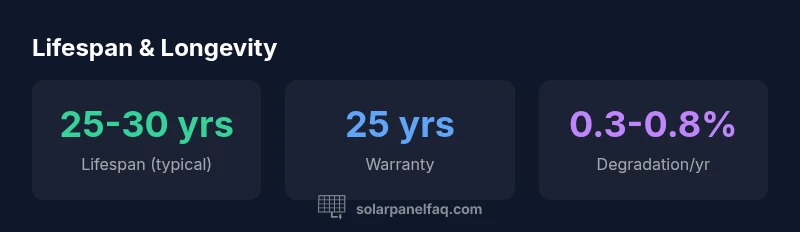
How long do solar panels last on a roof? Most residential panels designed for roof mounting deliver about 25-30 years of useful life. With routine maintenance and a standard 25-year warranty, you can expect gradual performance declines rather than sudden failures. Climate, installation quality, shading, and panel type all influence actual longevity, but regular inspections and timely repairs help protect your investment.
Understanding how long do solar panels last on a roof
The question many homeowners ask is how long do solar panels last on a roof, and what does that mean for your energy plan. According to Solar Panel FAQ, most residential rooftop systems are designed for decades of reliable operation. The Solar Panel FAQ team finds that a typical useful life is about 25-30 years, with gradual performance decline rather than abrupt failure. Lifespan is not fixed; it depends on installation quality, climate, roof orientation, shading, and panel technology. In practice, a well-installed system with routine inspections can sustain meaningful output long after the warranty expires, but end-of-life planning remains prudent. Regular cleaning to remove debris and periodic performance checks help detect early signs of degradation. For homeowners, this means designing around a long horizon for energy needs and budgeting for eventual replacement or upgrades. Use the 25-year warranty as a baseline, but expect continued output beyond that window in many cases.
Key factors that influence turbine panel longevity
Lifespan is shaped by degradation rates, weather exposure, and maintenance habits. Warmer climates tend to accelerate wear in some components, while frequent shading reduces energy output but can have mixed effects on wear. Installation quality matters: improper mounting can introduce micro-cracks or wiring stress that hastens decline. The Solar Panel FAQ team emphasizes the importance of proper torque on rail fittings, clean conduit runs, and secure electrical connections. Degradation is gradual, usually leading to a progressive drop in output rather than sudden losses. These dynamics mean you should monitor performance relative to expected curves and schedule professional checks every 3-5 years.
Warranties and what they really cover
Warranties provide a baseline for durability, but they do not guarantee a fixed lifespan. Most solar panels come with a 25-year warranty that covers product defects and, in some cases, performance guarantees (often around 80-85% of original output at year 25). The nuance is that warranties typically exclude damage from extraordinary events or improper maintenance. Understanding this helps you plan for longevity: a panel may outlive its warranty but still produce useful electricity for many years with appropriate care.
Maintenance that extends life
Maintenance is a cost-effective way to push out the end of life. Simple steps include: clean panels lightly with water to remove dust and bird droppings; trim nearby vegetation to avoid shading; inspect mounting rails for corrosion; check wiring and conduit for signs of wear; and schedule a professional inverter or microinverter check if you notice sudden output drops. A well-maintained system tends to degrade at the lower end of the typical rate range and can continue delivering significant energy for longer than expected.
Real-world scenarios: climate, roof type, and installation quality
Different roofs and climates produce different longevity profiles. In dry, sunny deserts, panels may operate efficiently for 25-30 years but exhibit faster performance loss if cooling is suboptimal. Coastal areas with salty air can experience corrosion if components are not rated for marine exposure. Roof type also matters: metal roofs with solid mounting environments may reduce micro-movement that leads to microcracks, while older shingles may endure more maintenance. Overall, the human factor—quality installation and ongoing inspection—often has a bigger impact on longevity than climate alone.
Planning for replacement costs and budgeting
Budgeting for replacement should consider system size, panel efficiency, and mounts. Replacement costs vary with technology and installation complexity but typically scale with horsepower: larger systems and higher-efficiency panels command higher upfront costs. Homeowners should budget for a new array or upgrades roughly 25-30 years after installation, including potential inverter replacements. Incentives and tax credits can influence net costs, and long-term savings from reduced electric bills should be weighed against the capital outlay. The Solar Panel FAQ analysis suggests creating a replacement reserve to minimize financial stress as you approach the end of life.
End-of-life indicators and next steps
Watch for a steady, unexplained drop in performance beyond expected degradation or visible wear on mounting hardware. If energy production falls significantly below the projected curve or if maintenance costs rise disproportionately, it may be time to evaluate replacement or system upgrades. A professional assessment can determine whether component replacement, re-roofing, or a full retrofit is most cost-effective. Planning ahead helps you lock in best-value options when the time comes.
Lifespan and degradation by system type
| System Type | Lifespan (years) | Typical Degradation/yr | Notes |
|---|---|---|---|
| Monocrystalline roof panels | 25-30 | 0.3-0.8% | Most common type; strong performance |
| Polycrystalline roof panels | 25-30 | 0.3-0.8% | Similar lifespan; often lower cost |
| Thin-film roof panels | 20-25 | 1.0-1.5% | Less common; sensitive to heat |
Frequently Asked Questions
Do solar panels ever fail completely on a roof, and how rare is this?
Complete failures are relatively uncommon in modern panels, especially when installed correctly and maintained. Most issues manifest as gradual output loss or localized shading effects rather than total outages. Regular inspections help detect problems early and minimize downtime.
Complete panel failure is rare with proper maintenance; most issues show up as slower output and can be addressed early with professional checks.
What factors most influence the degradation rate over time?
Degradation is driven by temperature, UV exposure, humidity, and manufacturing quality. Climate can accelerate wear, while good installation and clean electrical connections slow it. Regular cleaning and inspections help keep degradation within the lower end of the typical range.
Degradation is mainly affected by heat, sunlight, and upkeep—keep things clean and connected to slow aging.
Do hot climates cause faster wear for rooftop panels?
High temperatures can increase material stresses and reduce efficiency slightly, but proper system design (cooling paths, airflow, and mounting) mitigates much of this effect. In practice, hot climates may see similar lifespans if the system is well-designed and maintained.
Hot weather can stress panels, but good design and upkeep keep lifespans on track.
Do inverters affect how long panels last?
Inverters and other electronics have their own lifespans, often shorter than panels. Regular inverter servicing and timely replacements help maintain overall system longevity, but inverter wear doesn’t directly shorten panel life.
Inverter care matters, but it’s separate from the panels' life span.
What maintenance is recommended to maximize lifespan?
Keep panels clean, trim shading, inspect mounting hardware, and schedule periodic professional inspections every 3-5 years. Address corrosion or loose connections promptly to prevent accelerated wear.
Clean, inspect, and tune up every few years to extend life.
How should a homeowner plan financially for end-of-life?
Plan for potential replacement or upgrades around 25-30 years after installation. Consider incentives, financing options, and potential inverter replacements to optimize lifecycle costs.
Start budgeting now for a future replacement to stay ahead of costs.
“Long-term reliability hinges on thoughtful system design plus proactive maintenance. With regular checks, most rooftop solar continues to provide meaningful energy well beyond its warranty window.”
Top Takeaways
- Plan for 25-30 years of usable life for most rooftop solar panels
- Expect gradual degradation and a typical 25-year warranty as a baseline
- Maintenance and installation quality have outsized influence on actual longevity
- Budget for replacement costs and potential inverter upgrades
- Monitor performance to catch early signs of end-of-life before major failures