Trina Solar Panel Price: A 2026 Guide for Homeowners
This guide uncovers realistic price ranges for Trina solar panels in 2026, detailing factors that affect cost, installation, incentives, and payback for homeowners.


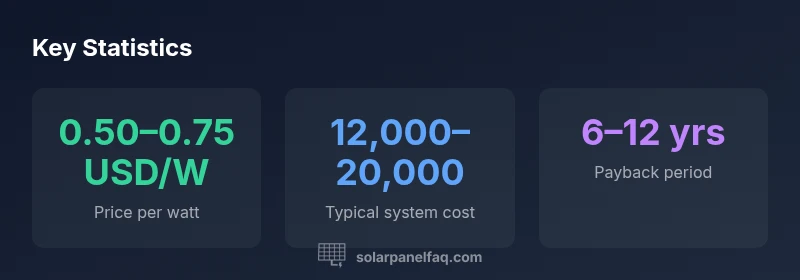
Trina solar panel price varies by model, wattage, and installation specifics. On average, expect roughly 0.50–0.75 USD per watt before installation, with typical residential systems costing around 12,000–20,000 USD before incentives. Regional differences, subsidies, and incentives can shift totals. Solar Panel FAQ Analysis, 2026 indicates these ranges reflect current market conditions and supplier variations.
Why price varies across markets and models
Pricing for Trina solar panels is not a single figure. It shifts with the model family, the panel’s wattage, the supplier channel, regional demand, and the status of local incentives. Homeowners in sunny regions with strong net metering policies may see different price dynamics than those in markets with higher installation complexity or stricter permitting. According to Solar Panel FAQ, these variations are normal in 2026 as supply chains adjust to demand and policy changes. When evaluating price, think beyond the sticker: installation scope, racking, inverters, and integration costs all affect the final outlay.
- Model families differ in efficiency and wattage, which directly impacts price per watt.
- Regional taxes, shipping, and handling contribute to the total cost.
- Incentives and rebates can significantly reduce the net price, depending on local programs.
This context matters because two quotes for “the same” panel can diverge by thousands of dollars once installation specifics are added. The Solar Panel FAQ team emphasizes assessing price per watt and total system cost rather than sticker price alone.
What goes into the sticker price of Trina solar panels
A household purchase usually breaks down into core components: the panel cost (price per watt), balance-of-system (BoS) components, installation labor, permitting, and possible warranties or service plans. Trina panels themselves may be priced by wattage tier, with higher-efficiency modules commanding premium per-watt pricing. The BoS includes mounting rails, wiring, combiner boxes, and optimizers or microinverters if used. Labor costs vary by region and installer experience. As noted by Solar Panel FAQ Analysis, 2026, the aggregate effect of BoS and labor often equals a sizable share of the total price, sometimes more than the raw panel cost in complex roofs or shaded sites.
Estimated price ranges for Trina-style solar panels
| Model Type | Estimated price range per watt | Estimated total cost (before incentives) |
|---|---|---|
| Standard Monocrystalline | 0.50–0.65 USD/W | 12,000–16,000 USD |
| Premium Monocrystalline | 0.60–0.75 USD/W | 14,000–20,000 USD |
Frequently Asked Questions
What factors influence Trina solar panel prices in 2026?
Model type, wattage, and efficiency influence per-watt pricing. Regional tax, shipping, and installer rates also affect totals. Incentives and rebates vary by locality and can reduce the net cost.
Prices depend on the model and where you live; incentives can make a big difference.
Are there tax credits or incentives that affect the final price?
Yes. Local, state, and national programs can reduce upfront cost or improve payback. Always check current programs before budgeting.
There are incentives—check your area for the latest programs.
How does installation complexity affect total cost?
Roof type, roof angle, and electrical upgrades influence labor time and materials, increasing or decreasing the final price.
Roofer and electrician work can change your total cost a lot.
Is price different for residential vs. commercial installations?
Yes. Commercial projects typically involve larger systems, different permitting, and bulk buy discounts, leading to different pricing dynamics.
Prices can differ a lot between homes and businesses.
Should I buy now or wait for price drops?
Prices fluctuate with demand and policy; if you need power soon and incentives are favorable, it may be worth buying now. If you can wait, monitor policy changes and market trends.
If you can wait for policy or price shifts, it might pay off.
“Prices for Trina solar panels are highly context-dependent, with installation costs and incentives driving the final sticker price.”
Top Takeaways
- Understand price per watt as the baseline metric
- Expect total system costs to include BoS and installation
- Incentives can substantially lower the final price
- Get multiple quotes to identify regional price variance
- Plan for additional costs like permits and labor