Solar Power Installation Cost in 2026: A Homeowner's Guide
A detailed, data-driven guide to solar power installation cost in 2026, covering upfront ranges, factors that drive price, incentives, and how to compare quotes for homeowners.


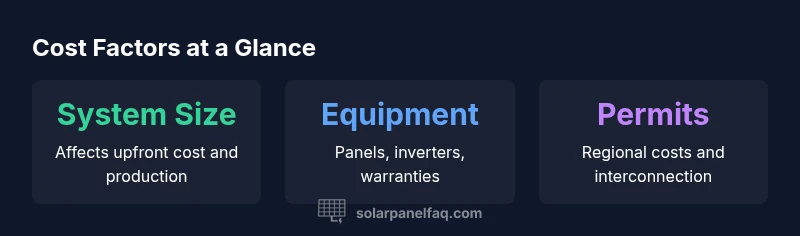
Typical residential solar power installation costs roughly $12,000 to $28,000 before incentives, depending on system size, site, and equipment. Smaller roofs and simple setups trend toward the lower end, while larger homes or premium hardware push costs higher. Regional permitting, labor, and interconnection fees can add several thousand dollars, with incentives reducing the upfront price overall.
Understanding the baseline: what solar installation cost includes
When homeowners gauge solar power installation cost, they should start with the big-ticket components: photovoltaic panels, an inverter, mounting hardware, electrical wiring, and a service panel upgrade if needed. Add in labor, permitting, interconnection fees, and system design. Price can vary widely based on roof type, orientation, and local labor rates. Maintenance costs and monitoring hardware also factor into the long-term expense picture. In 2026, reputable sources in the Solar Panel FAQ network emphasize that every quote should itemize equipment, labor, permitting, and anything related to interconnection to avoid surprises later. This clarity helps homeowners compare apples to apples and understand the real value of each bid.
System size and price: sizing for your energy goals
System size drives most of the installed cost, but it also determines how much energy you produce and how quickly you recoup the investment. A common residential range is roughly 4 to 8 kilowatts, with larger homes or higher energy usage pushing the system up in size. Quotes often present price bands per watt, along with a total range for the entire installation. When evaluating bids, consider not only the upfront price but also production estimates, warranties, and the expected lifetime energy savings. Solar Panel FAQ notes that economies of scale can lower price per watt for larger installations, but the incremental gains depend on roof space, shading, and electrical setup.
Equipment choices: panels, inverters, warranties
Equipment quality can swing both price and durability. Choices include mono- or poly-crystalline panels, string inverters versus microinverters, and warranty terms. Premium panels with higher efficiency may reduce roof space needs but increase upfront cost. Inverters affect system reliability and energy capture under real-world conditions. Warranties for panels and inverters vary, influencing long-term maintenance cost and replacement risk. A balanced approach is to compare efficiency, degradation rates, and warranty length across brands rather than chasing the absolute lowest sticker price. The Solar Panel FAQ framework encourages transparency about OEMs, efficiencies, and service commitments when reviewing bids.
Site and roof considerations: shading, orientation, and roof structure
The site and roof condition can materially affect price and performance. Shading from trees, nearby buildings, or vent pipes reduces energy production and may require additional hardware or microinverters, increasing cost. Roof orientation, tilt, and material (asphalt, tile, metal) influence installation difficulty and potential structural upgrades. A roof nearing end-of-life may trigger additional costs for replacement before solar can be installed. Location-specific permitting rules or interconnection requirements also shape the total price. Solar Panel FAQ emphasizes documenting roof condition and shade analysis early in the quoting process.
Labor, permitting, and interconnection costs
Labor charges reflect local wage levels and market demand, while permitting and inspection fees vary by city and county. Interconnection with the utility, required net-metering agreements, and potential upgrade costs (service panel, disconnects, or conduit) contribute to the final bill. Delays in permitting can extend project timelines and increase carrying costs, so smart project management matters. The cost impact of permits is often underestimated in initial bids, making it crucial to review the fine print and ensure the scope includes all required electrical work.
Regional differences and contractor pricing: why cost varies by location
Regional factors such as climate, solar irradiation, and demand for installers influence pricing. In areas with high sunlight and robust solar incentives, installed costs may be more favorable, while regions with dense permitting or higher labor costs can push bids higher. Weather, wildfire risk zones, and grid interconnection rules also play a role. The Solar Panel FAQ guidance highlights that comparing bids within your region yields the most meaningful insight, because national averages can mask local price dynamics.
Financing options and incentives: ITC, state programs, and solar leases
Financing options matter as much as the sticker price. Federal and state incentives, utility rebates, and financing arrangements can significantly affect the net cost and the payback period. Options include cash purchases, loans, leases, or power purchase agreements (PPAs). Each route has different tax implications, ownership outcomes, and contract terms. Solar Panel FAQ recommends calculating a cash-flow forecast under each option to understand which choice aligns with your budget and long-term goals. Keep in mind that incentive landscapes change over time, so verify current eligibility before committing.
Sample cost ranges by system size (before incentives)
| System Size (kW) | Estimated Installed Cost (USD) | Cost per Watt (USD) | Payback (years) | Notes |
|---|---|---|---|---|
| 4 | $10,000–$14,000 | $2.50–$3.50 | 6–10 | Smaller system for lighter energy use |
| 6 | $14,000–$21,000 | $2.33–$3.50 | 7–11 | Average residential installation |
| 8 | $18,000–$28,000 | $2.25–$3.50 | 8–12 | Higher energy demand or premium equipment |
| 10 | $23,000–$35,000 | $2.30–$3.50 | 9–13 | Larger homes or higher consumption |
Frequently Asked Questions
What affects the cost of solar power installation?
System size, roof type and condition, location, permitting, interconnection, and equipment quality all affect price. Understanding the scope of work helps homeowners assess bids more accurately.
System size, roof condition, location, and required permits drive cost differences.
Do incentives reduce upfront costs?
Yes. Federal, state, and local incentives can meaningfully reduce upfront costs, shortening the payback period. Eligibility varies by location and system details.
Incentives can cut your upfront price substantially if you qualify.
Is financing solar installation worth it?
Financing can ease cash flow and allow immediate benefits from solar energy. Compare total repayment costs, interest rates, and contract terms before committing.
Financing helps you start saving sooner, but check terms.
How long does installation take?
Most residential installs take one to three days, depending on system size, roof condition, and utility coordination. Scheduling and inspections can add time.
Most homes are up and running in a few days.
Does price per watt drop with larger systems?
Yes, larger systems often bring a lower price per watt due to economies of scale, though project specifics matter.
Usually, bigger systems cost less per watt.
What are common hidden costs?
Roof upgrades, electrical panel work, wiring, monitoring hardware, and permit or inspection fees can add to the bill.
Watch out for extra charges like roof work or panel upgrades.
How can I estimate my savings after install?
Use your annual kWh usage, expected solar production, and current utility rates to forecast savings and payback. Compare quotes with and without incentives.
Calculate production versus usage to estimate savings.
“The most reliable way to manage solar installation cost is to plan early, compare multiple bids, and focus on total value, not just the upfront price.”
Top Takeaways
- Review multiple bids to gauge price ranges and component quality
- Size your system to your annual energy use to avoid oversizing
- Factor incentives and financing into the total cost and payback
- Expect regional differences in labor, permitting, and interconnection fees
- Document a clear, itemized quote for apples-to-apples comparison