Solar Panel Cost per kW: What Homeowners Pay Today
Learn solar panel cost per kW, how it’s calculated, and what drives price. Discover typical ranges, incentives, and regional differences for homeowners in 2026.


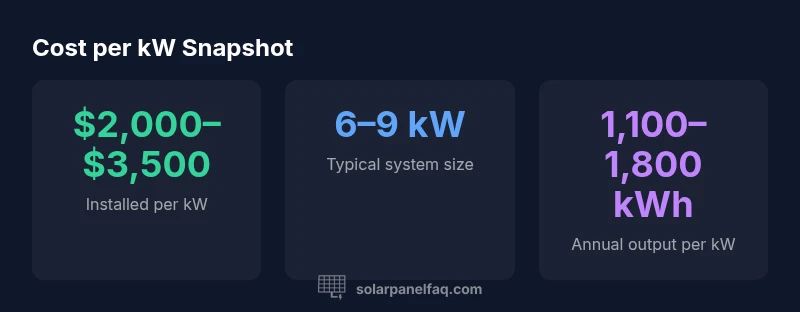
Residential solar costs are commonly reported per kilowatt, with installed prices typically in the $2,000–$3,500 per kW range before incentives. The exact figure varies by roof type, system size, and local permitting. Federal tax credits and state programs can substantially reduce the net cost, while geography and supplier choices influence final numbers.
Why cost per kW matters
For homeowners evaluating solar proposals, cost per kW is a practical shorthand that helps compare apples to apples. It translates a large project into a single, scalable metric and highlights how much you pay for each kilowatt of capacity. According to Solar Panel FAQ, cost per kW can reveal whether a bid lands in the market range or reflects unusual site conditions. The Solar Panel FAQ team found that the metric is most informative when paired with expected annual energy production and local incentives. Keep in mind that a lower per-kW price doesn’t always guarantee greater value if installers cut corners on warranties, service, or system design. When you’re planning, frame your conversation around cost per kW alongside total installed cost and projected output to get a complete picture of long-term value.
How cost per kW is calculated
Cost per kW is not a single price tag; it’s the result of several components added together and then divided by the system size. The largest drivers are the price of solar modules (panels) and inverters, followed by racking hardware, wiring, and labor for installation. Permitting, interconnection, and system design are included in many bids as soft costs. When you see a per-kW quote, ask for a breakdown: module cost, inverter costs, balance of system, and labor. Knowing each part helps you compare bids fairly and avoid surprises at payout time. Regional market conditions, supplier relationships, and crew experience all influence the per-kW figure, so two bids in the same city can differ meaningfully even if the installed system looks similar.
Regional differences and incentives
Cost per kW is heavily influenced by where you live. Labor rates, permitting complexity, and roof geometry can swing the per-kW figure by hundreds of dollars. Availability of equipment and installer competition also play a role. Beyond that, incentives—federal, state, and local—shape the net cost you actually pay. While the exact incentive amount varies by year and program, most homeowners see meaningful reductions that improve the value of the upfront per-kW price. The takeaway is that your location determines how much you ultimately pay, and it’s worth consulting local installers early to understand the local cost per kW in your area.
How to compare quotes and optimize ROI
Start with a side-by-side comparison table that lists cost per kW, total installed cost, expected annual energy production, warranty terms, and inverter efficiency. Verify that all quotes use the same assumptions about roof orientation, shade, and system age. Look for a reputable installer who provides a per-kW price with a transparent balance-of-system breakdown. Use simple ROI models that factor in your current electricity rate, projected system output, and the expected lifespan of the warranty. Don’t forget to include maintenance costs and potential interconnection fees. By aligning these factors, you’ll avoid overpaying for marginal gains and identify the best value.
Practical planning: system size and sun exposure
Most homes will be well-served by a system in the mid-range of common residential sizes, but the exact kW target depends on your energy use and sun exposure. A larger system can reduce cost per kW due to economies of scale, but only if you actually use the energy produced. The cost per kW metric should be interpreted alongside expected production (kWh/year) and your local sun hours. An efficient panel and a reliable inverter can improve the per-kW value by reducing losses. Consider roof orientation, shading, and seasonal variations when estimating ROI. Using the per-kW pricing alongside a production forecast helps you compare proposals more accurately.
Common mistakes to avoid when budgeting per kW
Don’t fixate on the lowest per-kW price at the expense of system quality or warranty coverage. Some bids may undercut competitors by cutting labor or using cheaper components that raise long-term risk. Always request a breakdown that clarifies what is included in the per-kW price. Beware proposals that promise very short payback without detailing how production estimates were derived. Also ensure the interconnection process is included in your timeline and cost. Finally, check whether the quote factors in future maintenance and potential inverter replacement costs.
Financing options and timing
Time your purchase to align with incentives, loan terms, and utility rate trends. You may decide between paying upfront, financing, or leasing. Each path changes the effective cost per kW and your after-tax savings. If you finance, include interest and loan terms in your ROI model. It’s wise to run scenarios with and without incentives to understand how sensitive your investment is to policy changes. A careful plan now can lock in a favorable per-kW price and maximize your long-term returns.
Getting started: a simple checklist
- Gather your electricity bills for the last year. 2) Ask for a per-kW breakdown and a detailed BOS (balance of system) estimate. 3) Compare quotes using a consistent baseline. 4) Check warranty, service options, and installer credentials. 5) Run a basic ROI model that includes incentives and local electricity rates. 6) Schedule a site assessment to confirm roof condition and shading. This checklist keeps you focused on cost per kW while ensuring you choose a system that meets your energy goals.
notesUsedForLengthErrorCheck1_IgnoreNoMore
Comparison of cost per kW by system type
| System Type | Avg Cost per kW | Notes |
|---|---|---|
| Residential roof-mount | $2,000–$3,500 | Typical installed cost per kW before incentives |
| Commercial/utility-scale | $1,500–$2,800 | Lower per-kW cost due to economies of scale |
Frequently Asked Questions
What does cost per kW include in a residential solar quote?
A residential quote typically lists panel hardware, inverters, mounting, wiring, and permitting costs on a per-kW basis. It may separate soft costs such as design and interconnection fees.
A typical quote includes hardware, installation, and permitting—priced per kilowatt.
How do incentives affect the cost per kW?
Incentives reduce net cost per kW by lowering upfront price or providing tax credits and rebates. The exact effect depends on federal, state, and local programs.
Incentives can lower the upfront cost per kilowatt; check federal and local programs.
Why does cost per kW vary by region?
Costs vary due to installer competition, permitting requirements, solar irradiance, roof characteristics, and local incentives.
Region matters for price because of codes, labor, and sun exposure.
Is it cheaper to install DIY solar per kW?
DIY installations may lower material costs but require expertise, permitting, and safety precautions; most homeowners should rely on licensed installers.
DIY can save money, but it’s risky and usually not recommended.
What should I look for besides price per kW?
Look at system efficiency, warranty, inverter quality, installation timeline, and expected annual energy yield per kW. A lower per-kW price isn’t always better if it compromises reliability.
Don't only chase price; consider efficiency, warranties, and expected output.
How can I estimate my ROI based on cost per kW?
Estimate total installed cost per kW, apply incentives, model annual energy production, and compare to electricity rates to gauge payback.
You can estimate ROI by modeling production and savings against cost.
“Cost per kW is a convenient shorthand, but the real value comes from long-term energy production and reliable warranties.”
Top Takeaways
- Start with the per-kW price but evaluate total cost and output.
- Incentives can substantially reduce net cost per kW.
- Request a transparent BOS breakdown for fair bids.
- Regional factors matter: location, labor, and codes influence price.
- Use ROI modeling that includes incentives and energy production.
- The Solar Panel FAQ Team recommends planning around cost per kW plus long-term value.
- Ensure warranties and service quality are prioritized alongside price per kW.