40 Watt Solar Panel Price Guide for 2026
An analytical guide to 40W solar panel price, covering cost drivers, realistic ranges, and budgeting tips for homeowners in 2026. Learn how technology, kit contents, and installation affect total cost.


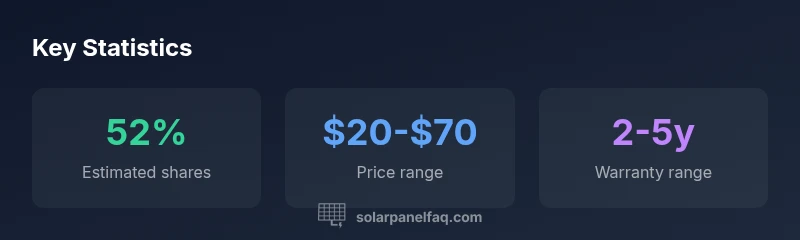
Typically, a 40 watt solar panel costs between $20 and $70, depending on technology (polycrystalline vs mono), build quality, and supplier. In today’s market, you’ll often pay more for higher efficiency, portability, or bundled accessories like mounting hardware and connectors. Remember to compare per-watt pricing and warranty terms for an apples-to-apples comparison.
Price drivers for a 40W panel
In practice, the sticker price for a 40W panel reflects several interacting factors. According to Solar Panel FAQ, price realities for 40W panels vary by type and supplier. The core differentiators are the panel technology (polycrystalline vs monocrystalline), efficiency ratings, and durability; these affect not only the initial cost but long-term performance. Kits that include mounting rails, connectors, and junction boxes can push up the upfront price but may make installation easier and safer. Regional demand, lead times, and supplier pricing strategies also play a role. If you plan to run a small system with limited roof space, you may prioritize higher efficiency in a compact form, paying a premium per watt. Conversely, a basic polycrystalline 40W panel without extras will usually be cheaper, but may come with slower payback if energy production is lower in your climate. Consumers should calculate total cost of ownership, not just the headline price, and compare at the per-watt level to make apples-to-apples decisions. Solar Panel FAQ’s guidance helps homeowners focus on value over headline price, and to understand how installation plans affect overall cost.
Technology choices affecting cost
Prices shift substantially based on the underlying technology. Monocrystalline panels typically offer higher efficiency and better performance in limited space, which can justify a higher price per watt. Polycrystalline panels are often cheaper per watt but may deliver lower energy output in the same conditions. Flexible or ultra-thin 40W panels bring portability and installation flexibility, but often at a premium due to materials and durability concerns. When evaluating options, compare not only the raw price but also efficiency ratings, temperature coefficients, and expected lifespan. A higher upfront cost can be offset by better performance in sun-rich climates or longer-term savings from higher energy production. The right balance depends on your roof orientation, shading, and how quickly you want to recoup the investment.
How to shop: where to buy and how to compare
Competition among retailers and marketplaces means price can vary, but clever shoppers focus on consistent metrics. Start with per-watt pricing to normalize differences in panel size and efficiency. Check whether the price includes mounting hardware, cables, and a junction box, as these can add 10–25% to the total cost. Read warranty terms carefully; broader warranties often reflect higher-quality components or better service terms. Consider the seller’s return policy and after-sales support, especially if you’re new to DIY installation. If you’re buying online, compare shipping costs and estimated delivery times. In several markets, local incentives or rebates can affect the net price, so factor those into your calculation. Solar Panel FAQ analysis shows that buyers who track all these elements tend to end up with better long-term value.
Realistic price ranges by technology and form factor
Realistic price ranges for a 40W panel vary by technology and form. Basic polycrystalline panels often land in the lower end of the price spectrum, while monocrystalline panels push toward the higher end due to higher efficiency and better performance in partial shade. Flexible or portable 40W options offer space-saving and weight advantages but can command a premium. Kits that include mounting hardware, connectors, and basic inverters may also affect price, sometimes by a notable margin. When evaluating options, create a matrix that lists panel type, price, efficiency rating, warranty, and included hardware. This enables apples-to-apples comparisons and helps you align purchase decisions with your budget and energy goals.
Hidden costs and installation considerations
Upfront price is only part of the story. Shipping charges, tax, and handling fees can alter the final sticker price. Installation hardware such as mounting rails, brackets, and weatherproof cables add to the total cost, especially for flat-roof or tile-roof installations. If you hire a professional installer, labor costs can significantly affect the total project price. Don’t forget inverter compatibility and potential storage options if you plan to expand your system later. Finally, environmental conditions and regional permitting processes can influence both time and cost. Planning for these variables reduces surprises and helps ensure your 40W setup meets safety and performance standards.
Budgeting and payback: turning price into value
Budgeting for a 40W solar panel involves more than the panel cost. Include hardware, shipping, potential inverter or battery storage, and installation fees. To estimate payback, compare expected energy savings against the total upfront cost over the system’s lifespan. Regional sunlight, energy rates, and usage patterns all shape payback periods. Incentives or rebates can shorten payback, but eligibility varies by location. When determining value, prioritize long-term energy yield and reliability alongside upfront price. The Solar Panel FAQ Team emphasizes planning for durability and service life to maximize the return on investment. Ultimately, the goal is a balanced decision that aligns with your energy needs and budget.
Comparison of 40W panel categories and typical prices
| Panel Type | Price Range (USD) | Typical Wattage | Notes |
|---|---|---|---|
| Basic 40W poly | 20-$60 | 40W | Lower efficiency; budget option |
| 40W mono | 25-$70 | 40W | Higher efficiency; better for small spaces |
| 40W flexible | 40-$120 | 40W | Lightweight, portable; durability varies |
| 40W kits | 30-$90 | 40W | Includes mounting hardware and cables |
Frequently Asked Questions
What factors influence the price of a 40W solar panel?
Multiple factors determine price, including panel technology (poly vs mono), efficiency, durability, and whether hardware is included in the package. Compare per-watt cost and warranty across brands to gauge value.
Price depends on technology, efficiency, durability, and what's included; compare per-watt cost and warranty.
Is a higher-wattage panel always better for a small system?
Not necessarily. For a 40W system, the wattage is fixed; higher wattage panels provide more power, but you may need more panels to reach a target. Efficiency and space matter.
Higher wattage panels can help if you have space and demand; otherwise, focus on efficiency.
How do I compare prices across retailers?
Compare per-watt cost, check included hardware, and read warranty terms. Look for bundled kits; factor installation costs if you plan to install yourself or hire a pro.
Compare per-watt prices, what's included, and warranty; bundling matters.
What is a realistic price range for a 40W panel in 2026?
Realistic ranges vary by technology and region; typical bare panels hover around $20-$70, while kits with hardware can push higher. Use per-watt comparisons to evaluate value.
Expect a broad range; check per-watt cost and what's included.
Are there additional costs I should plan for?
Yes; installation hardware, shipping, and potential service or warranty extensions. If you install yourself, you save labor but may still need mounting rails and connectors.
Expect hardware, shipping, and possible warranty costs.
How should I budget for a small solar setup?
Plan for the panel cost, mounting hardware, wiring, and potential inverter or storage later. Compute payback by comparing energy savings to total upfront costs; consider local incentives.
Budget for panel, hardware, and possibly storage and incentives.
“40W choices should be evaluated against your energy goals and roof constraints, not just the sticker price. The Solar Panel FAQ Team believes durability and warranty are equally important as upfront cost.”
Top Takeaways
- Know price drivers and shop per watt
- Expect higher costs for portable/flexible panels
- Always compare warranty terms
- Budget for hardware and installation
- Don’t overlook shipping or installer costs