Solar Panel 80W Price in 2026: A Practical Guide
Discover current price ranges for an 80W solar panel, the factors that influence 80W panel pricing, and practical steps to compare options and save money before you buy.


What an 80W Solar Panel Is and Why Price Varies
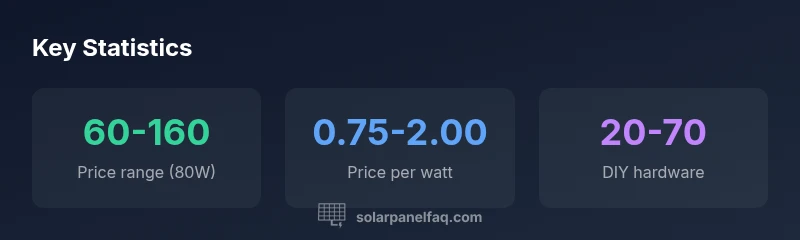
According to Solar Panel FAQ, an 80W solar panel is a compact module well-suited for small solar arrays, portable setups, or backup systems. The solar panel 80w price you’ll encounter depends on several intertwined factors, including cell technology (monocrystalline vs polycrystalline), manufacturer quality, and warranty length. In practice, price differences reflect not just the wattage, but the efficiency, longevity, and performance under real-world conditions. When evaluating options, homeowners should look beyond sticker price and consider how a panel will perform in their specific space and climate. Brand reputation and regional supply chains also shape costs, so a panel that’s affordable in one market may be pricier somewhere else. As you research, aim to balance upfront costs with expected lifetime energy production and reliability.
To frame the buying decision, identify your goals: space constraints, aesthetics, and whether the panel will be part of a larger solar array. If you’re limited by roof area, a higher-efficiency 80W model could deliver more energy per square foot, potentially reducing the total number of panels needed. Conversely, if space is abundant, a more budget-friendly 80W panel with a solid warranty may suffice. The Solar Panel FAQ team emphasizes that price should be considered alongside performance metrics such as efficiency ratings, temperature coefficient, and warranty terms to avoid undersizing a system or facing expensive replacements later.
Key Factors Driving 80W Panel Price
Deciding on an 80W panel price requires weighing several core drivers:
- Technology and efficiency: Monocrystalline cells often command higher prices than polycrystalline for the same wattage due to greater efficiency and space-conserving benefits.
- Build quality and warranty: Panels with longer warranties and robust certifications tend to cost more upfront but reduce long-term risk.
- Brand and availability: Popular brands with wide distribution may price aggressively, while newer or premium brands may charge a premium for perceived reliability.
- Certifications and testing: UL, IEC, and other safety/testing marks can influence price due to testing costs that are reflected in the sticker price.
- Supply-chain and logistics: Regional demand, shipping costs, and import duties can shift price bands.
Practical takeaway: when comparing 80W panels, adjust for the total cost of ownership, not just the upfront price. A slightly pricier option today might deliver better this-year and next-year energy returns due to higher efficiency and lower degradation over time.
How to Compare 80W Panels and Save Money
A disciplined comparison approach helps you maximize value:
- Focus on price per watt: Convert sticker price to a per-watt figure to normalize across models.
- Check efficiency and performance data: Higher efficiency panels can produce more energy in a fixed space, potentially lowering installation costs.
- Review warranties and certifications: A longer warranty and recognized certifications reduce the risk of early failure.
- Consider temperature and shading tolerance: Panels that perform better in high heat or partial shading may yield more energy in real-world conditions.
- Size up the system: If you plan to expand, choose panels compatible with future additions and a bank of modules that scales cleanly.
- Factor installation costs: DIY installation can lower upfront costs, but ensure mounting hardware, wiring, and safety requirements are met.
For homeowners evaluating the 80W price, it’s sensible to compile a short list of 3–5 panels and compare their per-watt costs, warranties, and expected energy output over 20 years. This approach helps you avoid overpaying for brand-name prestige while still securing a reliable product.
DIY vs Professional Installation: Cost Implications
Installation costs can swing the overall economics of an 80W panel. If you’re comfortable with basic electrical work and have the right tools, a DIY setup can trim several hundred dollars from the total project, especially when adding only one to three panels. However, professional installation offers benefits: optimized angle, correct wiring, and a warranty that covers workmanship. For roof-mounted configurations, a professional assessment often uncovers roof-condition issues or shading problems that significantly affect cost and energy yield. When comparing quotes, request a breakdown: panel price, mounting hardware, racking, wiring, inverter compatibility, and an estimated energy yield over the system’s lifetime. The solar market also shows that installation costs can be a meaningful portion of the total, so don’t overlook these components when calculating your payback period.
Practical Steps to Get a Solid Deal on an 80W Panel
- Define your goals: space, energy needs, and budget. A clear brief helps narrow models that fit.
- Gather multiple quotes: get at least 3 quotes from reputable installers or retailers to benchmark prices.
- Verify after-sales support: check warranty terms, return policies, and service networks.
- Look for bundled offers: some suppliers include mounting hardware or monitoring services in a package.
- Monitor and revisit: after installation, track performance against expectations and reassess if you’re upgrading or expanding the system.