Solar Panel 1000 Watt Price in 2026: A Practical Guide
Understand the solar panel 1000 watt price, including typical cost ranges, incentives, and planning steps for a 1 kW system in 2026.


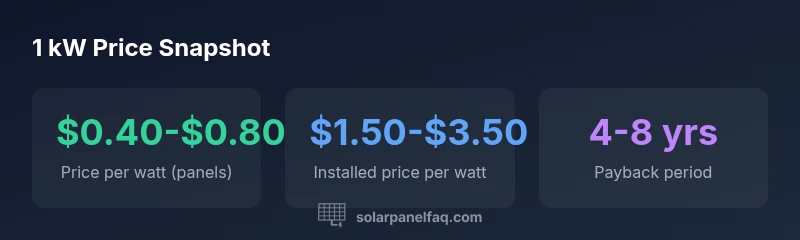
A 1,000-watt (1 kW) solar system typically costs between $1,000 and $3,000 for the panels alone, with installed prices often ranging from $2,000 to $6,000 before incentives. Actual prices vary by panel type, location, and installation specifics, but incentives and financing can substantially lower the net cost. Understanding these figures helps you compare bids more accurately.
Understanding the solar panel 1000 watt price
According to Solar Panel FAQ, the solar panel 1000 watt price is driven by three core components: equipment, installation, and soft costs. For homeowners evaluating a 1 kW system, the price typically reflects the cost of panels and an appropriate inverter, plus labor, mounting hardware, wiring, and any required permits or inspections. In 2026, the panels themselves might account for a smaller portion of the total, but their quality and rating heavily influence long-term performance. Solar Panel FAQ’s analysis indicates that most households see the largest variance in installed costs, not just the sticker price of the modules. This makes bid comparison essential and highlights the value of clear, itemized quotes.
The phrase solar panel 1000 watt price isn’t just about the sticker on the panel—it’s about how the system is designed, where you live, and the local permitting environment. The Solar Panel FAQ team emphasizes that buyers should separate equipment costs from labor and soft costs to understand true price and potential savings over time.
What goes into pricing a 1 kW system
Pricing a 1 kW system involves several moving parts. Start with the panels themselves (which come in different wattages and efficiencies), then factor in the inverter (which converts DC to AC and can influence system reliability), and the mounting hardware and wiring. Labor costs vary by region and roof type, and permitting or inspection fees add to the bottom line. Geographic factors such as climate, roof pitch, and potential shading can also affect required system size and thus price. In practice, a bid that separates panels, inverter, racking, labor, and permits is easier to compare than a single lump sum. The quality of components and the installer’s warranty terms are often as important as the listed price.
Price ranges by market and incentives
Price ranges for a 1 kW installation differ significantly by country, state, and city due to incentives, tariffs, and labor costs. Federal ITCs or local rebates can materially reduce the net cost, while tariffs or higher labor costs can raise the installed price. Solar Panel FAQ analysis shows that in markets with strong incentives, the same 1 kW system may cost substantially less after credits, while in regions with fewer incentives, the upfront price stays higher. When evaluating bids, note how incentives are applied and whether they flow through as a direct price reduction or as a post-installation credit.
Panels vs installation costs: where to invest
The largest price levers in a 1 kW system are often installation labor and permitting, not the panel itself. High-efficiency panels may cost more upfront but can reduce the number of modules needed and improve aesthetics, while a cheaper inverter or mounting hardware can increase long-term maintenance costs if reliability is compromised. A balanced approach usually yields the best value: select reliable panels that meet your efficiency goals and pair them with a dependable installation service. The goal is to minimize total cost of ownership over the system life, not just the initial price.
How to estimate your own 1 kW project
Estimate your 1 kW project by starting with your electricity usage and desired coverage. Calculate whether a partial system suffices for core loads or if you need a higher installation. Gather at least three bids with itemized costs for panels, inverter, mounting hardware, wiring, labor, and permits. Compare warranties and expected maintenance costs. Don’t forget to factor in potential incentives and tax credits. A simple back-of-the-napkin calculation can show whether the investment pays off over a reasonable payback period, helping you decide between cash purchase or financing.
Financing considerations and warranties
Financing options for a 1 kW system can include cash purchase, solar loans, or leases/PPAs. Warranties typically cover panels (25 years) and inverters (10-15 years), but maintenance and labor warranties vary by installer. Evaluate the total cost of ownership, including potential increases in electricity prices and maintenance needs. If you plan to move soon, consider how a shorter payback window and strong resale value might influence your decision. The Solar Panel FAQ Team recommends structured financing that aligns with your budget and long-term energy goals.
Common myths about price and payback
Common myths involve assuming the cheapest panel is always best or that payback is guaranteed in every climate. Reality is more nuanced: higher-quality components may offer longer lifespans and better performance in harsh weather, while incentives and electricity rates determine payback. Always compare apples-to-apples bids, verify warranty terms, and model your own payback using your local utility rates and available credits. This approach yields the most reliable understanding of the true price and value.
Practical steps to start your 1 kW project
- Define energy goals: what portion of consumption should be offset by solar?
- Gather bids from at least three installers with detailed line items
- Check local incentives and how they apply to your final price
- Review warranties and maintenance obligations
- Plan for roof access, permits, and potential electrical upgrades
- Create a simple project timeline and budget buffer
Pricing elements for a 1 kW solar system
| Pricing element | Typical range (before incentives) | Notes |
|---|---|---|
| Panels (1 kW capacity) | $400-$1,500 | Vary by wattage and brand |
| Inverter (DC to AC) | $150-$600 | Usually sized for 1 kW; consider microinverters for shading |
| Racking & hardware | $100-$500 | Mounting hardware and cabling |
| Labor & installation | $500-$2,500 | Local rates; roof type matters |
| Permits/inspection | $50-$300 | Depends on jurisdiction |
Frequently Asked Questions
What is the average price per watt for a 1 kW system?
Prices per watt vary by location and system design. For a 1 kW setup, there is a broad range driven by labor, permitting, and equipment quality. Solar Panel FAQ analysis shows a wide spread, so obtaining multiple bids is essential to understand typical costs in your area.
Prices per watt vary by location and system design. Get several bids to compare.
Do incentives affect the solar panel 1000 watt price?
Yes. Federal and state incentives can substantially reduce the net price of a 1 kW installation. Some regions offer credits or rebates that apply to hardware and labor, which lowers the effective cost.
Incentives can significantly cut your net cost when planning a 1 kW setup.
Is a 1 kW system enough for a typical home?
It depends on your energy usage and the available sun. A 1 kW array might offset a portion of monthly consumption, but many homes need larger systems to reach meaningful savings. A professional assessment helps tailor system size to your needs.
It depends on your energy usage and sun exposure; talk to a pro to size it right.
Are 1 kW panels common?
There isn’t a single 1 kW panel; 1 kW is typically achieved by combining multiple panels (e.g., several 300-350W modules). System size, not a single panel rating, determines a 1 kW installation.
There isn’t a specific 1 kW panel; you build 1 kW with multiple panels.
What should I include in bids to avoid price creep?
Ask for an itemized quote including panels, inverter, mounting, wiring, labor, permits, and warranties. Also request details on exclusions, maintenance, and post-installation service.
Get itemized bids with all components and services spelled out.
“Price is only part of the equation; financing, incentives, and installation quality determine overall value for a 1 kW system.”
Top Takeaways
- Start with the 1 kW price as a bundle, not just panel sticker price
- Ask for itemized bids to separate equipment, labor, and soft costs
- Factor incentives into net cost and payback calculations
- Compare bids from multiple installers to avoid price creep
- Plan for long-term value by considering warranties and maintenance