10kw Solar System Cost: A 2026 Guide for Homeowners
Understand the true cost of a 10kw solar system, including installed price ranges, regional differences, incentives, and payback estimates for 2026. A practical guide for homeowners considering solar.


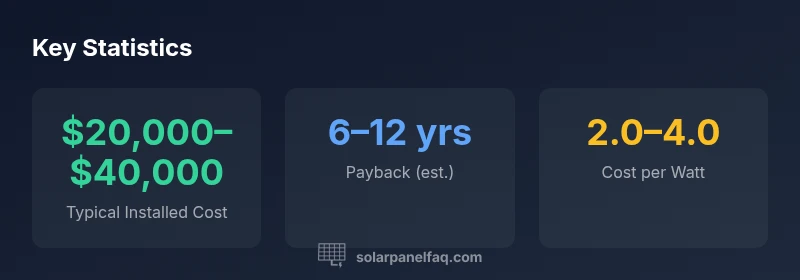
According to Solar Panel FAQ Analysis, 2026, the 10kw solar system cost for a typical U.S. installation ranges roughly between $20,000 and $40,000 before incentives. The final price varies with panel type, inverter, mounting, labor, and permitting. In practice, incentives and regional differences can significantly alter net cost, so compare quotes carefully and consider long-term savings.
Why a 10kw System Is a Popular Choice for Homes
For many homeowners, a 10kw solar system hits a balance between enough annual energy generation to cover a substantial share of household consumption and a manageable installation size. When you compare the 10kw solar system cost against typical electricity bills and demand charges, the system often pays back over time through reduced energy expenses. The Solar Panel FAQ team has found that most homes with average daily usage see meaningful savings by the third to seventh year, depending on local rates and incentives. In this guide, we unpack what drives the price, how to read a quote, and how to structure financing so the upfront cost doesn’t overshadow long-term value.
What Drives the 10kw Solar System Cost
Cost is driven by several big-ticket items: the solar panels themselves (monocrystalline vs polycrystalline), the inverter technology (string vs microinverters), racking and wiring, and labor for installation and permitting. Higher-efficiency panels typically cost more upfront but can squeeze more energy out of limited roof space, potentially improving payback. Inverters impact system performance and longevity, and advanced monitoring adds a bit more value. Soft costs—permits, inspection fees, and interconnection charges—vary by jurisdiction and can swing the total price by a few thousand dollars in either direction. The combination of parts, roof type, and install complexity often explains the majority of the 10kw system cost swing.
Regional Variations and System-Specific Factors
Where you live shapes both price and performance. Labor costs differ across regions, and permitting processes can add time and expense. Interconnection fees, net-metering rules, and local incentives also influence net cost. For example, coastal climates may need higher-quality equipment to withstand harsher weather, while regions with aggressive rebates can shorten payback. The 2026 landscape continues to show policy-driven variability, so a quote in one state can be materially different from another even for the same 10kW configuration. Homeowners should collect multiple bids and ask installers to itemize components, warranties, and expected production.
Financing, Incentives, and Paying for a 10kW System
Financing options affect the perceived cost more than the list price. You can pay upfront to maximize cash savings, or finance through a loan or lease product designed for solar. Federal and state incentives reduce the net price and alter payback timelines, so accounting for these incentives is essential. When evaluating quotes, separate the base price from incentives and monitor any periodically changing policy details that could shift the net cost in the coming years. This framing helps homeowners compare apples-to-apples and avoid overstating short-term out-of-pocket expenses.
Data-Driven Cost Breakdown: Hardware vs. Soft Costs
A typical 10kW system splits roughly into hardware and soft costs, with hardware including panels, inverters, and mounting hardware, and soft costs covering permitting, design, and labor. In practice, hardware accounts for about half to two-thirds of the installed price, while soft costs fill the remainder. Your exact split depends on the quality of components and the complexity of the roof. For homeowners evaluating quotes, request a line-by-line breakdown and a warranty summary to ensure you understand what you’re paying for and what you’re protected against over the life of the system.
How Incentives Shape Net Price and Payback
Federal ITC programs, state incentives, and local rebates can materially lower net cost. While the headline price may look high, the net price after incentives often reflects a meaningful reduction that improves the payback period. It’s essential to verify eligibility and documentation requirements ahead of time and to confirm whether incentives apply to both hardware and installation costs. A thoughtful comparison should include post-incentive cost estimates, expected annual energy production, and realistic degradation assumptions to forecast long-term savings.
Reading Quotes and Quotes: How to Compare Quotes Effectively
When you receive quotes, compare the same scope of work across bidders. Look for consistent assumptions about system size, orientation, shading, and warranty terms. Ask for the performance ratio and expected annual production (in kWh) so you can estimate annual savings against your current electricity rate. A well-structured quote should also define service I load, monitoring options, and maintenance intervals. With a careful approach, a 10kw solar system cost becomes a well-justified investment rather than a single price tag.
Long-Term Maintenance and Warranties to Consider
Warranty coverage matters as much as up-front cost. Panels typically come with 25-year power output warranties, inverters with 10–12 year warranties or longer for premium models, and workmanship warranties from installers. Maintenance costs are generally modest but not negligible, especially for older roofs or if re-roofing occurs during the system’s life. Budget for occasional cleaning, inspection, and potential module cleaning services to maintain performance. A clear warranty map helps protect your investment over 25+ years.
How to Start: Step-by-Step To-Do List For Your 10kW Project
- Gather energy usage data and roof details. 2) Obtain multiple quotes with itemized cost breakdowns. 3) Check installer licenses and local references. 4) Compare post-incentive costs and payback estimates. 5) Review warranties and service agreements. 6) Schedule a site assessment to confirm roof suitability and any needed upgrades.
Example cost and value drivers for a 10kW solar system in the U.S.
| Aspect | Typical installed cost range | Key drivers | Notes |
|---|---|---|---|
| System size (10 kW) | $20,000–$40,000 | Panels, inverter, racking, labor | Assumes standard components and a typical roof area |
| Installed price range (nationwide) | $20,000–$40,000 | Regional labor and permitting | Before incentives and tax credits |
| Payback period (est.) | 6–12 years | Energy usage, rates, incentives | Depends on local utility tariffs and consumption habits |
| Cost per watt (installed) | $2.00–$4.00 | Module quality, inverter choice | Higher efficiency hardware increases upfront cost |
Frequently Asked Questions
What is the typical installed cost for a 10kW system in the United States?
A typical installed cost ranges from about $20,000 to $40,000 before incentives, depending on components and labor. Quotes should itemize hardware, labor, and permitting so you can compare net costs.
A typical 10kW system costs between twenty and forty thousand dollars before incentives. Compare line-by-line quotes to understand net costs after incentives.
How does cost vary by region?
Costs vary with local labor rates, permitting fees, and interconnection charges. Regions with strong incentives often show lower net prices. Always ask for regional scenarios and expected incentive applicability in your area.
Costs differ by region due to labor, permitting, and interconnection rules; check incentives for your location.
Do incentives affect the final price?
Yes. Federal, state, and local incentives can significantly reduce the net price, shortening the payback period. Verify eligibility and required documentation before finalizing quotes.
Incentives can reduce the net price a lot, so check which ones apply to you.
What maintenance costs should I budget for?
Maintenance costs are typically modest, including occasional cleaning and inspections, with most major components covered by long warranties. Budget for periodic checks to keep production high.
Maintenance is usually low-cost; expect occasional cleaning and inspections.
Is a 10kW system worth it for a typical home?
For homes with substantial electricity use, a 10kW system often delivers meaningful savings over 15–25 years, especially after incentives. Personal usage patterns and roof orientation influence the payoff.
If you use a lot of electricity, a 10kW system can be worth it over time.
“The most important thing homeowners can do is look beyond the sticker price and evaluate net cost, production, and warranties over the system’s lifetime.”
Top Takeaways
- Read the full breakdown before buying to avoid sticker shock
- Incentives dramatically affect net cost and payback
- Get multiple, itemized quotes for apples-to-apples comparisons
- Plan for maintenance and warranty coverage over 25+ years