Solar Power for Camping: The Complete How-To Guide
Learn how to size, deploy, and maintain solar power for camping. From portable panels to batteries and safe energy management, this practical guide covers setup, budgeting, and troubleshooting for off-grid adventures.


To power camping gear with solar, choose a portable panel (10–100W), pair it with a 12V battery and a charge controller, and plan a simple daily energy budget. Start by sizing your loads, then match panels to your needs, and test your setup before camping. This approach delivers reliable lighting and device charging on outdoor trips.
Why solar power for camping matters
Solar power for camping offers silent, emission-free energy for lights, devices, and compact appliances. With a small portable panel and a lightweight battery, you can enjoy longer nights at the campsite without running on noisy generators or disposable batteries. According to Solar Panel FAQ, portable solar setups are increasingly popular with outdoor enthusiasts who want off-grid flexibility and environmental responsibility. The right system keeps essential gear powered while you hike, fish, or unwind by the campfire. When you size the setup properly, you balance energy needs with weight, sun exposure, and budget, so energy waste is minimized and reliability is high. In practice, a well-designed camping solar system can power overnight lighting, phone charging, a small cooler, and a fan without requiring fuel or noisy operation. The result is greater independence and a calmer, more connected outdoor experience.
Key considerations for camping solar setups
Before buying components, define what you actually need to power. Make a simple daily energy budget: list the devices, estimate runtime, and add a safety margin for cloudy days. Choose a panel size that fits your portability needs and a battery capacity that can cover your worst-case night without recharging. Weather, weight, and storage space influence decisions, as do battery chemistry and controller type. For camping, MPPT controllers often provide higher efficiency in variable sun conditions, which saves weight and money over time. Finally, check weather sealing and connectors to avoid corrosion. A small, well-rounded kit can handle lighting, device charging, and even a compact cooler when sun is strong.
Choosing the right panels for camping
Camping panels come in folded, flexible, and rigid varieties. Folded panels offer high portability, quick setup, and built-in stands, making them ideal for tents and backpacks. Rigid panels are sturdy and efficient but heavier, best for car or RV setups. For camping, common guidance is to start with a small, portable panel in the 10–60W range for light loads, or 60–120W if you plan to charge tablets, lights, and coolers. Always ensure compatibility with your battery and controller, and choose panels with rugged connectors and moisture resistance. When evaluating you should check open-circuit voltage and short-circuit current to stay within safe charging limits. Finally, verify that the panel’s weight, dimensions, and included mounting options fit your camping style.
Power management: batteries, controllers, and inverters
Power management hinges on three core components: the battery, the charge controller, and optionally an inverter. For camping, a deep-cycle 12V battery provides a reservoir energy to last through the night. Lithium batteries offer lighter weight and higher cycle life but cost more upfront, while lead-acid options are cheaper but heavier and require ventilation. The charge controller regulates current from the panel to the battery; MPPT controllers extract more energy from sun than PWM controllers, especially with higher panel voltages. If you need AC power, an inverter is required, but it adds weight and reduces overall efficiency. A small, efficient setup will often run loads like LED lighting, charging phones, a compact fan, and a portable fridge. Always fuse connections and keep the system ventilated, especially around batteries.
Setup scenarios: tent camping, RV, and car camping
Tent camping often uses a lightweight, portable panel placed on a sunlit side of the site, with a compact battery tucked in a dry bag. RV setups can leverage roof-mounted or portable panels, offering more space but requiring careful cable routing. Car camping provides the easiest access to larger panels and better battery banks, while still benefiting from a solar boost. In all cases, plan for sun angles, shade, and potential cloud cover. Use panel tilt to optimize exposure during peak sun hours and avoid blocking vented areas with gear that could trap heat.
Safety, maintenance, and best practices
Safety first means keeping voltages within equipment ratings, using proper fuses, and avoiding damaged cables. Store batteries in ventilated, dry spaces and never seal them in closed boxes while in use. Clean panels periodically to remove dust and bird droppings that reduce efficiency. Inspect connectors for corrosion and ensure weatherproof enclosures on rainy trips. When wiring, use correct polarity and label all connections to simplify troubleshooting. Finally, test your system in daylight before heading out to confirm it charges correctly and holds a charge.
Cost and value: budgeting for camping solar
A camping solar setup is an investment in reliability and convenience, with cost driven by panel wattage, battery type, and controller efficiency. Starter kits with a small panel, a basic controller, and a modest battery are affordable for casual campers but may require upgrades for heavier usage. As you plan, consider long-term value: lighter lithium batteries save weight for backpackers, MPPT controllers maximize energy capture, and durable panels endure rugged outdoor use. Even without precise price figures, you can size a kit to your budget and scale up as needed.
Troubleshooting common issues
If your panel isn’t charging, verify connections, check the controller’s indicators, and ensure the panel is oriented toward the sun. Battery voltage drops may indicate a failing battery or a poor connection; inspect fuses and cables, and ensure the battery is not water-damaged. Inconsistent performance can stem from shade, dirty panels, or a mismatched charger. Keep a small toolkit handy: spare fuses, connectors, and insulating tape, plus a multimeter to verify voltages. Regular checks help you catch issues before they ruin your trip.
Quick-start checklist for your first trip
- Define loads and required duration of use. - Pick a compatible panel, battery, and controller. - Position the panel to face sun for maximum exposure. - Connect the controller, then the battery; verify voltage readings. - Wire essential loads through appropriate fusing and use the inverter only if necessary. - Test under daylight in a safe area before camping. - Pack spare fuses, connectors, and a dry storage solution.
Real-world expectations and longevity
With proper sizing and safe operation, camping solar power is a practical and long-term solution for outdoor enthusiasts. Real-world setups emphasize reliability under varied weather and exposure conditions. Regular maintenance extends battery life and keeps panels clean for peak efficiency. In the long run, a well-chosen system can pay for itself through saved fuel costs and increased campsite comfort.
Tools & Materials
- Portable solar panel (10–100W, foldable recommended)(Choose a panel with built-in stand and MC4 connectors)
- 12V deep-cycle battery (gel or lithium)(Capacity enough for your loads; prefer Li-ion for weight)
- Solar charge controller (MPPT preferred)(Protects battery; match input to panel rating)
- Cabling and connectors (MC4, DC cables)(Adequate length for reach and safety)
- Fuses, fuse holder, and a small fuse block(Protect wires and devices)
- Battery monitor or multi-meter(For real-time voltage and state of charge)
- Inverter (600W or less) for AC appliances(Only if you need AC; reduces efficiency)
- Waterproof storage bag or case(Keeps components dry in rain)
Steps
Estimated time: 45-75 minutes
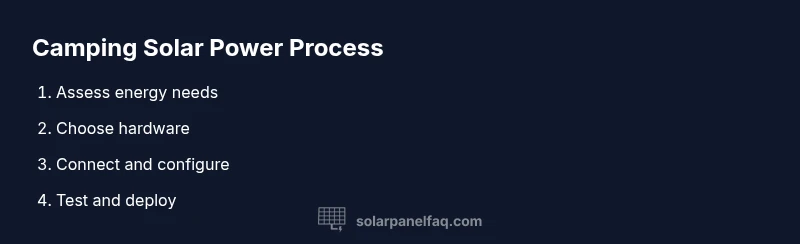
- 1
Assess your camping energy needs
List the devices you plan to run, estimate daily usage, and set a conservative safety margin for cloudy days. This shapes your panel wattage and battery size. The goal is to avoid overbuild while ensuring enough energy for essential activities.
Tip: Create a simple load list with estimated daily hours for each device. - 2
Select compatible hardware
Choose a portable panel within your target wattage, a 12V battery with adequate capacity, and a suitable MPPT controller. Ensure all parts fit your backpacking or vehicle setup and that connectors are weatherproof.
Tip: Match the panel’s Voc to the controller’s input range to avoid overstress. - 3
Position the solar panel for optimal sun
Place the panel where it receives direct sun for most of the day, angle it toward the sun, and avoid shade from trees or tents. For tent campers, a lightweight stand or clamp mount can help keep the panel stable.
Tip: Adjust during the day to maximize exposure as the sun’s angle shifts. - 4
Connect panel to charge controller safely
Attach the panel leads to the controller’s input first, ensuring correct polarity. Use ferrules or proper crimp connectors to reduce corrosion and loose connections.
Tip: Double-check polarity with a quick voltage check before finalizing connections. - 5
Connect battery to controller and monitor
Connect the battery to the charge controller’s output. Use the battery monitor if available to track voltage and state of charge during the trip.
Tip: Keep batteries in a ventilated, dry location away from heat sources. - 6
Wire loads through fuse-protected paths
Run essential loads through appropriate fuses or a fuse block to protect wiring. If using an inverter, place it close to the battery with proper cable sizing.
Tip: Keep high-current paths short to minimize voltage drop. - 7
Test the system in daylight
Power on the setup in bright sun and observe charging current and battery voltage. Confirm all devices charge and outputs stay within safe limits.
Tip: Document readings to compare against later trips. - 8
Secure and weatherproof connections
Seal exposed connectors, store cords neatly, and use protective covers to keep moisture out when not in use.
Tip: Label cables to simplify future maintenance. - 9
Pack spare parts and safety gear
Carry extra fuses, connectors, tape, and a basic multimeter for on-the-road troubleshooting. Keep everything in a dry bag.
Tip: Create a compact, weatherproof toolkit for camping trips. - 10
Plan for maintenance and troubleshooting
Before each trip, inspect panels for dirt and debris, check cables for wear, and test the system under daylight. Replace worn components promptly to avoid failures on-site.
Tip: Schedule a post-trip inspection to keep the system reliable.
Frequently Asked Questions
What is the best solar panel size for camping?
There isn't a single best size; it depends on your loads and sun. Start with a compact panel and a modest battery, then scale up if you add appliances. Always test in daylight.
There isn't a one-size-fits-all panel. Start small and test in daylight to size up as needed.
Can I run a fridge on a camping solar setup?
A small 12V fridge can run with proper battery and insulation. Expect limited hours in cloudy or short-sun days and plan around that.
A small 12V fridge can work with proper planning, but expect limits on cloudy days.
Do I need a battery for camping solar power?
Yes. A battery stores energy for use during the night and when sun isn’t available, providing steadier power for essential loads.
A battery is typically needed to smooth power supply for night use.
Is it safe to use solar power in the rain?
Keep components in weatherproof cases and avoid exposed connections during rain. Use covers and dry storage to protect equipment.
Stay safe in rain by keeping gear protected and dry.
How do I maintain a camping solar system?
Regularly inspect cables, clean panels, check for corrosion, and test voltages. Replace worn parts and recheck fuses after long trips.
Check cables, clean panels, and test voltages after trips.
Can I recharge my system while driving?
Driving can supplement energy, but it requires proper wiring and safety considerations. Do not rely on driving alone for daily power needs.
Driving can help recharge, but don’t rely on it as your only source.
Watch Video
Top Takeaways
- Define loads before buying gear.
- MPPT controllers improve efficiency in variable sun.
- Test setups before trips to prevent surprises.
- Keep safety gear and fuses accessible.
- Budget battery capacity against load needs.