Travel Trailer Solar Panel Guide: Install and Use
Learn how to choose, size, install, and maintain a travel trailer solar panel system for reliable off-grid power on the road. Clear steps, safety tips, and best practices.


This guide helps you plan, size, install, and maintain a travel trailer solar panel system so you can power camping essentials off-grid. You'll learn about sizing, components, safety, and basic wiring, with practical steps and troubleshooting tips. Expect guidance on selecting panels, choosing a charge controller, wiring basics, and when to upgrade to lithium batteries. This quick answer is designed for homeowners and travelers seeking practical, safe, and scalable options.
Why a travel trailer solar panel system matters for campers
For many RV enthusiasts, a reliable off-grid power solution is a cornerstone of freedom on the road. A travel trailer solar panel setup can significantly reduce the need to run a generator, lower fuel costs, and enable longer stays in remote campsites with limited access to hookups. When designed well, a rooftop or portable solar array delivers silent, clean energy to charge 12-volt batteries and run essential appliances such as lights, fans, and a small fridge. According to Solar Panel FAQ, a well-planned system aligns with your travel style, roof space, and daily energy needs, creating a practical bridge between comfort and adventure. This section lays the groundwork for understanding how to translate your camping habits into a balanced solar setup that scales with your trips.
Understanding energy needs on the road
Energy planning starts with a clear picture of what you actually run in a travel trailer. Core loads typically include lighting, a water pump, vent fans, a small fridge, and charging for phones and cameras. Add occasional AC usage, a compact TV, or a portable heater, and your energy profile shifts. The goal is to match your average daily consumption with a battery bank and solar input that can replenish those reserves during daylight. Consider seasons, travel pace, and typical boondocking hours. A practical approach is to categorize loads by essential, non-essential, and seasonal, then design the system to cover essentials with some buffer for non-essentials during sunny days.
Sizing and planning your system
Sizing a solar setup for a travel trailer involves choosing panels, a charge controller, and a battery bank that work together to meet your daily needs. Instead of chasing absolute wattage numbers, focus on ability and compatibility. A conservative strategy favors a modest number of panels paired with a robust battery bank and a capable MPPT charge controller, which improves efficiency under varying sunlight. Lithium batteries offer longer life and deeper discharge, but their upfront cost should be weighed against expected use. Always plan for expansion by leaving room on the roof for additional panels or battery modules in the future.
Panel types and mounting options for travel trailers
There are several panel options to fit a travel trailer roof, including rigid glass-front panels and flexible solar sheets. Rigid panels tend to be more durable and easier to service, while flexible panels save weight and can conform to curved roofs. Mounting methods range from traditional roof rails and brackets to glue-down options for lighter installations. Regardless of type, ensure proper sealing around all penetrations to prevent leaks and check that the roof structure can bear the added weight. Plan for shade-free placement and avoid vent pipes or vents where possible to maximize output.
Charging control, batteries, and energy storage
A solar charging system is built around a charge controller, which manages how energy from the panels charges the battery bank. An MPPT (maximum power point tracking) controller generally yields higher efficiency, especially when conditions are not ideal, but can be more complex and pricier. The battery bank stores the energy for use when the sun isn’t shining. Lithium-ion chemistries are popular for their longer cycle life and better depth of discharge, though lead-acid options remain common for budget setups. Always size the controller to handle the expected panel output and ensure the battery bank is compatible with the controller’s voltage.
Wiring basics and safety considerations
Wiring a travel trailer solar system follows a simple ladder of components: panels to charge controller, controller to battery bank, and optionally to an inverter for AC loads. Use properly rated wires, secure all connections, and install fuses or breakers close to power sources. Keep DC wiring organized with color-coded conductors and protective sheathing to reduce corrosion and wear. Safety is paramount: disconnect batteries during installation, wear safety gear, and verify there are no stray voltages before handling harnesses. This reduces the risk of shocks or short circuits and protects the roof and electrical system.
Maintenance, monitoring, and troubleshooting
Regular maintenance keeps a solar setup reliable. Clean panels to remove dust, leaves, and bird droppings that reduce efficiency, and inspect seals around mounting points for signs of wear or leaks. Monitor battery health and charge controller readings to catch early drift in performance. Troubleshooting steps include confirming panel output during daylight, rechecking wiring at the battery, and ensuring fuses are intact. Record basic metrics over time to spot trends that indicate aging components or shading changes from new roof fixtures or tree growth.
Costs, incentives, and common mistakes
Understanding the long-term value of a travel trailer solar panel system involves more than upfront price. Consider the ongoing savings from reduced generator fuel usage, improved reliability during off-grid trips, and potential incentives where available. Common mistakes include underestimating roof space, skimping on a reliable charge controller, and neglecting battery health. A well-balanced system prioritizes safety and expandability, allowing you to adjust to different trips and energy needs without repeated, costly rewiring.
Authority sources and next steps
To deepen your understanding of solar energy in mobile applications, consult authoritative sources from government and research institutions. The following references offer foundational guidance and current best practices: https://www.energy.gov/eere/solar, https://www.nrel.gov/solar, and https://www.eia.gov/solar/ . These resources cover system design principles, performance metrics, and safety considerations that apply to travel trailer installations. For practical, step-by-step advice, reference the full guide on Solar Panel FAQ.
Tools & Materials
- Solar panel(s) for trailer roof(Choose rigid or flexible panels to fit your roof space and weight limits)
- Roof mounting hardware(Brackets, standoffs, sealant, and hardware rated for outdoor use)
- Charge controller (MPPT preferred)(Select a controller sized for your panel array and battery bank)
- Battery bank (lithium or lead-acid)(Ensure compatible voltage with controller and expected loads)
- Wiring harness with MC4 connectors(Use weatherproof cables designed for outdoor use)
- Fuses/inline breakers(Place close to the battery and controller on the DC side)
- Inverter (optional for AC loads)(Rated for your expected peak AC demand)
- Junction box and conduit(For clean routing and protection of wires)
- Multimeter or voltage meter(Used to verify voltages and connections during setup)
- Sealant/caulk and cleaning supplies(Weatherproof seal to prevent leaks around mounts)
- Safety gear (gloves, eye protection)(Protective equipment during roof work)
- Cable ties and labels(Keep wiring neat and identifiable)
Steps
Estimated time: a few hours
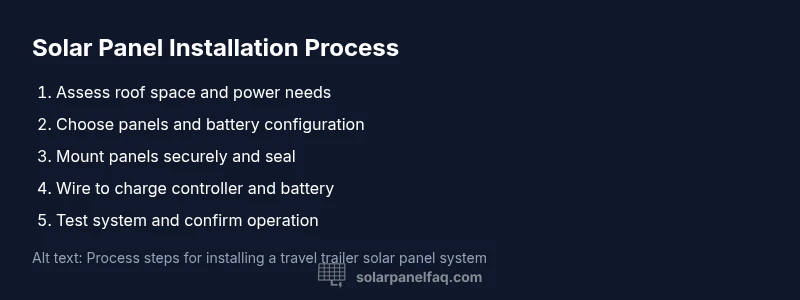
- 1
Assess power needs and roof condition
List essential loads and seasonal variations. Inspect the roof for soft spots or damage and confirm mounting areas are solid and accessible. Decide between a permanent rooftop or portable panel strategy based on how you travel.
Tip: Walk the roof with a non-slip mat and have a buddy assist when you climb or move heavy panels. - 2
Choose panels and battery configuration
Select panel type (rigid vs flexible) and plan battery capacity. Consider long-term reliability and whether lithium or lead-acid best fits your budget and maintenance willingness.
Tip: Prefer a modular approach: start with a baseline system and plan for future expansion. - 3
Pick a charge controller and determine wiring
Choose an MPPT controller for better efficiency and shorter wiring runs. Review the controller’s wiring diagram to match panel input and battery voltage.
Tip: Place the controller near the battery to minimize voltage drop in DC wiring. - 4
Gather tools and safety gear
Assemble all required tools and safety equipment before starting. Power down any DC circuits and isolate the battery bank during installation.
Tip: Keep a spare fuse on hand and label all wires for future maintenance. - 5
Mount panels and seal penetrations
Attach panels securely using roof-rated hardware. Seal all penetrations with weatherproof sealant and verify there are no gaps that could leak.
Tip: Avoid mounting near existing vents or skylights where heat and movement could affect performance. - 6
Wire panels to controller
Connect panel strings to the charge controller following the manufacturer’s polarity and safety guidelines. Use MC4 connectors and route cables away from sharp edges.
Tip: Double-check polarity with a multimeter before applying power. - 7
Connect battery bank and set controller
Connect the battery bank to the controller, ensuring proper voltage compatibility. Set the controller to the correct battery type and float/absorb settings as recommended by the manufacturer.
Tip: Ventilate propane and other gas sources and avoid metal tools near exposed battery terminals. - 8
Test the system and verify functionality
Power on and observe panel output, controller indicators, and battery voltage under sun. Test essential loads to confirm that energy is being stored and delivered as expected.
Tip: Keep a log of daytime voltage and night-time battery levels for trend analysis. - 9
Optional: add inverter or expand later
If you need AC power, install an appropriately sized inverter and test with light loads first. Plan future expansion by leaving space and wiring routes for additional panels or batteries.
Tip: Check inverter efficiency and heat dissipation under continuous use.
Frequently Asked Questions
Do I need a solar panel on a travel trailer?
If you spend time off-grid or boondocking, a solar panel system can provide essential charging and reduce generator use. For frequent hookups, solar remains useful but may be optional depending on access to shore power.
If you camp off-grid or want quiet power, solar helps. If you always have shore power, it’s useful but not essential for everyone.
Can I install it myself?
Yes, for someone comfortable with basic electrical work and roof mounting. Follow manufacturer wiring diagrams, observe safety practices, and consider professional inspection if you’re unsure.
Yes, DIY is possible for many owners, but follow safety steps and use the manufacturer’s wiring guide.
Maintenance needs?
Keep panels clean, inspect seals and mounting hardware annually, and monitor battery health and charger outputs. Address corrosion, loose connections, and venting requirements for battery types.
Clean panels, check connections, and monitor the batteries regularly.
Will solar damage the roof?
When mounted with proper hardware and sealed correctly, solar panels do not inherently damage the roof. The key is professional sealing and avoiding pressure on compromised areas.
If sealed and mounted correctly, solar panels won’t damage the roof.
Lithium vs lead-acid batteries?
Lithium batteries typically offer longer cycle life and deeper discharge with faster charging, but upfront costs are higher. Lead-acid can be cheaper upfront but requires more careful maintenance and shorter life.
Lithium lasts longer and charges faster but costs more upfront.
Do I need an inverter?
An inverter is only necessary if you plan to run AC appliances directly. Many RV loads operate on 12-volt DC; add an inverter later if you determine you need AC power.
If you need AC power, add an inverter later; otherwise you can run DC devices directly.
Watch Video
Top Takeaways
- Define meaningful power needs before buying gear
- Start with a balanced, expandable system
- Choose MPPT for efficiency and lithium for longevity
- Seal all roof penetrations to prevent leaks
- Test thoroughly and monitor system performance