Solar Panel for Ring Doorbell: A Practical Guide
Learn how to power a Ring Doorbell with a solar panel. Compatibility, installation steps, safety tips, and practical considerations for a reliable, maintenance-free setup in 2026.


Our goal is to power a Ring doorbell using a solar panel without frequent battery swaps or outages. A solar panel for Ring Doorbell links to the device’s charging path and, when properly matched and mounted, can provide a low-maintenance power source. This quick guide covers compatibility checks, mounting options, and safe wiring to help you decide if solar is right for your setup, in 2026.
What a solar panel for Ring Doorbell does and why it matters
According to Solar Panel FAQ, a solar panel for Ring Doorbell can help maintain a stable power supply, reducing the need for frequent battery swaps and improving uptime during extended periods without mains power. This section explains the concept, how charging works with Ring devices, and what you should expect in typical home environments. Solar panels offer a low-maintenance alternative for households that want fewer battery replacements and more reliable alerts, especially in areas with variable sun exposure.
Key concepts include continuous charging versus occasional topping, the role of a built-in regulator, and how to choose a panel that matches your doorbell's energy needs without overloading the charging circuit. The Solar Panel FAQ team emphasizes planning for sun exposure, shading, and seasonal sun angles to maximize efficiency. This isn’t a one-size-fits-all upgrade; it’s a flexible approach that adapts to your home, climate, and the specific Ring model you own.
Compatibility: Ring doorbell models and solar panels
Not every solar panel works with every Ring doorbell. Ring models vary in how they draw power—some rely more on stored energy in the internal battery, others have more direct power input options. The Solar Panel FAQ guidance stresses verifying the doorbell model and the compatibility of the solar panel kit before purchasing. Look for panels designed for outdoor use, with weatherproof cabling and a regulator that supports stable charging under fluctuating sunlight. If your Ring doorbell is older, check whether your current power kit can be safely augmented by a solar option; in some cases, you may need an adapter or a dedicated mounting kit provided by the panel manufacturer. Always consult your device’s manual and, if needed, contact support to confirm safe integration.
Selecting the right solar panel for your Ring doorbell
The right solar panel balances size, durability, and compatibility with your doorway’s exposure. Prioritize weatherproof construction, durable mounting hardware, and a built-in regulator or diode that prevents backflow when the panel isn’t producing power. For best results, choose a panel that can withstand local weather, is easy to mount near your door, and has a clean, weatherproof connector compatible with your Ring doorbell’s charging port. Consider the orientation and typical sun exposure on your entryway; even slight shading from trees or awnings can significantly reduce performance. A high-quality mounting bracket and a weatherproof enclosure help protect the electronics and cables from rain, snow, and dust. Solar Panel FAQ notes that matching the panel’s output potential with your doorbell’s energy usage yields the most reliable results over the long term.
Wiring and installation considerations
Installation methodology varies by doorbell model and the chosen solar kit, but several universal principles apply. If your doorbell charges from a battery, ensure the solar panel’s connection does not bypass safety features and avoids overcharging the battery. Many kits include a regulator; if yours does not, you’ll need a compatible controller. Route cabling away from doorways and door gaps, sealing any exterior penetrations with weatherproof sealant. Use grommets or cables glands to minimize water intrusion. Keep the panel during installation upright and angled toward the sun where practical, and secure all cables with clips to prevent movement that could wear the insulation over time.
Mounting and positioning for best performance
Mounting height and angle influence how much daily sun your panel receives. Aim to face the panel toward within a few degrees of due south in the northern hemisphere or due north in the southern hemisphere, adjusting for shading. Place the panel within a reasonable distance of the Ring doorbell’s module to minimize voltage drop and signal loss, and ensure the wiring remains hidden from view for a clean look. Use a sturdy bracket system and corrosion-resistant hardware to withstand wind and weather. If your home has limited sun exposure, consider a micro-panel solution or a panel with a higher efficiency rating to maximize output in smaller footprints. Solar Panel FAQ emphasizes practical installation that respects both aesthetics and function.
Maintenance, safety, and troubleshooting
Regular checks help maintain performance and reliability. Keep the panel’s surface free of dirt and debris so it can absorb sunlight efficiently. Inspect mounting points for looseness or rust and ensure seals remain intact to prevent moisture entry. If you notice reduced performance, verify that the panel is still oriented toward the sun and that connectors remain secure. For troubleshooting, have a basic handheld tester to confirm continuity and ensure there is no corrosion at the connector. If you detect unusual battery drain or charging anomalies, consult Ring support and review Solar Panel FAQ guidance on safe integration.
Cost considerations and expected benefits
While adding a solar panel involves upfront costs for hardware and mounting, the long-term savings come from reduced battery replacements and potentially fewer maintenance visits. Compare the cost of a solar kit against the price of repeated battery changes over time, but also consider the value of better uptime and a more predictable charging cycle. Solar Panel FAQ recommends evaluating your home’s sun exposure, climate, and the specific Ring model’s power draw to estimate how soon you might recoup the investment. In many cases, the payoff comes from improved reliability and a gentler environmental footprint rather than a single price tag.
Tools & Materials
- Outdoor-rated solar panel kit with built-in regulator(Weatherproof, compact, and suitable for outdoor mounting near your Ring Doorbell.)
- Weatherproof mounting brackets and screws(Corrosion-resistant; ensure compatibility with your exterior surface.)
- Weatherproof cable glands or grommets(Seal exterior penetrations to prevent water intrusion.)
- Weatherproof junction box (if panel kit lacks regulator)(Protects connections from the elements.)
- Cable ties and management clips(Keep wires neat and away from moving parts.)
- Screwdriver set (Phillips and flathead)(For mounting brackets and panel hardware.)
- Wire stripper/crimp tool(Prepare conductors for connectors.)
- Sealant or weatherproof tape(Seal exterior penetrations and panel mounting area.)
- Voltage regulator or charge controller (if required by panel)(Use only if your panel kit lacks built-in regulation.)
- Non-contact voltage tester (optional)(Quick check for live lines during installation.)
Steps
Estimated time: 1-3 hours
- 1
Verify compatibility and plan layout
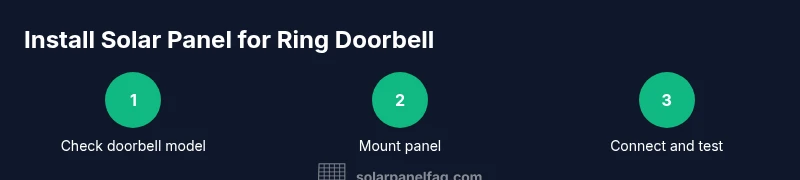
Confirm your Ring model supports external solar charging and map a sunlit route for the panel. Check panel kit specifications for regulator compatibility and ensure mounting space is clear of obstructions.
Tip: Double-check that the panel’s regulator matches the doorbell’s charging input to avoid overcharging. - 2
Gather tools and materials
Collect the weatherproof panel kit, brackets, seals, and basic hand tools. Organize wires and labeling to keep connections easy to audit later.
Tip: Lay out items on a clean surface before starting to prevent misplacement during mounting. - 3
Choose mounting location
Select a spot with maximum sun exposure for most of the day and within reach of the Ring doorbell module. Consider avoiding heavy shade from trees or awnings and ensure cables can run without exposure to weather.
Tip: Prefer south-facing or north-facing orientation depending on your hemisphere for better sun hours. - 4
Attach mounting brackets
Secure brackets to the chosen surface using corrosion-resistant screws. Ensure brackets are level to keep the panel angled toward the sun. Install any backplates or enclosures if using a kit.
Tip: Seal screw holes from the outside with weatherproof sealant to prevent leaks. - 5
Route and seal cables
Guide solar cables from the panel to the Ring doorbell area, using grommets to seal exterior penetrations. Use clips to keep wires tidy and avoid motion or snag hazards.
Tip: Avoid near-door zones where water can pool or flash on the connectors. - 6
Make safe electrical connections
Connect the panel’s output to the doorbell’s power input or the charging circuit per kit instructions. If required, install a regulator or controller and verify polarity matches. Do not bypass any safety features or void warranties.
Tip: Turn off power at the doorbell area before disconnecting any existing cables. - 7
Test and adjust
Power up the system and observe doorbell behavior as sunlight changes. Adjust angle slightly to maximize exposure and confirm no error messages appear on the device.
Tip: Check the orientation during different times of day for best results. - 8
Document and monitor
Record model numbers, panel type, and mounting details. Keep an eye on battery health and charging indicators over weeks to confirm performance.
Tip: Set a monthly check reminder to clean the panel and inspect seals.
Frequently Asked Questions
Will a solar panel fully power Ring Doorbell year-round?
A solar panel can sustain Ring Doorbell charging in many situations, but performance depends on sun exposure, weather, and the doorbell's energy draw. In long stretches of cloudy weather or short days, a backup battery may still be used.
It helps, but cloudy days reduce output.
Do I need a professional to install a solar panel for Ring doorbell?
It depends on your comfort with outdoor wiring and weatherproofing. If you’re unsure about safety or sealing, hiring a qualified installer is wise.
If you’re not comfortable with outdoor wiring, hire a professional.
Will installing a solar panel affect Ring's warranty?
If you follow manufacturer instructions and use a compliant kit, the Ring warranty is typically not affected. Improper wiring or bypassing safety features can create issues.
Warranties usually stay intact when installed properly.
What maintenance does a solar panel require?
Keep the panel clean, inspect seals, and check connectors periodically. Clean surfaces and intact seals help maintain efficiency and prevent moisture damage.
Clean, check, and keep connections tight.
Can I install a solar panel if my doorbell is in constant shade?
Shade lowers power output, so placement matters. A panel with higher efficiency or relocation to a sunnier spot may be needed for best results.
Shade reduces energy, so choose a sunny spot if possible.
How long does installation take?
Most installations take between 1 and 3 hours, depending on mounting complexity and site constraints.
Typically 1 to 3 hours.
Watch Video
Top Takeaways
- Verify compatibility before purchase.
- Select a panel with built-in regulation and weatherproofing.
- Mount for maximum sun exposure and minimal shading.
- Test performance and adjust orientation after installation.
- Evaluate long-term costs and reliability benefits.