Solar Panel Cell Phone: Charge Anywhere with Solar Power
Learn how to charge your smartphone using solar power with portable panels, appropriate cables, and practical safety tips for homeowners and travelers in 2026.


Yes—it's feasible to power a smartphone with solar energy. A portable solar charger or a compact panel can charge a phone in direct sun when you have a compatible USB cable and, ideally, a small buffer battery. This guide explains setup, expected performance, and practical safety steps for homeowners and travelers seeking reliable off-grid charging.
What is a solar panel cell phone and why it matters
A solar panel cell phone is a phone charged or recharged using energy harvested from the sun through a solar panel. For homeowners and prospective solar buyers, this approach offers off-grid charging during outages, camping trips, or extended outdoor activities. In practical terms, a small solar setup can provide a convenient edge in daily life, reducing dependency on grid power for occasional charging needs. When you say "solar panel cell phone" you’re talking about the basic idea of converting sunlight into usable electrical energy to power a phone or, more commonly, to top up its internal battery via a USB cable. In 2026, many families view solar charging as part of a broader energy resilience strategy, particularly in regions with sunny days and variable grid reliability.
Key concepts to grasp include panel wattage, USB output standards, and the role of buffering devices like power banks. Understanding these elements helps you pick a kit that fits your phone’s charging needs and your typical sun exposure. The Solar Panel FAQ team emphasizes practical approaches tailored for homeowners who may not be solar experts, focusing on simple, safe, and effective charging practices.
Core concepts: energy, wattage, and charging ports
Charging a phone from solar involves converting light into electricity and delivering it through a USB port. The panel’s wattage indicates how much power it can produce under ideal conditions; a typical phone might require 5 to 10 watts for a comfortable top-up. In practice, you’ll see panels labeled with wattage ratings (for example, 6W, 10W, 20W). The actual current you get depends on sunlight intensity, panel orientation, panel temperature, and the age of the panel. Phones receive power via USB cables, with common formats including USB-A to Micro-USB, USB-C, or Lightning. If you want fast charging, look for higher wattage panels and consider a buffering option (power bank) to store energy for later use. The goal is to have a safe, stable USB output that won’t damage the phone’s battery.
Choosing the right connectors and buffers matters
Most phones today charge at 5V through USB. If your panel outputs higher voltage, a small regulator or power bank helps regulate the flow. A buffer battery not only smooths fluctuations but also provides charge when sunlight fades. Keep in mind that cable quality and connector compatibility influence charging speed and reliability. The core idea is to match the panel’s output to the phone’s input requirements using safe, tested interfaces.
How charging works: from sun to USB
Sunlight is harvested by the panel, which converts photons into DC electricity. This energy travels through a conduit (the cable) to your phone or buffering device. The phone’s battery management system then accepts a power level the battery can safely handle. Because sunlight is intermittent, a buffer battery or a panel with an integrated charge controller helps maintain a consistent voltage level. The more sun you have, the more energy you can accumulate in a short period; a cloudy day will slow charging considerably. For best results, place the panel so it faces direct sun, with minimal shade or reflective interference.
Portable charging options: panels, banks, and combos
Two common setups exist: a portable folding solar panel that directly feeds a USB port, and a solar panel connected to a battery bank. The direct approach is simple but depends on constant sun; the buffered setup stores energy during peak sun and delivers it later at a steady pace. Some kits combine a panel with a small integrated battery and a built-in controller, which can simplify setup and improve safety. For travel, a compact kit that folds flat into a bag is ideal; at home, you can pair a larger panel with a power bank for reliable daily charging.
Estimating charging time and performance factors
Charging time varies with panel wattage, sunlight, cable quality, and your phone’s battery capacity. A 5–10W panel may require multiple hours to fully recharge a typical smartphone from 20% to 100% under bright sun. A higher-wattage panel (15–20W) can cut this time substantially but requires more space and exposure. Real-world results depend on how consistently the sun hits the panel, the angle of incidence, panel temperature, and the phone’s charging efficiency. If you need predictable results, pair a modest panel with a dependable power bank to buffer energy and smooth output during transitions between sun and shade.
Direct charging vs using a power bank
Direct charging means the phone is powered directly from the panel via USB. While this approach is simplest, it exposes charging to fluctuations in sunlight. Using a power bank adds buffering, stabilizing the voltage and offering energy storage for cloudy periods or late-evening charging. A hybrid approach—panel to bank, then bank to phone—often delivers the best balance of portability and reliability. The key is to verify that the bank’s output matches your phone’s charging needs and that the cable type is correct.
A practical setup: small kit for home and travel
A practical, home-and-travel kit to support a solar panel cell phone might include a foldable 10–15W panel, a USB-C or USB-A cable compatible with your phone, and a compact power bank with 10,000 mAh or more. Add a simple USB carabiner pouch for weather protection and easy attachment to backpacks. When selecting, consider the panel’s durability and the cable’s longevity. If you expect periodic outages or outdoor activities, this kit can provide dependable, low-cost charging for everyday devices.
Safety, care, and maintenance
Solar panels are robust but can degrade if mishandled. Keep panels clean and free of dust, ensure cables stay dry, and avoid leaving equipment in extreme heat or inside a sealed car on sunny days. Periodically test the system to confirm the USB port is delivering power and the battery bank is holding a charge. Store gear in a cool, dry place and inspect for frayed cables or loose connectors before each use. Routine checks help extend the life of your solar charging kit and protect your device.
Real-world scenarios and expectations
In a typical sunny day, a small 6–10W panel can top up a smartphone enough to cover emergencies, comms, or a partial mid-day charge. For regular daily charging, larger panels or buffered setups perform better, especially if you rely on your phone for navigation, calls, or streaming. Expect slower charging indoors or in shaded areas. Always plan for variability: keep a lightly charged power bank for moments when sun becomes insufficient. With patience and the right kit, solar charging becomes a practical part of your everyday tech routine.
Tools & Materials
- Portable solar panel charger (folding)(Look for 6–20W output with integrated diode protection and weather-rated casing)
- USB charging cable compatible with your phone (USB-C/Lightning/Micro-USB)(Use a quality cable to minimize power loss)
- Power bank or battery buffer (optional but recommended)(Choose at least 10,000 mAh for meaningful buffering)
- USB-C to USB-A adapter or cable dongle (if needed)(Ensure compatibility with older phone models)
- Waterproof bag or pouch (optional)(Protect gear during outdoor activities)
Steps
Estimated time: 30-60 minutes depending on sunlight and device
- 1
Assess sunlight and location
Choose a bright, unobstructed spot with direct sun. The more sun, the faster the charge. If using a buffering battery, position it so it remains in shade while the panel faces sun to minimize heat effects on the bank.
Tip: Aiming the panel toward the sun at a 15–30 degree angle maximizes exposure without requiring a track system. - 2
Position the panel and connect
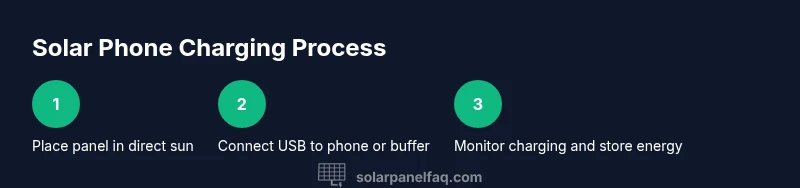
Place the panel where it receives steady sun, then connect the USB cable from the panel to your phone or buffer device. Ensure the connections are snug and free of moisture before powering on.
Tip: Avoid bending cables sharply to reduce wear; use a clip or strap to keep cables off the ground. - 3
Use buffering when possible
If you have a power bank, connect the bank to the panel first, then connect your phone to the bank. This helps smooth current and provides energy storage for later use.
Tip: A charged buffer bank can deliver a steady 5V even when sun shadows momentarily appear. - 4
Monitor charging and adjust
Check the phone for the charging indicator and observe panel output if you have an app or meter. Reposition the panel if the indicator stalls or slows.
Tip: Small changes in angle can noticeably affect charging speed in partial sun. - 5
Safely disconnect and store
When charging completes or you’re done, unplug in sequence and store components in a dry place. If using a buffer bank, recharge it later with sunlight or a wall charger.
Tip: Never leave a hot panel in direct heat; let it cool before folding for storage. - 6
Test before relying on it
Test the kit during a calm period to ensure it consistently delivers power to your phone. If performance drops, inspect cables and connectors for wear.
Tip: Regular checks extend the life of cables and protect your investment.
Frequently Asked Questions
Can I charge any phone directly from a solar panel?
Most phones can be charged directly if the panel provides a stable 5V USB output, but output quality varies with sunlight. A buffering power bank can improve reliability and protect the device from voltage fluctuations.
You can usually charge many phones directly if the panel outputs a steady 5 volts, but for consistency, use a power bank to smooth the charge.
What wattage panel do I need for daily phone charging?
Even small phones benefit from a 6 to 20 watt panel, depending on how quickly you want to recharge and how often you lose direct sun. Higher wattage reduces charging time but requires more space and durability.
A 6 to 20 watt panel is usually enough for regular topping up, with more wattage speeding up the process in bright sun.
Is a charge controller necessary for phones?
Many small USB panels include built-in regulation suitable for phones, but a separate microcontroller or buffer bank adds protection against voltage spikes and shading.
Most small panels don’t need a separate controller, but a buffer bank gives extra protection and steadies output.
How does sunlight affect charging speed?
Direct, strong sunlight yields faster charging, while shade or clouds reduce current. Positioning and panel angle can significantly influence results.
Bright sun charges fastest; shade slows things down. Angle the panel toward the sun for better results.
Can I use solar charging at home during outages?
Yes, a home-ready kit with a larger panel and buffer can power essential devices during outages, though performance depends on sun exposure and storage capacity.
Absolutely, with the right kit you can keep essential devices powered during outages.
What maintenance does a solar charging kit require?
Keep panels clean, cables dry, and protect connectors from abrasion. Periodically test the system to ensure proper output.
Keep it clean, dry, and test regularly to ensure reliable performance.
Watch Video
Top Takeaways
- Plan for sun variability; expect slower charging on cloudy days.
- Match panel output to your phone with proper cables and buffers.
- A buffering power bank improves reliability for everyday use.
- Safety and cable integrity protect devices and prolong kit life.