Should Solar Panels Be Turned Off in a Cyclone: A Practical Guide
Learn when and how to safely shut down solar panels during a cyclone, including safety steps, impacts on storage, and reactivation after the storm.


Should solar panels be turned off in a cyclone? In most cases, yes—shut down the solar array at the main AC disconnect when a cyclone is imminent and winds reach dangerous levels. If safe, also isolate the DC side per your system manual to minimize backfeed risk. Do not touch live components or conductors.
Should Solar Panels Be Turned Off in a Cyclone? Safety Basics
When a cyclone looms, homeowners should prioritize safety and minimize potential electrical hazards. The guiding question—should solar panels be turned off in a cyclone—has a practical answer: disable the system before winds become severe and debris becomes airborne. This approach protects the hardware from wind-driven damage and reduces the risk of backfeed to the grid. According to Solar Panel FAQ, proactive shutdowns are part of a broader cyclone-readiness plan that includes securing rooftop equipment, checking roof integrity, and reviewing the system manual for isolation procedures. While utilities rarely require a full shutdown, procedures vary by system type, manufacturer, and local code. Always consult your installer or system manual before attempting any disconnection, especially if you lack training or safe access. The goal is to prevent dangerous energization and keep first responders safe if access to your property is required during or after a cyclone.
Understanding How Your System Is Wired during a Cyclone
Solar installations connect panels to a DC circuit, which then converts to AC and feeds the home or the grid. In a cyclone scenario, the key question is whether there is an accessible disconnect on the AC side and whether there is a DC isolation point. If your system includes a clearly labeled main AC disconnect, this is typically the first place to shut down. DC isolation may be required on certain string inverters or combiner boxes. The Solar Panel FAQ guidance emphasizes following the manufacturer’s isolation sequence and never bypassing safety interlocks. Do not assume a universal rule applies; the correct procedure depends on your exact hardware layout, including any battery storage. Remember that turning off at the point of energy entry can interrupt backfeed and reduce arcing risk during severe weather.
Local Codes, Manufacturer Guidance, and What to Check Before a Storm
Before cyclone season, verify local electrical codes and ensure you have written shutdown procedures. Review your inverter’s manual for DC shutdown steps and confirm there is an accessible main disconnect that you can reach safely from ground level or a secure platform. If you have rooftop panels, assess roof condition and access routes; only attempt shutdowns if you can do so without risking a fall or exposure to wind-driven hazards. Solar Panel FAQ notes that many manufacturers require a formal shutdown sequence; deviating from it can void warranties or create safety gaps. Maintain updated contact information for your installer and utility if a system is interconnected.
Safe Shutdown Procedures: A High-Level Overview (Non-Technical)
A cyclone-safe protocol prioritizes a controlled, non-energized shutdown. Begin by locating the main AC disconnect and ensuring it is clearly labeled. If your system includes a DC isolation switch or a combiner box with a manual reset, use those per the manual. Never disconnect live conductors; always power down in the recommended order and verify no voltage is present with an appropriate tester before handling any component. If you rely on a battery storage system, follow the battery safety guidelines separately to avoid hazardous conditions. This section intentionally avoids step-by-step technical details to reinforce safety—refer to your installer manual for the exact sequence.
Weather Factors That Drive Shutdown Decisions
Cyclone decisions hinge on wind speed, flying debris, and water intrusion risk. If winds are forecast to exceed safety thresholds or if debris could impact roof-mounted equipment, initiating a shutdown is prudent. Pre-storm planning should include securing the array and ensuring that any access points to the PV system are safe and dry. Avoid performing shutdowns during heavy rain or on a wet surface; rain and moisture increase the risk of slips and electric shock. The guideline is to err on the side of caution and to perform shutdowns when it is safe to do so, not at the moment of peak storm intensity.
After the Storm: Inspection, Reactivation, and Safety Considerations
Once the cyclone has passed, perform a cautious reactivation following the manufacturer’s restart sequence. Inspect for physical damage before energizing any components, including panels, rails, wiring, inverters, and battery storage. Look for loose connections, corrosion, or water intrusion. If any damage is suspected, contact a licensed electrician or installer for assessment. Documentation of post-storm checks can support warranty claims and future maintenance planning. Solar Panel FAQ emphasizes documenting the shutdown and reactivation steps to streamline subsequent service and to ensure a safe return to operation.
Common Myths About Cyclone Solar Safety, Debunked
A frequent myth is that shutting down is always necessary for every cyclone. In reality, the decision depends on weather severity, system layout, and local code. Another misconception is that shutting off the switch automatically protects the battery; batteries require separate protocols to avoid thermal or chemical hazards. The best practice is to follow the system manual and local guidelines, seek professional advice when in doubt, and avoid improvising with unverified tricks. By debunking these myths, homeowners can make informed, safety-centered choices during cyclones.
Homeowner Checklists and Practical Readiness
To stay prepared, keep a cyclone-ready checklist: identify the correct shutdown points (AC disconnect and DC isolation, if applicable), confirm safe access routes, and ensure you have personal protective equipment. Create a simple, printed shutdown sequence for quick reference, and update it after any maintenance or battery changes. Regularly test the accessibility and labeling of disconnects without energizing the system. This proactive approach reduces stress during an actual cyclone and helps ensure a faster, safer return to normal operation afterward.
Tools & Materials
- insulated gloves (AR/ANSI rated)(Chemical- and cut-resistant; suitable for electrical work)
- non-contact voltage tester(To verify absence of live voltage before handling components)
- voltage meter / multimeter(Checks both AC and DC sides as per manual)
- insulated ladder or safe access platform(Stable footing; avoid wet surfaces)
- screwdriver set (Phillips and flathead)(For disconnect screws and panel access)
- lockout-tagout kit(Secure disconnections to prevent re-energization)
- weather-appropriate PPE (goggles, hard hat, rain gear)(Protection from debris and weather)
- waterproof labels and tape(For labeling and temporary protection)
- documentation sheet and camera(Record shutdown steps and post-storm condition)
Steps
Estimated time: 45-60 minutes
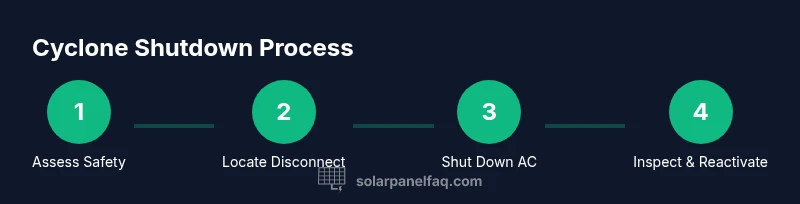
- 1
Assess safety and prep
Before touching any equipment, ensure you are wearing PPE and that the work area is dry. Review the system manual for the exact shutdown sequence and confirm you have clear, safe access to the main disconnect and any DC isolation points.
Tip: If you are not sure about your roof or access route, do not proceed—call a professional. - 2
Locate main AC disconnect
Find the main AC disconnect switch or breaker as described in the manual. Ensure the device is labeled and accessible from ground level or a secure platform, not from the rooftop edge.
Tip: You should be able to reach it without stepping on wet surfaces. - 3
Turn off the AC disconnect
Switch the main AC disconnect to the off position to stop power flow to the house and grid, following the recommended sequence in the manual. Do not bypass the switch or use alternative routes.
Tip: If the switch feels loose or arced, stop and consult a professional. - 4
Isolate the DC side if applicable
If your system includes a DC-disconnect or a combiner box with a manual shutoff, isolate it according to the manual. Do not touch DC conductors directly.
Tip: Verify zero voltage on DC circuits with your meter before any inspection. - 5
Verify de-energization
Use a voltage tester or multimeter to confirm there is no live AC or DC energy reaching accessible components. If voltage is detected, refrain from further action and contact a professional.
Tip: Do not rely on a single test—check all relevant points as specified by the manual. - 6
Documentation and post-shutdown plan
Document the shutdown steps, any observed damage, and the plan for reactivation. Store records safely and share them with your installer or utility if interconnection exists.
Tip: Keep a dated note for warranty and maintenance records.
Frequently Asked Questions
Should solar panels be turned off during a cyclone?
Yes, turn off the solar array at the main AC disconnect and, if safe, isolate the DC side per the manual to minimize backfeed and electrical hazards during a cyclone.
Yes. Turn off the solar array at the main disconnect and isolate the DC side if safe.
Will turning off affect battery storage or warranty?
Shutting down as recommended by the manufacturer generally aligns with warranty guidelines. Always follow the manual and consult your installer for battery-specific precautions after a cyclone.
Shutting down as directed by the manual is usually consistent with warranty guidelines; check with your installer about batteries.
What if I cannot access the disconnect safely?
If safe access is not possible, prioritize personal safety and contact a licensed professional for guidance. Do not improvise or climb onto wet surfaces or exposed wiring.
If you can't access the disconnect safely, stop and call a professional.
When can I restart the system after a cyclone?
Restart only after conditions are clearly safe and after a thorough post-storm inspection. Follow the manufacturer restart sequence and verify all connections are secure.
Restart only after it’s clearly safe and you’ve inspected for damage.
Is roof access ever safe during a cyclone?
Roof access during a cyclone is never advised. Wind, rain, and debris create serious fall and electrical hazards; wait for safe, calm conditions before any inspection.
No, roof access during a cyclone is unsafe; wait for calm conditions.
Should I hire a professional for shutdowns every time?
If you are unsure about the shutdown sequence or have a complex system, hiring a licensed electrician or your installer is the safest option.
If in doubt, hire a professional for the shutdown.
Watch Video
Top Takeaways
- Shut down safely before cyclone conditions intensify.
- Follow the system manual for AC/DC isolation sequences.
- Verify zero voltage before handling any components.
- Document the shutdown and post-storm checks for warranty compliance.
- Coordinate with professionals for reactivation after the cyclone.