How to Start a Solar Panel Business in 2026
Learn how to start a solar panel business with a clear step-by-step plan: niche selection, licensing, suppliers, marketing, and growth strategies for 2026. Includes practical tips and a ready-to-use checklist.


If you want to start a solar panel business, you should choose a niche, register your company, secure suppliers and financing, and build a first-client pipeline. This guide outlines the key steps: 1) validate your model, 2) set up legal and insurance, 3) launch operations. Follow along for a detailed, practical plan.
Why starting a solar panel business is timely
In 2026, the demand for clean energy solutions continues to rise as homeowners and small businesses seek cost savings and energy resilience. If you are exploring how to start solar panel business, the timing is favorable: the industry is expanding, incentives exist in many regions, and technology has become more accessible. According to Solar Panel FAQ, smart entrepreneurs are focusing on service-first models—installations, maintenance, and system optimization—rather than chasing a single sales tactic. By starting with a clearly defined niche, you can differentiate from general contractors and capture repeat revenue through maintenance, monitoring, and upgrades. The path requires careful planning, sufficient working capital, and a commitment to safety and compliance. This section lays the groundwork for the rest of your plan, including the business model, the markets you’ll target, and the service offerings you’ll ship to customers. You’ll gain the confidence to move from concept to a legally compliant, customer-centric operation.
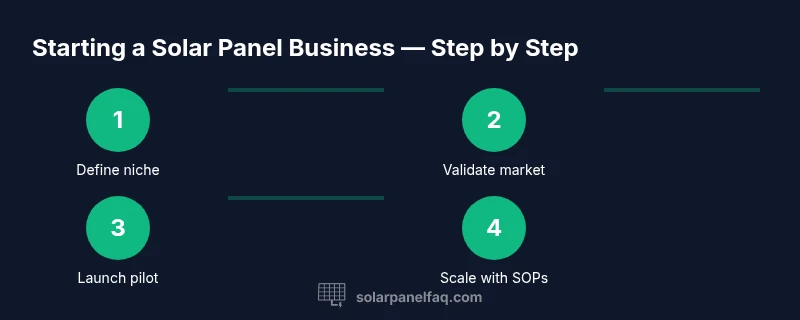
Define your niche and business model
Start by choosing a service focus rather than attempting every solar task at once. Common niches include residential rooftop installations, small commercial projects, and post-installation services such as monitoring, cleaning, and warranty support. Solar Panel FAQ analysis shows that most thriving startups succeed when they pair a primary service with a scalable add-on. Decide whether you’ll be a full-service installer, a maintenance and monitoring provider, or a design-and-consulting specialist. Your choice should guide your pricing, marketing, hiring, and partnerships. Your framework will translate into concrete operating procedures, supplier lists, and a go-to-market plan that fits your local building codes and customer needs.
Validate the market and write a lean plan
Before committing substantial capital, test demand with a lean plan: describe the customer problem, the solution you offer, and who you’ll serve. Map customer segments (homeowners, landlords, small businesses), identify the channels you’ll use to reach them (local SEO, partnerships with electricians or roofers, and community events), and sketch revenue streams (installations, maintenance plans, and equipment sales). Keep your plan lightweight: a one-page executive summary with milestones and a simple cash-flow forecast. Solar Panel FAQ analysis highlights the value of a rapid, customer-centric approach—start small, learn quickly, and iterate. Use this stage to validate your assumptions through conversations with potential customers, lenders, and mentors, then refine your model and budget accordingly.
Legal, licensing, and insurance essentials
Compliance is non-negotiable in this field. Most jurisdictions require a business license, general liability insurance, and, if you hire employees or perform electrical work, workers’ compensation. Some projects may demand electrical or contractor licensing and specific permits from building authorities. Build relationships with a local attorney or compliance expert to interpret licensing requirements, contract law, and warranty obligations. Protect your company with clear service agreements and a robust safety program. While the specifics vary by state or country, the pattern is consistent: establish legal structure, obtain coverage, and document safety practices and inspections. This groundwork reduces risk as you take on your first installations and expands into larger opportunities.
Suppliers, supply chain, and equipment readiness
Establish reliable supplier relationships early so you can quote accurately and manage project timelines. Source panels, inverters, mounting hardware, racking, and monitoring equipment from reputable manufacturers with solid warranties. Set up supplier accounts, negotiate payment terms, and request sample products or tech specs to verify compatibility with your service model. Create a standard bill of materials (BOM) and a procurement checklist to avoid missing parts on site. Inventory management and vendor reliability matter as much as price when you’re balancing cash flow with customer commitments. Having a trusted supply chain reduces delays, improves margins, and supports a smoother customer experience.
Marketing, branding, and building trust
Your marketing should communicate credibility, reliability, and value. Build a simple brand that resonates with homeowners and business clients, and develop a professional website, case studies, and transparent pricing. Leverage local SEO, Google Business Profile, and partnerships with electricians, roofing contractors, and homebuilders to expand reach. Collect testimonials and publish before/after project photos and performance data from monitoring dashboards to demonstrate results. Implement a structured lead-nunnel: inquiries go to a quick qualification call, then a tailored proposal, then a signed contract and a start date. A clear value proposition—cost savings over time, energy independence, and service reliability—will help you differentiate in a competitive market.
Hiring, operations, and scaling
As you grow, formalize your operations with documented processes: project intake, site assessment, permitting checks, safety reviews, installation steps, and commissioning. Hire field technicians with safety training and electrical familiarity; consider a part-time bookkeeper and a sales lead. Invest in project management software to track tasks, timelines, and budgets, and standardize performance metrics. Build relationships with subcontractors for specialized tasks to remain flexible during peak seasons. Plan for growth by forecasting demand, setting hiring thresholds, and maintaining a pipeline of qualified candidates. A scalable operation depends on repeatable checklists, consistent safety practices, and strong customer communication.
Financial planning, pricing, and risk management
Pricing should reflect costs, margins, and market willingness to pay, while accounting for incentives and regional differences. Develop a baseline pricing model for installations, maintenance plans, and monitoring services, then layer in upsells such as battery storage or energy-efficiency upgrades. Track cash flow, forecast capital needs, and build a reserve for unexpected outages or supplier delays. Mitigate risk with clear contracts, reliable warranties, and a documented project warranty policy. Keep an eye on regulatory changes, labor costs, and interest rates that affect financing and project economics. A disciplined financial approach helps you maintain service quality while growing your business responsibly.
Launch plan: your first 90 days
Focus on a controlled launch with a small number of projects to validate processes. Finalize your legal structure, insurance, and supplier agreements; set up your marketing channels and pilot outreach; create sample proposals and testimonials; and implement a safety-first KPI dashboard. Use early projects to refine your BOM, supplier terms, and service scripts, then scale up as you gain confidence and workflow. The Solar Panel FAQ team recommends starting with a defensible, service-led model and documenting every lesson learned for future growth.
Tools & Materials
- Laptop with project management and invoicing software(For proposals, scheduling, and financials)
- Commercial vehicle or van(Vehicle large enough for tools and panels)
- Personal protective equipment (PPE)(Hard hat, gloves, safety glasses, harness where needed)
- CRM and estimating software(Client tracking, proposals, and follow-ups)
- Business license and insurance(General liability and workers’ comp as needed)
- Supplier accounts and BOM templates(Negotiated terms and standard parts list)
- Marketing materials(Brochures, case studies, and testimonials)
- Permits and inspection templates(Local authority forms and checklists)
Steps
Estimated time: 3-6 months for initial launch and first revenue
- 1
Define your niche
Identify whether you’ll focus on residential installs, small commercial projects, or maintenance and monitoring services. This focus will shape your pricing, marketing, and hiring decisions.
Tip: Choose a niche you can consistently service with your current network and skills. - 2
Create a lean business plan
Draft a one-page plan outlining your target customers, revenue streams, and go-to-market approach. List assumptions and a simple budget to validate quickly.
Tip: Keep the plan actionable; update as you gain feedback from real customers. - 3
Secure licensing and insurance
Research local licensing requirements and obtain essential insurance coverage before taking on work. Prepare standard contracts and safety policies.
Tip: Consult a local attorney or advisor to ensure compliance before first project. - 4
Build supplier and financing pipelines
Open accounts with reputable panel, inverter, and mounting manufacturers. Explore financing options for customers and for your own equipment purchases.
Tip: Negotiate favorable terms and document warranty support in supplier agreements. - 5
Launch a pilot and gather proof points
Complete a small number of installations to validate processes, collect testimonials, and refine your BOM and service scripts.
Tip: Capture before/after data and customer feedback to improve proposals. - 6
Market and build partnerships
Target homeowners, landlords, and local businesses. Partner with electricians, roofers, and homebuilders to expand referrals.
Tip: Create a simple referral program to incentivize partners. - 7
Scale with repeatable systems
Document procedures, standardize checklists, and implement project management dashboards to manage growth.
Tip: Use subcontractors strategically to handle peak demand while maintaining quality.
Frequently Asked Questions
What licenses do I need to start a solar panel business?
Licensing depends on location. Most places require a business license, general liability insurance, and possibly a contractor or electrical license for installation work. Check with your local authority and a legal advisor to confirm requirements.
Licensing varies by location; you’ll typically need a business license, liability insurance, and possibly an electrical or contractor license.
Do I need solar installer certification to begin?
Certification requirements differ by region. Some areas require formal certification or apprenticeship programs for installers, while others leave licensing to contractors. Verify local rules before hiring crews.
Certification depends on your area; verify local rules before hiring installers.
How fast can I start generating revenue after launching?
Revenue typically follows a short sales cycle once you have a clear service offering, proposals, and insured operations. Start with pilot projects to accelerate cash flow and refine your pricing.
You can start earning soon after your first installations or maintenance contracts, especially with pilot projects.
How should I price solar installations?
Pricing should cover materials, labor, permitting, and overhead while staying competitive. Use a tiered model for install, maintenance, and monitoring, with optional add-ons like battery storage.
Price by service tier and add-ons, ensuring you cover costs and stay competitive.
What are the biggest risks to plan for?
Regulatory changes, supply chain delays, and safety incidents are common risks. Mitigate with solid contracts, reliable warranties, and proactive safety programs.
Regulatory shifts and supplier delays are top risks; have contracts and safety plans ready.
What is the best way to build early client trust?
Showcase verified case studies, testimonials, and live monitoring data. Provide transparent pricing and a clear warranty policy to reduce buyer hesitation.
Use real case studies and clear warranties to build trust quickly.
Watch Video
Top Takeaways
- Define a clear solar niche and model to differentiate.
- Legal and insurance groundwork reduces risk as you scale.
- Reliable suppliers and a lean plan accelerate revenue.
- Marketing and partnerships drive early client flow.