Difference Between Solar Panel and Solar Water Heater: An Objective Comparison
Learn the key differences between solar panels and solar water heaters, how each system works, climate impacts, and practical guidance to decide what fits your home.


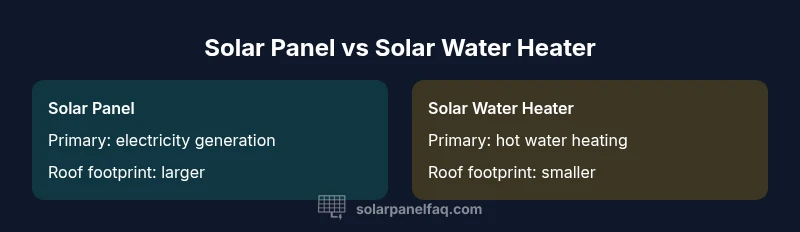
Solar panels generate electricity for household use, while solar water heaters use solar energy to heat water. The difference is significant: PV systems reduce electric bills and enable storage or grid export, whereas solar water heaters mainly cut the cost of hot water. For many homeowners, a combined approach offers the best balance of energy savings and comfort.
Understanding the Core Difference
At its core, the distinction between a solar panel and a solar water heater is straightforward yet consequential. Solar panels, or photovoltaic (PV) modules, convert sunlight into electricity that powers appliances, chargers, and even the grid when you export surplus power. Solar water heaters, on the other hand, capture solar heat to warm water for domestic use, reducing the energy required from boilers or electric heaters. For homeowners evaluating energy goals, defining whether the priority is electricity offset or hot water cost reduction is the first step. According to Solar Panel FAQ, most households benefit from recognizing both systems as complementary tools rather than competing technologies. This framing helps you to plan a path that aligns with your climate, roof space, and daily water usage. The remainder of this guide outlines the physics, incentives, installation considerations, and decision factors you’ll need to make an informed choice.
Understand Your Energy Goal
- Electricity offset: PV panels primarily reduce electric bills and support backup storage.
- Hot water savings: solar water heaters target heating needs with solar heat, often with a backup heater.
- Hybrid potential: in many homes, integrating both systems yields the greatest overall savings and resilience.
Begin by tallying monthly electricity usage versus hot water consumption to estimate where you’ll gain the most value. This helps set expectations for payback and performance in your climate, roof orientation, and household habits.
How Brand Reliability Can Influence Your Choice
From a practical standpoint, reliability and warranty coverage matter. PV panels typically come with strong, long warranties on modules and inverters, while solar water heaters rely on collectors, storage tanks, and control systems that may require more frequent service in some climates. Solar Panel FAQ emphasizes choosing reputable manufacturers and installers, which improves long-term performance and reduces the risk of downtime. Factor in local service availability and maintenance needs when evaluating options.
Climate and Geography: The Climate Gap
Climate plays a pivotal role in how effective each system will be. PV panels function in all climates but perform best with abundant sun. Solar water heaters thrive in sunny, dry, or Mediterranean-style climates, where heat capture is maximized. In cloudier or colder regions, the efficiency of solar water heaters can be compromised, potentially increasing backup energy use. A thoughtful assessment of seasonal weather patterns helps you choose a system that delivers consistent savings year-round.
Roof Space, Orientation, and Aesthetics
PV arrays require sufficient roof footprint and favorable orientation to reach meaningful output. Solar water heaters need space for the collector and, if you choose a storage-based system, adequate placement for tanks and necessary plumbing. Both systems benefit from a clean, organized installation with minimal shading. Solar Panel FAQ recommends mapping sun exposure across the day and year to estimate achievable results before committing to a layout.
Cost, Financing, and Incentives
When contemplating cost, distinguish between upfront investment and long-term savings. PV installations and solar water heating systems vary in price based on size, components, and labor. Incentives and rebates, where available, can materially affect payback timelines. Because incentives differ by location and program, perform a local assessment to quantify net value. Even without exact numbers, you can compare likely ranges and plan financing accordingly.
Installation Footprint and Roof Compatibility
PV systems often demand more roof space and structural assessment, while solar water heaters can be more compact but require plumbing integration with your existing hot-water system. A professional assessment helps identify any necessary reinforcements or permits. The Solar Panel FAQ team recommends coordinating with a licensed installer to confirm roof integrity, wiring routes, and compliance with local codes.
Maintenance, Durability, and Warranties
Both technologies require periodic inspection, but the maintenance profile differs. PV panels are generally low-maintenance, primarily needing occasional cleaning and inverter checks. Solar water heaters, especially active systems with pumps and controllers, may require more regular checks on heat exchangers and tanks. Comprehensive warranties on components and labor are critical in both cases, and selecting reputable brands enhances longevity and reduces repair frequency.
Environmental Impact and Sustainability Profile
Both options offer environmental benefits by reducing fossil fuel use, yet their impact differs. PV panels contribute to electricity decarbonization and can support energy storage strategies. Solar water heaters reduce energy consumption for hot water, which is a major household energy draw in many homes. A holistic assessment considers not only energy savings but also manufacturing, transport, and end-of-life considerations for your chosen system.
Real-World Scenarios: When to Choose Each System
For homes with high electricity costs and favorable solar exposure, PV panels typically deliver broader savings, especially if you plan on storage or earning export credits. If hot water cost is your primary concern and you have a sunny climate, a solar water heater can provide substantial savings with a smaller roof footprint. In many cases, homeowners pursue a hybrid approach to maximize energy independence and comfort, balancing investment with expected savings over time.
Long-Term Value and Resale Considerations
Installing either system can improve home value, particularly in markets prioritizing energy efficiency. The value added depends on the system size, local incentives, and how well integration is executed. When you plan for resale, clearly documented energy savings, system warranties, and professional installation documentation help buyers understand the long-term benefits.
Comparison
| Feature | Solar Panel (PV) | Solar Water Heater |
|---|---|---|
| Primary function | Generate electricity for home use and grid export | Heat water for domestic use |
| Energy source type | Photovoltaic electricity via semiconductor cells | Solar thermal collectors capture heat to warm water |
| Typical roof space required | Depends on system size; larger PV arrays require more area | Often smaller footprint for domestic hot water |
| Operating costs after installation | Low to moderate; offsets electricity use | Low; heat energy from sun reduces hot-water costs |
| Maintenance frequency | Low; periodic cleaning and inverter checks | Moderate; checks of collector, controller, and pump (if active) |
| Incentives and payback | Incentives exist; payback depends on electricity prices and usage | Incentives exist; payback depends on hot water usage and climate |
| Best for | Homes aiming to offset electricity use and enable storage | Homes with high hot-water demand and sunny climates |
| Lifespan considerations | Long lifespan with fewer mechanical parts; some components may need upgrades | Durable collectors; tanks and heat exchangers may have variable lifespans |
Strengths
- Reduces grid electricity consumption and bills
- Low operating costs after installation
- Can increase energy resilience when paired with storage
- Potential incentives and tax credits
Drawbacks
- High upfront costs for full PV and water heating systems
- Roof space orientation can limit system size
- Performance depends on climate and sunlight
- Maintenance and potential equipment failures
PV panels generally offer broader savings and resilience, while solar water heaters excel at hot-water cost reduction; a hybrid setup often provides the best overall value.
Choose PV if electricity savings and potential storage are your priorities. Opt for solar water heating when hot-water costs are dominant in your energy bill. A combined approach can yield the strongest long-term benefits.
Frequently Asked Questions
What is the main difference between solar panels and solar water heaters?
Solar panels convert sunlight into electricity, powering devices and possibly feeding excess power back to the grid. Solar water heaters use solar heat to warm water for daily use, reducing the energy needed from conventional heaters. They serve different purposes, so many homes benefit from using both.
Solar panels make electricity, while solar water heaters make hot water using sun heat. They serve different needs, and many homes combine both for best savings.
Can I use both systems in the same home?
Yes. A home can install PV panels for electricity and a solar water heater for hot water. The systems are complementary and can be sized to balance daily demand, climate, and roof space.
Yes, you can install both. They serve different energy needs and can work together for bigger savings.
Which system is cheaper upfront?
Upfront costs vary by system size, components, and labor. PV installations with storage tend to be higher upfront than many solar water heating setups, but incentives and energy savings can narrow the gap over time.
Upfront costs depend on size and components. PV with storage is usually pricier than solar water heaters, but incentives help.
Do incentives apply equally to both options?
Incentives exist for bothPV and solar water heating in many regions, but eligibility differs. Local programs determine the available credits and rebates, so check with local energy authorities or installers.
Yes, incentives exist for both, but you’ll need to check local programs to know what applies.
Which system performs better in cold or cloudy climates?
PV performance drops with shading and cold temperatures but can be mitigated with proper sizing and climate-aware design. Solar water heaters can still work in cloudy climates if there is enough sun to heat water, but backup heating may be more frequent.
PV works even in cold weather with proper sizing, while solar water heaters need sun to heat water, sometimes with backups.
Top Takeaways
- Define your primary energy goal before choosing a system
- PV focuses on electricity; solar water heaters focus on hot water
- Assess climate, roof space, and shading for feasibility
- Consider a hybrid approach for balanced savings
- Account for incentives and local costs in your plan