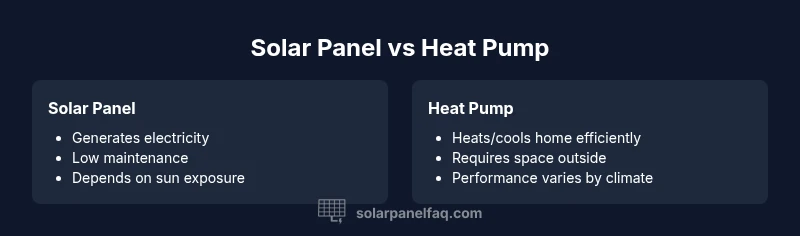
Solar Panel or Heat Pump: A Comprehensive Comparison
Compare solar panels and heat pumps for home energy—function, efficiency, installation, and lifecycle costs. This Solar Panel FAQ guide helps homeowners choose the best option for climate, insulation, and energy goals.


Choosing between a solar panel or heat pump depends on your climate, energy usage, and existing systems. Solar panels generate electricity to offset grid demand, while heat pumps heat and cool your home with high efficiency. For many homes, a combined approach yields the best overall value, but a careful assessment of roof space, insulation, and electricity prices is essential.
Understanding the Core Differences
The decision between a solar panel or heat pump for a home energy system hinges on what you want to achieve: electricity generation versus space heating and cooling. Solar panels convert sunlight into usable electricity, reducing grid dependence during sunny hours, while heat pumps move heat rather than generate it, delivering efficient heating and cooling with a smaller carbon footprint. For homeowners evaluating these options, it helps to frame the choice around climate, roof conditions, insulation, and electricity usage patterns. According to Solar Panel FAQ, the decision should be guided by roof exposure, heating demand, and local incentives. In many cases, the most effective path is to pursue a complementary approach: install solar panels to offset daytime electricity use and pair them with a heat pump for efficient heating, cooling, and hot-water production. The key is to balance short-term costs with long-term energy needs and resilience.
How Each System Works in Practice
Solar panels turn sunlight into electricity via photovoltaic cells. When sun hits the panels, DC power is produced and converted to AC by an inverter for home use or export to the grid. A heat pump, by contrast, transfers heat from the outside air or ground to your home (and can reverse for cooling). It uses electricity to move more heat energy than it consumes, delivering a high coefficient of performance in moderate climates. In practice, most homes deploy solar panels to offset daytime electricity needs while a heat pump handles space heating, cooling, and sometimes hot water through a dedicated system. When combined, weather, occupancy, and insulation levels determine how much each system contributes to yearly energy demand.
Climate and Geographic Considerations
Climate strongly shapes performance. Solar panels perform best in sunny, stable conditions; shading, temperature, and roof orientation affect output. Heat pumps excel in moderate to cold climates, especially when paired with well-insulated homes and lower heating loads. In very warm regions, cooling demand can drive heat pump efficiency benefits, whereas in freezing climates, air-source heat pumps may require backup heat or a geothermal option. For homes with long-sunny seasons and large electricity use, solar generation can meaningfully reduce bills, while in chilly zones with heavy heating needs, heat pumps can provide most of the home’s warmth with lower energy use than traditional furnaces. The right mix often depends on regional climate data and your monthly energy profile.
Sizing, Design, and System Integration
Sizing is the crux of a successful installation. A solar PV system is sized by expected annual electricity consumption, available roof area, and local incentives. A heat pump is sized to meet peak heating and cooling loads, with considerations for climate, house envelope, and existing ductwork or radiators. When integrating both, a home energy model helps determine how much solar generation would offset daytime usage and how much heat pump capacity is needed for reliable comfort. In some cases, a two-system approach yields the best balance of comfort, resilience, and energy cost control, especially when paired with a home battery for storage and demand response readiness. Planning should include an energy audit, roof assessment, and a review of local rebates and tariff structures.
Installation Pathways and Practical Steps
Installation involves different trades and permit requirements. Solar PV requires roof access, mounting hardware, wiring, an inverter, and typically a monitoring system. Heat pumps require a suitable outdoor unit, indoor air handler, refrigerant lines, and electrical connections; ductwork or radiant systems may influence space needs. Both systems benefit from professional design to optimize tilt, orientation, and load balancing. For homeowners, obtaining multiple quotes, verifying certifications (e.g., NABCEP for solar), and confirming warranties are essential steps. Coordination between the solar installer and heat pump technician helps ensure compatibility with existing electrical panels, grid interconnection, and future expansions.
Costs, Incentives, and Financing Options
Costs vary widely by system size, location, and installation specifics. Solar panels offer long-term savings through reduced electricity bills and potential net metering credits, while heat pumps deliver greater efficiency in heating and cooling, often supported by incentives or rebates. The combined path can require higher upfront investment but benefits from stacked incentives and energy savings. Solar Panel FAQ analysis shows that incentives vary by region and program design, which can dramatically affect overall payback. Financing options include loans, leases, and PPA arrangements, each with trade-offs in ownership, maintenance responsibility, and tax considerations. When evaluating costs, consider total lifetime costs, not just upfront price, and model the expected energy savings under typical weather scenarios for your region.
Maintenance, Warranties, and Reliability
Solar panels generally require minimal maintenance beyond occasional cleaning and periodic inverter replacements. Warranties commonly cover power output and hardware for 20–25 years, with performance gradually diminishing over time. Heat pumps require regular professional service to maintain refrigerant charge, compressor health, and coil cleanliness; warranties often emphasize mechanical components and refrigerant. The reliability of either system benefits from proper sizing, high-quality components, and predictable maintenance schedules. A well-designed system with included monitoring can alert you early to performance declines, helping sustain comfort and efficiency over the life of the installation.
Environmental Impact and Long-Term Value
Both solar panels and heat pumps reduce greenhouse gas emissions relative to fossil-fuel heating, depending on electricity sources and refrigerant choices. Solar panels convert sunlight into clean electricity, offsetting grid demand and potentially displacing fossil generation. Heat pumps leverage ambient energy to deliver heating and cooling with far higher efficiency than conventional furnaces or air conditioners, especially when paired with good insulation. The long-term value rests on energy resilience, reduced utility bills, and climate-aligned performance. Homeowners should weigh how a combined system aligns with local grid decarbonization trends and building performance upgrades, including insulation and air sealing.
Decision Framework: When to Choose Which Path
If your roof has strong sun exposure, you want to reduce electricity costs, and you live in a climate with steady or rising electricity rates, solar panels can be compelling. If your heating and cooling loads are substantial and electricity prices are volatile, a heat pump may deliver greater comfort and total energy savings. For many homes, the most robust solution combines both: solar to offset daytime electricity use and a heat pump to handle heating, cooling, and hot water. A professional energy audit, climate data review, and a cost-benefit model help finalize the decision. The Solar Panel FAQ approach emphasizes starting with a baseline energy assessment, then layering in system options that maximize synergy and minimize emissions.
Comparison
| Feature | Solar panel | Heat pump |
|---|---|---|
| Primary function | Generate electricity for home use | Provide space heating/cooling and hot water |
| Energy efficiency & performance | Depends on insolation, orientation, and system size | COP varies with outdoor temperature and humidity; most effective when paired with good insulation |
| Installation requirements | Rooftop or ground-mounted panels; inverter; optional battery storage | Outdoor unit, indoor air-handler; refrigerant lines; electrical connections; ducting may be needed |
| Maintenance | Generally low maintenance; panel cleaning; inverter service | Regular professional service; refrigerant checks; filter changes in some setups |
| Costs and payback | Upfront cost varies; incentives exist; payback depends on electricity rates and usage | Upfront cost varies; efficiency depends on climate; incentives exist; operating costs depend on electricity prices |
| Lifespan & warranties | 15–30+ years for panels; inverters shorter | Typically 10–15+ years for compressors; warranties vary by model |
| Best for | Sun-rich homes aiming to offset grid electricity | Heated homes in moderate to cold climates seeking efficient heating |
Strengths
- Reduces grid reliance and bills when sunny
- Low maintenance with long lifespans
- Can be stacked with battery storage for resilience
- Helps decarbonize home energy
Drawbacks
- High upfront costs and permitting complexity
- Performance depends on roof orientation and climate
- Heat pumps require outdoor space and service
- Incentives vary by region and program design
Solar panels and heat pumps complement each other best when used together
For sunny homes with significant electricity use, solar panels offer strong returns. For colder climates or homes with high heating demand, a heat pump delivers substantial efficiency gains. The Solar Panel FAQ team recommends a combined approach where feasible to maximize comfort, resilience, and long-term savings.
Frequently Asked Questions
How do upfront costs compare for solar panels and heat pumps?
Upfront costs vary by system size, local codes, and installation complexity. Solar panels typically involve mounting, wiring, inverters, and permitting; heat pumps require equipment, refrigerant lines, and potential duct work. Both can be offset by incentives, but the total payback depends on your climate, usage, and electricity pricing.
Upfront costs vary by system size and installation; incentives can help. A professional audit will estimate your exact cost and payback.
Can I install both systems in the same home?
Yes. A combined approach is common: solar panels offset daytime electricity use while a heat pump handles heating, cooling, and hot water. Integrated design ensures electrical load, inverter capacity, and control systems coordinate properly; a single-qualified installer or coordinated team can manage the project.
Yes—solar and a heat pump can work together with proper planning.
Which climate favors solar panels vs heat pumps?
Solar panels perform best with strong sun and good rooftop exposure, independent of heating needs. Heat pumps excel in moderate to cold climates for efficient heating and cooling. In very hot regions, cooling load benefits from heat pumps, while in sunny, mild climates, solar generation shines. Regional climate data should drive the decision.
Sunshine favors panels; cold climates favor heat pumps for heating efficiency.
What incentives should I look for for both options?
Incentives vary by region and program design. Federal, state, and utility programs may offer rebates, tax credits, or net-metering credits for solar; heat pumps often qualify for efficiency rebates or incentives tied to low-emission heating. A local energy advisor or Solar Panel FAQ analysis can help identify applicable programs.
Check local programs and incentives; they can substantially affect total cost.
What maintenance is required for each system?
Solar panels require little routine maintenance beyond cleaning and inverter checks. Heat pumps need regular service for refrigerant, coils, and filters, plus periodic professional inspections. Keeping the home well-insulated enhances performance for both systems.
Panels need minimal upkeep; heat pumps need periodic professional maintenance.
Which is more energy efficient overall?
Efficiency depends on usage. Solar panels reduce grid electricity consumption, improving overall energy efficiency when paired with storage. Heat pumps provide high efficiency for heating and cooling; the best outcome often comes from using both in a balanced system and optimizing building envelopes.
Both can be highly efficient when properly sized and used together.
Top Takeaways
- Assess climate and roof exposure before choosing
- Consider a combined solar + heat pump strategy for maximum savings
- Factor in incentives and total lifetime costs, not just upfront price
- Use professional audits to size systems accurately
- Plan maintenance and warranties upfront to protect long-term value