Solar Power System: How It Works and Setup Guide for Homeowners
A comprehensive, educational guide for homeowners on solar power systems, covering how they work, sizing, components, installation steps, and maintenance to help you plan, install, and optimize solar energy at home.


By the end of this guide you will understand how a solar power system works, how to size and select components, and how to plan a safe, code-compliant installation. You’ll also compare grid-tied, off-grid, and hybrid setups, estimate costs, and map maintenance needs. This quick answer helps homeowners start with a practical plan.
Understanding what a solar power system does
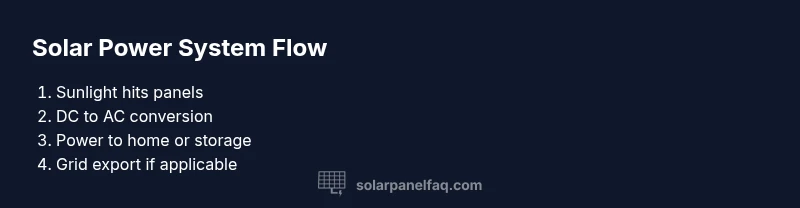
A solar power system converts sunlight into usable electricity for your home. It captures photons with photovoltaic panels, converts the resulting direct current (DC) into alternating current (AC) with an inverter, and then feeds power to electrical loads or storage. For homeowners, the exciting part is the potential to reduce or even eliminate monthly utility bills while increasing energy independence. Solar power systems also help reduce greenhouse gas emissions by displacing fossil fuel-generated electricity. In this guide, we reference guidance from the Solar Panel FAQ team and official energy resources to provide practical, actionable steps. The core idea is simple: capture daylight, convert it efficiently, and manage surplus energy wisely. As you plan, consider how your roof orientation, shading, and local incentives influence overall performance and payback. Solar power system deployments vary by climate, roof type, and energy goals, but the fundamentals hold true across most homes.
Core components: panels, inverter, battery, and balance of system
A modern solar power system includes several key parts that work together to generate, convert, and manage electricity. Photovoltaic (PV) panels absorb sunlight and produce DC electricity. The inverter converts DC to usable AC power for home circuits. A balance of system (BOS) includes racking, wiring, fusing, sensors, and monitoring equipment. Optional battery storage provides energy during outages or at times of high demand. When considering a battery, think about capacity, depth of discharge, cycle life, and charge/discharge efficiency. Always ensure components meet local electrical codes and interconnection standards. In practice, you should plan for the space to house equipment, accessible wiring routes, and safe, code-compliant installations. The goal is a reliable, safe setup that delivers clean energy to your home while maximizing return on investment.
System sizing and planning
Sizing a solar power system involves estimating your energy needs, accounting for seasonal variations, and selecting panels with appropriate wattage and efficiency. Start by reviewing 12 months of electricity usage to determine typical daily and seasonal demand. Consider roof area, orientation, tilt, and shading that affect performance. Panel efficiency and temperature coefficients influence the actual output, especially in hot climates. For homeowners, the planning phase should also cover inverter size, potential battery storage, and whether a grid-tied or off-grid approach is best. The plan should include a grid interconnection agreement, warranties, and a clear maintenance schedule to preserve performance over 25+ years.
System types: grid-tied, off-grid, and hybrid
A grid-tied system connects to the utility and allows excess solar generation to offset grid usage, often with net metering. An off-grid system relies on batteries and backup power without a connection to the grid, which requires larger storage and more robust sizing. A hybrid configuration combines solar with battery storage and a connection to the grid, offering resilience and energy reliability. Each type has trade-offs in cost, complexity, and independence. Your choice depends on local incentives, outages, space for storage, and how much you value self-sufficiency versus simplicity.
Installation considerations: permits, wiring, safety, and codes
Planning a solar installation involves navigating local building codes, electrical permits, and utility interconnection rules. You’ll likely need a permit set, an electrical plan, and an inspection from your local authority. Safety is paramount: de-energize circuits before work, use fall protection on rooftops, and follow lockout/tagout procedures. Choose a qualified installer if you’re not experienced with electrical work; professional oversight ensures compliance and helps avoid hazards. Always verify that equipment has proper certifications and that wiring methods comply with the National Electrical Code (NEC) or local equivalents.
Costs, savings, and incentives: financing options and payback
Costs for solar power systems vary by size, equipment quality, and installation challenges. Typical considerations include panel price per watt, inverter price, racking, wiring, and permits. While precise numbers depend on your location, an informed homeowner weighs initial costs against long-term savings, tax credits, rebates, and net metering benefits. Financing options range from cash purchases to loans or leases, with payback periods often spanning several years depending on energy use and incentives. Using a solar calculator can help you project annual savings, break-even timelines, and total return on investment.
Maintenance, warranties, and troubleshooting
A well-designed solar power system requires routine checks, especially after severe weather. Inspect panels for dirt, debris, or shading from nearby growth. Monitor inverter status indicators and review production data to spot anomalies. Warranties vary by component, with modules often carrying 25-year power output warranties and inverters 5-12 years depending on model. Troubleshooting steps include checking connections, verifying meter readings, and consulting the installer for complex issues. Regular cleaning and keeping equipment accessible can help maintain performance.
Getting started: homeowner checklist
To begin, gather your last 12 months of electricity bills and a rough map of your roof. Check shading from trees and nearby structures, and note roof orientation and tilt. Contact local installers for quotes and verify interconnection requirements. Collect permits, warranties, and maintenance schedules, and set a realistic budget that includes a contingency for unexpected costs. A gradual, well-planned approach helps ensure a smooth installation and reliable operation for decades.
Authoritative sources
For further reading and verification, consult official sources such as the U.S. Department of Energy, National Renewable Energy Laboratory (NREL), and state energy offices. These resources provide detailed guidance on interconnection, incentives, performance metrics, and best practices for solar power system design and maintenance. Always cross-check recommendations with local codes and utility requirements.
Tools & Materials
- Safety gloves(EN 374 compliant, cut-resistant)
- Safety glasses(ANSI Z87.1 rated)
- Ladder or scaffolding(Appropriate height for roof access)
- Roof mounting rails and hardware(Corrosion-resistant, UV-rated)
- Power drill and bits(Decked-out set for mounting)
- Torque wrench(To specified torque for fasteners)
- Cable cutters/strippers(Electrical-grade tools)
- Multimeter / clamp meter(For live measurements)
- PV combiner box (DC disconnect)(Optional safety device)
- Inverter (string or micro)(Match to system design)
- Battery storage (optional)(Size based on needs)
- Inverter wiring and DC/AC cables(UL-listed, appropriately rated)
- Safety signs and permits documents(For inspections and compliance)
Steps
Estimated time: 4-6 weeks
- 1
Define your energy goals
Identify daily energy needs by reviewing electricity bills for the past year. Define targets for solar contribution and comfort level with grid reliance. This helps establish system size and budget.
Tip: Pull the 12-month average kWh per day to estimate baseline load. - 2
Assess site suitability
Evaluate roof orientation, tilt, and shading from trees or chimneys. Use sun-path charts or a solar assessment app to forecast annual production.
Tip: Take notes on shading at different times of day and seasons. - 3
Choose system type
Decide between grid-tied, off-grid, or hybrid based on reliability goals, storage needs, and budget.
Tip: If reliability matters, consider a hybrid with battery storage. - 4
Select components
Choose panels with favorable warranty and efficiency, an inverter matching your DC side, and appropriate mounting hardware.
Tip: Prioritize a reputable brand with solid warranties and local support. - 5
Plan permits and interconnection
Prepare permit drawings and confirm interconnection requirements with the utility. Schedule inspections as required.
Tip: Start permit applications early to avoid delays. - 6
Install mounting hardware and panels
Mount rails, attach panels, and run DC wiring safely. Ensure watertight seals and proper cable routing to avoid damage.
Tip: Keep a clear workspace and double-check sealant integrity. - 7
Connect inverter and AC wiring
Connect DC from panels to the inverter, then link the inverter to your main service panel following NEC rules.
Tip: Only qualified electricians should perform AC wiring. - 8
Inspect, test, and monitor
Perform inspections, turn on, and verify system output with monitoring software. Schedule routine maintenance and performance reviews.
Tip: Document production data for future benchmarking.
Frequently Asked Questions
What is a solar power system?
A solar power system converts sunlight into usable electricity for your home using panels, an inverter, and balance-of-system components. It can be grid-tied, off-grid, or hybrid based on your needs.
A solar power system turns sunlight into electrical power for your home, using panels and an inverter. It can connect to the grid, operate independently, or combine both depending on your goals.
What is the difference between grid-tied and off-grid?
Grid-tied systems export excess power to the utility and rely on the grid for outages, while off-grid systems use batteries and are not connected to the grid. Hybrid systems combine both for resilience.
Grid-tied uses the grid and can export excess power, off-grid uses batteries and no grid connection, and hybrids mix both for resilience.
Do I need permits to install solar?
Most areas require electrical and building permits, plus utility interconnection approval. A licensed installer can help navigate local codes and inspections.
Yes, you usually need electrical and building permits and an interconnection approval. An installer can handle most of these for you.
How long does installation take?
Installation timelines vary with roof type, system size, and permitting. On-site installation typically spans several days to a few weeks.
Installations usually take a few days to a few weeks depending on complexity and permitting.
What maintenance is required?
Routine cleaning and periodic checks of wiring, inverters, and mounts keep performance high. Warranties often cover major components for 20+ years.
Regular cleaning and occasional checks will keep the system running well for many years.
Are there incentives or tax credits?
Incentives vary by location and change over time. Check federal, state, and utility programs and plan for potential payback impacts.
There are various incentives by location; check federal and local programs for benefits.
Watch Video
Top Takeaways
- Plan with a clear energy target and budget.
- Choose system type that matches your resilience goals.
- Follow safety protocols in all installation steps.
- Incentives and interconnection rules vary by region.
- Maintenance ensures long-term performance.