Solar Panels for Your Home: A Practical How-To Guide
Discover how to choose, install, and maintain solar panels for your home. This practical guide covers costs, efficiency tips, roof compatibility, and long-term savings.


This guide shows homeowners how to plan, size, and install solar panels for their home. You'll learn how to evaluate roof suitability, choose between system types, estimate energy savings, navigate permits, and maintain performance. This article also outlines costs, incentives, and safety.
Why solar panels for your home
If you're exploring solar panels for your home, you're asking not just about equipment but about long-term energy independence, resilience, and potential savings. According to Solar Panel FAQ, homeowners can start small with a grid-tied system and scale up as energy needs grow. Solar panels convert sunlight into electricity that reduces reliance on the grid, helps stabilize monthly bills, and can increase property value in many markets. In practice, most households see a noticeable drop in daytime electricity consumption, particularly during sun-rich months. The decision hinges on site suitability, local incentives, and your willingness to undertake a basic planning process. In this section, we’ll lay the groundwork by clarifying what solar panels can and cannot do, how they fit into a larger energy strategy, and what to expect during the first year after installation. You’ll leave with a clear vision of how solar power integrates with your home’s electrical system and daily routines.
Assessing site and energy needs
Before committing to a system, evaluate how much energy your home uses and how much sun your site receives. Start by gathering 12 months of utility bills to identify peak usage months and seasonal trends. Solar panels for your home perform best in sunny, unobstructed locations with south-facing roofs or exposures that capture daylight most of the year. If your roof is shaded or oriented poorly, you may still gain value by installing microinverters or optimizers. This block explains how to map energy needs to potential production, how to account for electric vehicle charging, and when a smaller system can still meet essential load. Remember, the goal is to match generation to consumption while leaving room for future expansion.
System types and configurations
There are several ways to configure a home solar system. The most common options are grid-tied systems with or without battery storage and off-grid configurations for remote properties. Grid-tied systems allow you to draw from the grid when needed and export excess solar generation to reduce utility bills. Battery storage adds resilience and can shift consumption to times when sun isn’t available, but it adds upfront cost and complexity. In this section, we compare monocrystalline vs polycrystalline panels, fixed-tilt vs tracking mounts, and string inverters vs microinverters. You’ll learn how each choice affects efficiency, space requirements, and long-term maintenance.
Sizing a solar array and estimating energy needs
Sizing a solar array requires translating annual electricity usage into an estimated number of panels and an expected output. Start by calculating annual kWh consumption and dividing by assumed production per watt for your climate. Then adjust for shading, orientation, and panel efficiency. This part covers how to choose system size, how to plan for future energy changes such as a home addition or EV charging, and how to avoid over- or under-sizing. We emphasize conservative sizing to maximize reliability and ROI, even if incentives fluctuate. Solar panels for your home should be planned with your current and near-future needs in mind.
Roof and shading considerations
Roof health, orientation, and shading are critical to performance. A south-facing or flat roof often yields the best results, but east/west orientations can still work with slightly larger systems. Shade from trees, chimneys, or nearby structures reduces production, so conduct a shade analysis at different times of day and across seasons. In this section we describe tools and methods for assessing roof condition, frame geometry, and possible re-roofing needs. We also touch on roof warranty implications and how to coordinate with your installer to minimize potential leaks during installation.
Financing, incentives, and cost considerations
Costs for solar panels vary by system size, equipment quality, and installation complexity. Rather than providing a single price, we discuss typical cost ranges per watt, the impact of inverters and mounting hardware, and how incentives like tax credits or utility rebates can influence the overall ROI. This block also explains different financing options, including cash purchase, loans, leases, and power purchase agreements. We highlight the importance of obtaining multiple bids, evaluating long-term maintenance costs, and planning for battery storage if you want energy resilience. By understanding these factors, you can balance upfront costs with future savings and environmental benefits.
Installation basics and safety for homeowners
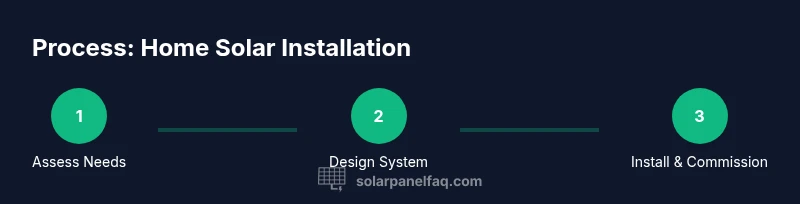
A safe, compliant installation typically requires professional electrical work and adherence to local codes. We outline the steps a professional installer will take, including electrical service planning, mounting system installation, module wiring, inverter setup, and system testing. If you choose a DIY approach, prioritize risk assessment, fall protection, and permits. This section provides a realistic view of what you can do safely and what should be left to licensed technicians to ensure warranty validity and code compliance. We include recommended safety routines and readiness checks before any work begins.
Maintenance, monitoring, and performance optimization
Solar panels require minimal routine maintenance, but performance declines from dirt, debris, and aging components. Regular cleaning, glare checks, and inverter monitoring help maintain expected output. Many modern systems come with online dashboards that show real-time production, which helps diagnose issues quickly. We discuss cleaning frequency, appropriate cleaning solutions, and how to interpret performance data to identify shading changes, soiling, or equipment faults. With proper monitoring, you’ll keep the system operating close to its ideal output and protect your investment.
Planning for the long term: warranties, upgrades, and next steps
Warranties for panels and inverters typically cover 20 to 25 years, with performance guarantees that degrade gradually over time. Keep a record of serial numbers, installation dates, and warranty documents. Consider future upgrades like battery storage or smart-grid integrations as technology and prices evolve. This final section helps you compile a practical action plan, including a timeline for permits, installation, and post-installation maintenance. The lens of long-term planning ensures you maximize value and reliability while minimizing risk.
Tools & Materials
- Fall protection PPE (gloves, hard hat, non-slip shoes, harness)(Use proper fall protection when working on roofs; follow local safety rules)
- Ladder or scaffolding with stabilizers(Secure base on firm ground; use a second person for support when possible)
- Cordless drill/impact driver with appropriate bits(PH2 or Phillips bits, wood and metal bits for mounting holes)
- Solar mounting rails, clamps, and hardware(Includes rails, clamps, screws, and conduit fittings)
- Multimeter or voltage tester and basic electrical tools(Check polarity and test circuits safely; have a non-contact tester handy)
- Measuring tape, marker, and wire strippers(Precise layout and clean wire terminations are essential)
Steps
Estimated time: 2-6 weeks
- 1
Calculate energy needs
Begin by collecting a full year of electric bills to determine average daily usage and seasonal peaks. Translate that usage into a target system size by translating kilowatt-hours into a wattage expectation for your climate. This step sets the foundation for all sizing decisions and helps you avoid undersizing or oversizing the array.
Tip: Have your utility bill handy to note monthly fluctuations and peak demand periods. - 2
Evaluate roof and site conditions
Inspect roof orientation, pitch, shading from trees or nearby structures, and the overall roof condition. Use a shade analysis tool or sun path diagram to map sun exposure across seasons. This step determines if you need microinverters, optimizers, or a different mounting strategy.
Tip: Schedule a professional roof inspection if you notice damaged shingles or signs of moisture. - 3
Select system type and sizing approach
Choose between grid-tied with or without storage, or an off-grid setup if you have limited utility access. Decide whether to add battery storage for backup and time-shifted usage. Finalize the target panel count and inverter configuration based on wattage, efficiency, and space.
Tip: Battery storage adds cost but improves resilience; evaluate your backup needs before committing. - 4
Secure permits and incentives
Research local building and electrical permits, interconnection rules, and available incentives such as tax credits or rebates. Collect required documentation and prepare a bid package for installers if you’re not DIYing the installation. This step helps avoid delays and ensures code compliance.
Tip: Start early with permitting to prevent last-minute hold-ups. - 5
Layout mounting and wiring plan
Work with your installer to map mounting locations, wiring routes, and inverter placement. Plan for weatherproof connections, conduit routing, and protection from weather exposure. Ensure space for future expansion if you anticipate adding storage later.
Tip: Document the layout and keep a copy of the plan for future upgrades. - 6
Install or hire licensed professionals
If you’re DIY-ing, proceed only with non-electrical tasks and seek a licensed electrician for all wiring. Most homeowners hire a certified installer to ensure warranty validity and code compliance. The installer will connect the system to the grid, perform commissioning, and verify safety tests.
Tip: Never bypass electrical codes; improper installation can void warranties and create safety hazards.
Frequently Asked Questions
Is solar energy worth it for a typical home?
Most homes see long-term savings depending on location, usage, and incentives. A well-sized system with proper maintenance maximizes value.
Most homes see long-term savings when properly sized and maintained.
How long does installation take and what about permitting?
Timing varies by project size and local permitting. Expect a few days for installation plus several weeks for permits and inspections in some areas.
Timing varies; permits can take weeks in some regions.
Can I install solar panels myself?
DIY installation is possible for non-electrical tasks, but most homeowners hire licensed professionals for wiring and interconnection to the grid.
Consider hiring a licensed installer for safety and warranties.
What maintenance do solar panels require?
Occasional cleaning and inverter monitoring keep performance near the expected output. Regular checks help catch issues early.
Clean panels occasionally and monitor the system online.
How many panels do I need and what about warranties?
Panel count depends on usage and roof space; warranties typically cover 20–25 years, with performance guarantees varying by manufacturer.
The number depends on your usage, and warranties usually cover 20 to 25 years.
What is the effect of incentives on ROI?
Incentives can significantly affect ROI by reducing upfront costs and shortening payback periods, but vary by location and policy changes.
Incentives can greatly improve ROI but vary by location.
Top Takeaways
- Assess energy needs before choosing panel count.
- Shading and orientation drive system performance.
- Different system types fit different budgets and goals.
- Permits and incentives impact timelines and ROI.
- Maintenance keeps performance steady over decades.