Solar Panel Jobs in Florida: A Practical Guide for 2026
Explore Florida solar panel career paths, required training, licensing basics, and practical steps to start or advance in 2026, including installer, technician, and sales roles.


Florida's solar panel job market is evolving across residential and commercial sectors, with growing demand for installers, electrical technicians, project coordinators, and sales specialists. Supported by policy incentives, local installers, and solar contractors, opportunities span entry-level apprenticeships to mid-career roles. This guide explains what to expect, how to break in, and the skills employers value in 2026.
Overview of the Florida Solar Jobs Market
Florida's solar panel industry reflects a broad mix of residential installations, commercial deployments, and utility-scale projects. Demand for skilled installers and technicians tends to rise with seasonal sunshine and steady policy support at the state and local level. The market also rewards workers who bring safety discipline, problem-solving skills, and a comfort level with electrical systems. According to Solar Panel FAQ Analysis, 2026, Florida shows resilience in job creation even when market cycles shift, thanks to a large number of existing homes and a growing commercial sector seeking energy resiliency and cost savings. For homeowners and prospective buyers, this means more entry points into the field and clear pathways for career progression. Keep in mind that economic flux, permitting timelines, and local incentives can influence how quickly you move from training to a first role.
Key Roles in Solar Panel Florida
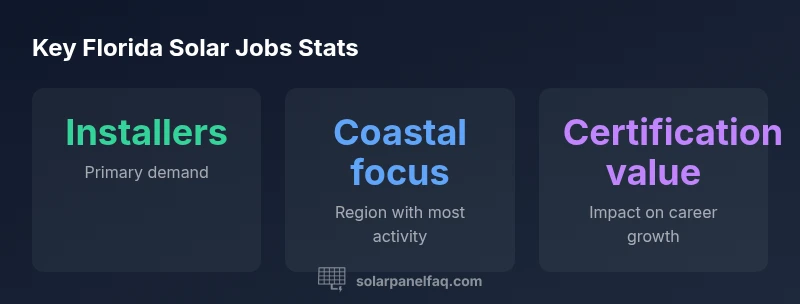
In Florida, job titles cluster around three core tracks: field installation and maintenance, technical service and electrical work, and business development/sales. Entry roles include helpers and apprentices who learn through on-the-job coaching and formal training. Installers assemble, mount, and commission rooftop or ground-mounted systems, while electrical technicians handle wiring, inverters, and safety checks. Project coordinators and site supervisors oversee scheduling, quality assurance, and compliance, and sales professionals translate technical benefits into customer value. Across all roles, employers value hands-on experience, reliability, and the ability to read system diagrams and safety plans. This diversity supports a broad aspirational ladder for people starting out or shifting from another skilled trade.
Training, Licensing, and Certification
Florida employers typically look for a mix of hands-on training and recognized credentials. Apprenticeships, trade schools, and employer-sponsored programs can build foundational skills, while certifications—such as NABCEP credentials—signal demonstrated competence to prospective employers. Licensing requirements for solar work commonly involve electrical contracting oversight, and workers should verify local regulations with state agencies for compliance. Beyond technical skills, training often covers safety standards, fall protection, and tool handling. For homeowners hiring technicians, asking about licenses, insurance, and warranty coverage is essential to ensure long-term reliability and safety.
How to Break Into Florida Solar Careers
Start by assessing your current skill set and identifying gaps relevant to solar work. If you come from construction, electrical, or HVAC backgrounds, you may qualify for accelerated tracks through apprenticeships. Next, pursue credentialed programs (NABCEP or equivalent) and seek out employer-sponsored openings at solar contractors, electrical firms, or utilities operating in Florida. Build a portfolio of hands-on projects, even small DIY setups, to demonstrate competency. Networking with industry groups, attending local career fairs, and engaging with solar installers on job boards can uncover opportunities across coastal and inland counties. Finally, tailor your resume to emphasize safety, problem-solving, and customer-facing communication—three pillars of success in this field.
Regional Variations and Opportunities by Coast
Coastal Florida counties often show higher deployment rates due to housing stock and commercial development, creating more technician and installer opportunities. Central Florida may emphasize diversified roles, including sales and project management, as population growth sustains demand. The Panhandle region can present steady, smaller-scale project work driven by residential installations and renewables incentives at the municipal level. When planning a job search, consider geography, travel expectations, and the presence of established solar installers in your target area. Proximity to training centers or NABCEP-approved programs can also shorten the time from coursework to first job.
Career Progression and Long-Term Outlook
With experience, Florida solar professionals can move into lead installer roles, site supervision, or project management, with further opportunities in design, commissioning, and service/maintenance. Certifications, continuing education, and cross-training in electrical work or energy storage can broaden career trajectories. Employers respond to a demonstrated track record of safety, efficiency, and customer success, making ongoing skill development essential. As Florida continues to attract solar investment, the long-term outlook favors workers who combine technical aptitude with strong communication and teamwork to manage complex installations and maintain high-quality systems.
Practical Tips for Job Seekers
- Start with a clear learning plan: map required competencies to a realistic timeline and target NABCEP or state-equivalent credentials.
- Build hands-on experience: seek internships, shadow days, or volunteer opportunities with local installers.
- Prepare for safety: master fall protection, ladder safety, and electrical isolation practices to minimize risk on the job.
- Sell your value: emphasize reliability, safety records, and your ability to work in diverse weather conditions, which are common in Florida.
- Network strategically: join local trade associations or community college programs that connect job seekers with employers in the solar sector.
Florida solar career pathways
| Aspect | Florida specifics | Notes |
|---|---|---|
| Licensing | Electrical Contractors license required for most solar installation work | Verify with DBPR and local authorities |
| Training paths | NABCEP certification common; apprenticeships and school programs | Look for programs with hands-on components |
| Job growth drivers | Policy incentives and solar deployment in homes and businesses | Vary by county and city programs |
| Entry points | Apprentice or helper roles; possible path to lead installer | Experience and credentials accelerate progression |
Frequently Asked Questions
What are common entry roles in Florida solar jobs?
Common entry roles include apprentice and helper positions, where on-the-job training is paired with classroom learning. These roles allow you to build hands-on experience in installation, safety, and basic electrical concepts before moving into more specialized work.
Entry roles include apprentices and helpers with on-the-job training to build hands-on installation skills.
Do you need a license to install solar panels in Florida?
Most solar installation work requires oversight by an electrical contractor license. Always check with state and local authorities to confirm requirements for your specific job and project size.
Yes, electrical contractor licensing is typically required for solar installs in Florida.
Is NABCEP certification worth pursuing in Florida?
NABCEP certification signals proficiency and can improve job prospects and earning potential, especially for mid-career advancement or challenging projects.
NABCEP certification helps you stand out and can boost career progression.
What training programs are available?
Look for accredited apprenticeship programs, trade schools with solar tracks, and employer-sponsored training that includes hands-on practice and safety training.
Seek NABCEP-aligned programs or employer-based training with hands-on practice.
Which Florida regions have more solar job opportunities?
Coastal counties and central Florida typically offer higher deployment rates due to housing and commercial activity, but opportunities exist statewide.
Coastal and central Florida tend to have more opportunities, though jobs exist across the state.
What career paths exist beyond installation?
Beyond hands-on labor, roles in sales, project management, design, and ongoing maintenance provide longer-term growth and stability.
There are sales, design, and project management paths in addition to installation.
“Structured training and NABCEP certification can significantly accelerate career advancement in Florida's solar sector.”
Top Takeaways
- Explore multiple entry paths in Florida solar jobs.
- Pursue NABCEP or similar certifications to improve prospects.
- Expect regional differences in demand, with coastlines often busier.
- Licensing for electricians is crucial for installation work.
- Develop both field and customer-facing skills for stability.