Solar Panel Installation Training: A Step-by-Step Guide for Homeowners
A comprehensive, hands-on guide to solar panel installation training for homeowners and aspiring technicians. Learn prerequisites, safety, step-by-step practices, and certification paths to build confidence and competence.


Learn how to pursue solar panel installation training safely and effectively. This guide covers prerequisites, safety protocols, hands-on practice, and assessment steps to build practical installation skills for homeowners or aspiring technicians. By following a structured training plan, you’ll gain confidence in mounting rails, wiring basics, and post-install checks, reducing risk and improving system performance.
Why Solar Panel Installation Training Matters
Investing in thorough solar panel installation training is a foundational step for anyone considering rooftop solar. Proper training reduces safety risks, ensures adherence to local codes, and helps you understand how components fit together to deliver reliable power. According to Solar Panel FAQ, a structured learning path that combines theory with supervised hands-on practice leads to better decision-making and safer work habits. Homeowners who train systematically can evaluate roof suitability, select compatible equipment, and perform essential checks that prevent future issues. This knowledge translates into more predictable performance, longer system life, and a smoother permitting process with your local authority. In short, training is not optional drama; it’s a practical investment in your home’s energy future.
Prerequisites and Safety Foundations
Before you begin any hands-on training, establish a solid safety foundation. Ensure you have access to appropriate fall protection and PPE (helmet, safety glasses, gloves, non-slip footwear). Review local electrical codes and any manufacturer requirements for training equipment. A mentor-led session or accredited training program is highly recommended to ensure you learn proper lockout/tagout practices, safe ladder use, and roof-access procedures. Have a clear plan for weather-related postponements and a dedicated training space that minimizes real-world risk while maximizing hands-on time. The goal is to build muscle memory for safe, methodical work, not to rush through tasks.
Core Skills You Will Learn
A well-rounded training program covers a broad set of skills. You’ll gain proficiency in site assessment, layout planning, and system sizing, followed by component selection and mounting techniques. You’ll also learn basic wiring concepts, circuit safety, and how to interpret wiring diagrams. Emphasis is placed on fall protection, tool safety, and error-spotting early in the process. Practice will include mock installations on a test rig to reinforce safe habits and reduce the chance of hazardous mistakes on real roofs. Expect to build a mental checklist that you can carry into every installation.
Roof Assessments and Site Prep
Roof assessment is a critical step that determines whether a given home is a good candidate for solar. Training covers roof condition evaluation, mounting surface selection, and weather considerations. You’ll learn to identify potential shading, roof orientation, and structural load implications. Site prep includes marking drill locations, securing rails, and planning cable routes to minimize shading and maximize wind resistance. The emphasis is on establishing a robust, repeatable process that you can follow with confidence each time.
Electrical Basics for Solar Arrays
Electrical fundamentals are essential for any solar installation. Training introduces direct current (DC) concepts, basic wiring schemes, and how to read diagrams that show module strings, combiner boxes, and inverters. You’ll learn safety practices for handling live components, proper conduit routing, and protection devices. While this guide uses training equipment rather than live systems, the underlying principles apply to real-world installations. A strong grasp of electrical basics reduces the risk of shocks, arcing, and equipment damage.
Hands-On Practice Scenarios
Practical exercises form the core of installation training. You’ll engage in simulated mounting, wiring, and commissioning sequences using training rails and mock panels. Scenarios cover common challenges like imperfect roof surfaces, partial shading, and wiring faults detected through basic testing. Each session ends with a guided debrief to identify opportunities for improvement. Repetition in a controlled environment builds confidence and hones your ability to stay calm under pressure.
Documentation, QA, and Troubleshooting
Documentation is a critical but often overlooked skill. Training teaches you to record measurements, component serials, and layout decisions. You’ll perform quality assurance checks at multiple stages: mounting security, electrical connections, and inverter commissioning. Troubleshooting drills help you practice diagnosing issues with mock faults or simulated sensor readings. Developing a methodical approach to QA and troubleshooting saves time and reduces the likelihood of call-backs after installation.
Assessing Readiness and Certification Paths
There isn’t a single universal certification for every jurisdiction, but most training programs offer completion credentials that demonstrate hands-on competence. You should map your progress to local permit requirements and any utility interconnection criteria. Some regions require formal apprenticeships or contractor licenses for real-world installations; training should be viewed as a stepping-stone toward those qualifications. If you’re considering a professional path, seek programs that pair classroom theory with on-roof practice and supervised assessments.
Next Steps: Finding a Course or Mentor
Begin by locating reputable training providers—community colleges, trade schools, and solar industry organizations often offer structured courses. Look for programs with practical hands-on hours, up-to-date safety content, and clear assessment criteria. If possible, pair with a mentor who can provide feedback on technique and performance in real-world settings. Finally, create a personal learning plan that tracks progress, targets specific competencies, and builds a portfolio of completed training activities.
Tools & Materials
- Safety helmet(ANSI-rated hard hat with full head coverage)
- Safety glasses(Impact-resistant eye protection (ANSI Z87.1))
- Work gloves(Grip and hand protection suitable for tools)
- Fall protection harness(Ensure proper fit and tether points)
- Roof anchor kit(For safe ascent and line of protection)
- Ladder and stabilizers(Non-slip feet and secure footing)
- Torque wrench(Accurate mounting torque per rail manual)
- Cordless drill with bits(Metric/imperial bit set; pilot holes)
- Wrenches and pliers(Assorted sizes for mounting hardware)
- Wire cutters/strippers(Insulated handles; sharp blades)
- Voltage tester(Non-contact tester for quick checks)
- Mock solar panels and inverter(Training-grade components only)
- Measuring tape and chalk line(Accurate layout and marking)
- Notebook and pen(Record measurements, decisions, and lessons)
- Blueprints/diagrams(Training diagrams or mock layouts)
Steps
Estimated time: 4-6 hours
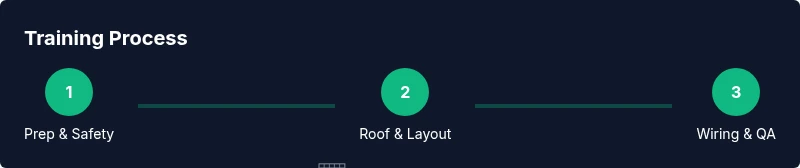
- 1
Prepare workspace and safety gear
Set up your training area with all PPE within reach. Inspect tools for damage and ensure fall protection equipment fits correctly. This step establishes your safety baseline and reduces the chance of injuries later in the training.
Tip: Double-check weather conditions; postpone if rain or high winds are forecast. - 2
Review roof assessment and layout plan
Study the training diagrams and measure the mock roof surface. Mark mounting locations, outline cable routes, and confirm clearance for panels. A clear plan prevents rework and ensures consistent practice.
Tip: Take photos of your layout for post-session review. - 3
Install mounting rails and racking
Secure rails to the mock roof using the provided anchors. Use the torque wrench to tighten to recommended specs. Validate alignment with a straightedge and ensure rigidity before proceeding.
Tip: Check for any soft spots or movement after tightening. - 4
Attach mock wiring and stringing layout
Route wiring along marked paths, using clamps and conduits as shown in the diagrams. Make sure all conductors are protected and runs are neat to facilitate future real installations.
Tip: Do not energize any components during training; keep the mock system de-energized. - 5
Mount training panels and perform QA checks
Place mock panels on rails, connect to the mock inverter, and verify basic functional checks with the tester. Confirm that mounting is secure and that panel wiring matches the schematic.
Tip: Document any anomalies and seek instructor feedback. - 6
Document results and conduct debrief
Record setup details, measurements, and any issues observed. Review the session with a mentor or instructor to identify corrective actions and areas for improvement.
Tip: Create a personal checklist to reuse in future sessions.
Frequently Asked Questions
Do I need formal certification to start solar panel installation training?
Certification requirements vary by location, but structured training programs offer practical credentials and hands-on experience that help you meet local standards. Completing a recognized course can support permits or contractor qualifications.
Requirements vary by area, but training programs provide practical credentials and hands-on skills.
What safety gear is essential for rooftop training?
Wear a hard hat, safety glasses, gloves, and a fall-arrest harness with proper anchors. Ensure footwear has good grip and that all equipment is in good condition before starting.
Always wear PPE like a hard hat, glasses, gloves, and fall protection when training on rooftops.
Can a DIY homeowner take this training solo?
You can begin with self-guided study, but hands-on instruction from an instructor or accredited program is strongly recommended for safety and code compliance. Pairing with a mentor accelerates learning and reduces risk.
It's best to train with an instructor or mentor to stay safe and learn correctly.
What topics are included in electrical basics for solar arrays?
Expect coverage of DC circuits, wiring diagrams, conduit routing, protection devices, and basic fault diagnosis. This foundation helps you understand how a system operates and how to troubleshoot common issues.
You’ll learn wiring, diagrams, and safety basics for solar arrays.
How long does typical solar installation training take?
Duration varies by program and depth. Some courses are a few days, while more comprehensive tracks span several weeks of supervised practice and theory.
Training can take from a few days to several weeks, depending on depth.
Watch Video
Top Takeaways
- Build a safety-first training habit.
- Practice with mock components before real-world tasks.
- Document steps and outcomes for continuous improvement.
- Map training to local codes and certification paths.
- Seek a mentor to accelerate skill development.