Solar Panel for RV: A Practical Guide to Off-Grid RV Power
Learn how to power your RV with solar panels: size, components, mounting options, and maintenance for safe, off-grid living.


A solar panel for RV is a compact off-grid power solution that converts sunlight into usable DC energy to charge batteries, run essential appliances, and fuel an inverter when you’re on the road. A successful setup combines panels, a charge controller, a properly sized battery bank, and safe wiring. Start by assessing daily energy use, available roof or space, and your budget before choosing a kit.
Understanding the RV Power Landscape
If you own a motorhome or travel trailer, a solar panel for rv can transform how you power life on the road. This guide helps homeowners and prospective buyers gauge what size system makes sense, which components matter most, and how to plan a safe, reliable installation. According to Solar Panel FAQ, most setups begin with a clear picture of daily energy use and the roof space available for panels. From there you balance battery storage, charging efficiency, and budget to tailor a system that matches your RV lifestyle. This section defines common goals, such as extending boondocking time, reducing generator runs, and maintaining modern comforts while keeping installation practical for DIY enthusiasts and professionals alike.
Sizing Your RV Solar System
Sizing an RV solar system starts with your energy budget for the trip. List all devices you plan to run daily—lights, fridge, fan, charging phones or laptops, coffee maker, water pump, and any entertainment gear. Translate each item into rough daily amp-hours and total them to estimate panel wattage needs. Then match that load to a battery bank capable of storing enough energy for back-to-back sunny and cloudy days. Remember that solar production varies with sun, temperature, and angle; a practical system often uses multiple panels and a battery bank that can handle several days without sun. The goal is to meet your typical daily needs while leaving a buffer for peak days.
Panel Types and Configurations for RVs
RV enthusiasts commonly choose monocrystalline panels for higher efficiency in limited roof space, while polycrystalline panels offer lower cost with slightly reduced efficiency. Flexible panels can conform to curved RV roofs, but may have shorter lifespans and different mounting considerations. When selecting configurations, consider how many modules you can fit on the roof, the wiring layout, and the impact of shading from antennas or vents. A modular approach—using several smaller panels rather than one large one—can simplify mounting and future upgrades. Always balance efficiency with durability and space constraints, and plan for expansion if energy needs grow.
Mounting Strategies: Roof vs Portable
Roof-mounted systems save space and reduce clutter, delivering a cleaner look and fewer setup steps when parked. Portable or semi-portable kits, including foldable panels or crank-out options, offer flexibility for shaded driveways or when you want to swap panels between vehicles. Roof installations require careful mounting hardware, weatherproof seals, and safe routing of cables through the roof, while portable setups demand secure staking or brackets to withstand wind and movement. Your choice should hinge on roof geometry, travel pace, and how often you park in places with steady sun exposure. Regardless of method, ensure proper electrical protection and routing to prevent damage during travel.
Batteries, Controllers, and Inverters
The battery bank stores energy for when sun isn’t available, so its chemistry (lithium or lead-acid), depth of discharge, and weight matter. Lithium options offer higher usable capacity and longer life but at a higher upfront cost, while AGM or flooded lead-acid can be budget-friendly for casual use. A charge controller protects batteries from overcharging; MPPT controllers generally outperform PWM units, especially in varying light. The inverter converts DC to AC for standard household devices. Choose a pure sine wave inverter with sufficient continuous power for your needs. This trio—batteries, controller, and inverter—determines how smoothly your RV operates off-grid.
Wiring, Safety, and Installation Best Practices
Wiring your RV solar system requires attention to correct conductor sizing, fusing, and proper disconnects. Use appropriately rated cables, fuse boxes, and a dedicated battery disconnect. Label all lines clearly and plan a fault-tolerant layout so you can isolate issues quickly. Grounding should follow local electrical codes, and water exposure must be minimized for all outdoor components. If you’re ever unsure about roof penetrations or high-current connections, consult a professional. Safety first protects people and property and ensures long-term reliability for your solar investment.
Real-World Scenarios: Budgets and Practical Setups
Many RV owners start with a modest, expandable kit and scale upward as needs grow. A small, easy-to-install package might rely on a few panels, a compact controller, and a modest battery bank, sufficient for weekend trips and modest loads. A larger, full-time setup can power refrigeration, climate control, lighting, and electronics for extended boondocking. Plan for upgrade paths: choosing modular panels, a scalable battery solution, and a controller capable of handling increased capacity. While exact costs vary by brand and components, prioritize reliability, safety, and compatibility with your RV’s electrical system over chasing the lowest upfront price.
Maintenance, Troubleshooting, and Longevity Tips
Keep panels clean and angled to maximize sun exposure. Inspect connections and fuses regularly, especially after travel or severe weather. Monitor battery health through a battery management system and voltage readouts, and re-check wiring for signs of wear. Periodically test the entire chain—from solar input to battery charge to inverter output—to ensure everything operates within expected ranges. Proactive maintenance extends system life, reduces downtime, and helps you enjoy more off-grid adventures.
Next Steps: Planning Your RV Solar Upgrade
With a clear understanding of your energy use, available space, and upgrade path, you’re ready to design a practical RV solar system. Start by selecting a baseline kit that fits your space and energy goals, then map out a phased plan for upgrades as you gain experience. Keep safety and local regulations in mind, and consider coordinating with a Solar Panel FAQ team member or a trusted installer to validate your design before you cut any roof or wall.
Tools & Materials
- Solar PV panels(Choose modular units with suitable wattage; consider mono-crystalline for space efficiency and optional flexible panels for curved roofs)
- Charge controller (MPPT recommended)(MPPT controllers optimize charging under variable sun, improving overall efficiency)
- Battery bank(Lithium for performance and longevity; AGM/lead-acid as budget-friendly alternatives)
- Inverter (pure sine wave)(Ensure continuous power rating meets your top loads and surge demands)
- Cabling and fuses(Use DC-rated cables; size fuses and breakers to match system current)
- Mounting hardware(Roof brackets or portable stands depending on mounting choice)
- Battery management system (BMS)(Important for lithium packs to protect cells and balance charging)
- Safety gear and disconnects(Include main disconnect, gloves, and eye protection during install)
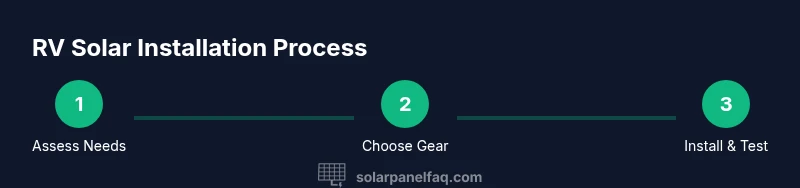
Steps
Estimated time: 6-12 hours
- 1
Assess energy needs
List all devices you’ll run daily and estimate their energy use. Convert that into a rough daily amp-hour target and set a realistic solar panel count to meet or exceed it. This informs all other sizing decisions.
Tip: Document load profiles for a typical day; this helps you avoid over- or under-sizing the system. - 2
Choose mounting approach
Decide between roof mounting for a cleaner look and fewer setup steps, or portable panels for flexibility and shade management. Consider roof geometry, weight limits, and travel conditions.
Tip: If you expect lots of traveling, a portable option can simplify relocation and seasonal sun exposure. - 3
Select battery and controller
Pick a battery type that matches your desired depth of discharge and weight, and pair it with a compatible MPPT controller for maximum efficiency.
Tip: Li-ion batteries offer deeper cycles and lighter weight but require a capable BMS and proper management. - 4
Plan wiring and safety
Draw a wiring diagram, select correct cable gauges, and install fuses, breakers, and a main disconnect. Ensure weatherproofing for any exterior components.
Tip: Label every conductor and keep a spare fuse kit on hand for quick fixes. - 5
Install and route components
Mount panels, route cables safely through the RV, and connect the controller, battery bank, and inverter according to the manufacturer’s instructions.
Tip: Do not drill through existing wiring; use grommets and sealants to prevent leaks. - 6
Test and optimize
Power up the system, verify charging current, monitor battery SOC, and ensure inverter output is stable. Make adjustments to wire routing and panel tilt if possible.
Tip: Start with minimal load and gradually add devices to confirm the system handles peak draw.
Frequently Asked Questions
What is the best RV solar panel wattage for a small camper?
There isn’t a universal wattage; it depends on your daily energy use and space. Start with a modest system and plan for future expansion as needs grow.
There isn’t a universal wattage; it depends on your daily energy use and space. Start with a modest system and plan for expansion.
Can RV solar power air conditioning or high-wield devices?
RV air conditioning is power-hungry. It can be supported by solar if you have a sizable battery bank and appropriate inverter, but many setups prioritize smaller loads and refrigeration.
Air conditioning needs a big energy reserve; solar can support it with a large system.
Is lithium battery necessary for RV solar?
Lithium offers more usable capacity and lighter weight, but AGM or other lead-acid options can work for budget setups. A proper BMS is essential with lithium.
Lithium is lighter and lasts longer, but not required for every setup.
Do I need a professional for RV solar installation?
DIY is feasible for many RV solar projects, especially smaller setups. For roof penetrations or high-current systems, consult a professional to ensure safety and compliance.
You can do it yourself for simple setups, but consult a pro for roof work.
What maintenance does an RV solar system require?
Keep panels clean, inspect connections, and monitor battery health. Schedule periodic checks of fuses, wiring, and the controller to ensure longevity.
Clean panels, check wiring, and monitor battery health.
How should I budget for an RV solar upgrade?
Plan for panels, controller, battery, inverter, mounting, and wiring. Costs vary by quality and components; prioritize reliable parts and future-proofing.
Budget covers components and installation; costs vary.
Watch Video
Top Takeaways
- Assess daily energy needs before selecting hardware
- Choose mounting based on roof space and mobility
- Consider lithium batteries for performance and longevity
- Prioritize safety with proper wiring and fusing