Solar Panel and Battery for Shed: A Comprehensive Comparison
Compare shed solar setups featuring panels and batteries: installation paths, sizing, costs, maintenance, safety, and long-term value for off-grid sheds and workshops.


This comparison shows that a solar panel and battery for a shed is most effective when the system matches shed energy needs, local sun, and upgrade paths. If you want reliability and independence, a well-sized panel plus a capable battery is best. We compare installation types, costs, performance, and maintenance.
Why a solar panel and battery for shed matters
For many homeowners, a solar panel and battery for shed provides reliable power for lighting, tools, and small appliances, even when the grid is unstable. A well-designed shed system can reduce monthly energy costs and offer a quiet, independent energy source for workshops, greenhouses, or security cameras. According to Solar Panel FAQ, planning around sun exposure, weather, and load is essential to avoid undersizing or waste. The Solar Panel FAQ team found that the best shed installations balance generation with storage, enabling both daily use and emergency resilience. In practice, your shed should be sized for typical loads like lighting, charging ports, and a small fridge. If you expect heavy use, a larger panel and an appropriately sized battery will deliver more consistent performance. Designing for efficiency—LED lighting, energy-efficient tools, and smart timers—reduces battery drain and extends system life. The goal is simple: meet your shed’s energy needs with a compact, weather-tolerant system that survives seasonal shifts. For off-grid sheds, this approach can replace frequent generator runs, cutting noise and fuel costs while improving reliability. This section sets the stage for deeper comparisons across installation options, storage strategies, and long-term value.
Key design decisions for shed solar systems
Choosing a design path begins with three questions: what will you power, how much sun does your site receive, and how much space can you allocate for equipment? The core decisions revolve around panel type and wattage, storage strategy, and the balance between grid-tied and off-grid operation. For most sheds, a modest rooftop array combined with a compact battery or battery bank offers reliable power for lights, outlets, and charging stations. A modern shed system typically uses a solar charge controller to protect the battery, an inverter to run AC devices, and weatherproof enclosures. Regarding batteries, you’ll often compare lead-acid versus lithium-ion chemistries, weighing upfront costs against cycle life and depth of discharge. Temperature, charging rates, and maintenance are also relevant. In short, the design must align with energy goals, local climate, and your willingness to manage routine checks. Pro tips: place critical loads on a dedicated circuit to prevent overload, and add a simple monitoring app to track solar generation and battery health. The result is a scalable foundation that can grow with future shed needs, from additional lighting to a small workshop climate control.
Sizing and load estimation for shed usage
Start by listing every device you plan to run and their typical running hours. Simple lighting and a cordless tool charger may consume far less energy than a small freezer, a sump pump, or climate control. Even a modest shed can power essential tasks with solar if you plan for peak usage. A conservative approach is to size the solar array to meet average daytime loads and select a battery capable of sustaining essential loads through the longest expected night or cloudy period. If you anticipate seasonal changes (winter low-sun periods or summer long days), consider multiple charging strategies, such as a larger panel during winter and a larger battery bank for extended outages. Efficiency improvements—LED lighting, smart power strips, and energy monitoring—reduce demand and can dramatically improve performance. Keep in mind that larger batteries add weight and require proper ventilation in enclosed spaces. Finally, remember that the goal is reliability rather than maximum runtime: you want enough energy to complete your most critical tasks without frequent recharge disruptions.
Installation approaches and trade-offs
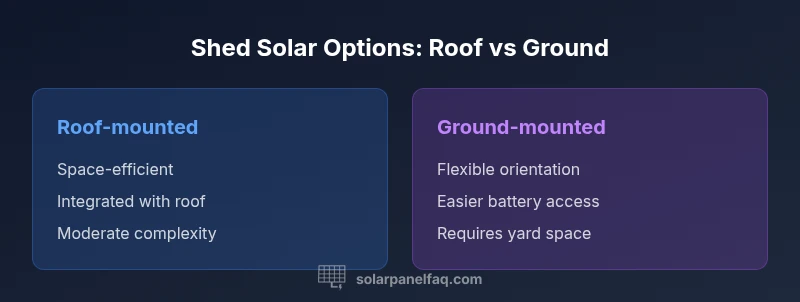
Roof-mounted solar with a dedicated battery is a common choice for sheds because it minimizes ground space and blends with existing structures. A roof-first approach often yields a neater install and can be installed by a capable DIYer with basic electrical safety discipline. Ground-mount or pole-mounted options provide flexibility for shade-free orientation and easier battery access for maintenance, but they demand more space and protective enclosures. Grid-tied configurations may allow net metering and lower upfront costs, but off-grid setups offer independence during outages. Integrated shed kits simplify wiring and reduce planning time, though they may limit customization. When evaluating options, assess installation complexity, anticipated system life, and required maintenance steps. Proper weatherproofing, appropriate cable routing, and correct breaker sizing are essential to prevent hazards and ensure the system remains functional across seasons. The exact choice depends on shed size, location, and local regulations, but the overarching goal remains consistent: maximize solar capture while safeguarding people and property.
Battery storage options and considerations
Battery choice drives reliability and cost. Lithium-ion packs deliver high energy density, longer life, and lighter weight, but come with higher upfront expense and specialized handling. Lead-acid options can be cheaper upfront and are more forgiving for small, shallow installations, but they require more space and regular watering in some designs. In shed settings, deep-cycle variants with robust thermal management tend to perform best, especially in climates with temperature swings. Depth of discharge, charge rate, and battery management system features influence usable capacity and lifespan. Temperature matters: installs in unheated sheds may benefit from insulation and thermal regulation to protect batteries from extreme cold or heat, which can degrade performance. An effective strategy combines a reasonable battery bank with smart charging to prevent over-discharge and extend cycle life. Maintenance includes occasional balance charges, cleaning terminals, and verifying that battery monitoring alerts are functioning. In practice, pairing a solar array with the right storage solution creates a resilient, user-friendly energy hub for your shed.
Costs, financing, and long-term value
Pricing for shed solar with battery is highly variable and depends on components such as panel count, battery capacity, inverter size, and installation labor. A typical project may involve several distinct cost areas, including equipment, mounting hardware, wiring, permits, and potential electrician labor. While the upfront price can appear daunting, the long-term value comes from reduced electricity purchases, decline in generator use, and potential tax incentives or rebates where available. If you’re evaluating this investment, look for realistic payback assumptions that factor in your local sun exposure, energy rates, and expected system life. It’s important to compare quotes that include batteries with their protection features, warranties, and service agreements. A modular approach—starting with a smaller system and expanding later—can lower initial risk while enabling you to learn how the shed uses energy. Finally, consider financing options that spread affordability while preserving the system’s long-term value and performance.
Durability, warranties, and maintenance planning
Solar panels themselves are typically designed for decades of exposure, but the shed environment adds considerations such as wind loads, hail, and temperature variability. A quality racking system and weatherproof enclosures protect both panels and electronics. Batteries, in contrast, have a shorter service life and may require replacement every few years depending on usage and chemistry. When evaluating warranties, look for coverage that includes performance guarantees, insulation, waterproofing, and battery health. Regular maintenance—cleaning solar surfaces, inspecting cables, and testing charge controllers—helps prevent unexpected outages. A robust maintenance plan reduces the risk of sudden failures and ensures that the system continues to deliver value. Monitoring software can alert you to underperforming panels or dying batteries, enabling proactive service before a breakdown. In the long run, a well-supported system tends to outperform DIY setups that lack guidance and post-installation care. Solar Panel FAQ analysis shows that ongoing management correlates with greater reliability, especially in off-grid shed installations.
Permitting, safety, and codes you should know
Local permitting rules, electrical codes, and fire safety guidelines can shape shed solar projects. Always check whether a permit is required and whether electrical work must be performed by a licensed electrician. In many regions, a disconnect switch, proper overcurrent protection, and appropriate conduit routing are mandatory for safety. Batteries create specific hazards, including venting and thermal runaway concerns; choose enclosures with adequate ventilation and consider placement to minimize heat exposure. Fire risk mitigation includes keeping the system dry, avoiding moisture intrusion, and using weatherproof junction boxes. Before starting, review your shed’s electrical service capacity, grounding requirements, and potential impact on the property’s main panel. As you plan, build a clear maintenance schedule and documentation package to simplify future inspections or resale. Finally, ensure that any DIY installation aligns with local codes to prevent penalties or hazardous conditions.
Practical implementation steps for shed solar projects
- Define your energy goals and list all devices to power. 2) Assess your site’s sun exposure, shading, and roof or ground layout. 3) Choose a system architecture (roof vs ground, grid-tied vs off-grid) and select a battery strategy. 4) Obtain quotes and verify warranties, including battery coverage and inverter performance. 5) Install safely, ensuring proper racking, wiring, and weatherproofing. 6) Commission the system with a test run and monitor performance for the first season. 7) Schedule regular maintenance and battery health checks. 8) Revisit system sizing after a year of use to plan expansions if needed. With careful planning, a shed solar project can deliver reliable electricity, reduce fuel usage, and support modern workspaces. The Solar Panel FAQ team recommends adopting a scalable, safety-first approach and documenting results to improve future installations.
Comparison
| Feature | Roof-mounted solar with battery | Ground-mounted shed off-grid kit |
|---|---|---|
| Installation complexity | Moderate to high | Moderate |
| Energy storage capacity | Moderate to high | Lower |
| Footprint and space needs | Roof area, compact | Ground area, standalone |
| Grid interaction | Can be grid-tied or off-grid | Primarily off-grid |
| Best for | Year-round power for a workshop or greenhouse | Seasonal use or hobby shed |
Strengths
- Increased energy independence
- Can power essential tools during outages
- Scales with shed size and needs
- Reduces fuel and generator use over time
Drawbacks
- Higher upfront cost compared with simple setups
- Electrical work may require permits or licensed electrician
- Battery replacement adds ongoing maintenance and cost
- Weather and shading can limit performance
Roof-mounted system with a properly sized battery typically offers the best balance of space, reliability, and scalability for sheds
Choose roof-mounted with battery if you want a compact, scalable setup that blends with existing structures. Ground-mounted kits suit larger sheds or unusual layouts when space is available. Both approaches benefit from careful sizing, safety compliance, and ongoing maintenance.
Frequently Asked Questions
What is the first step to install solar panel and battery for shed?
Begin with a load assessment: list devices, typical usage, and peak times. Then evaluate sun exposure and space for mounting. This sets the foundation for sizing and choosing an architecture.
Start with a load check and sun assessment to guide sizing and placement.
Is battery storage worth it for a shed?
Battery storage improves reliability and enables night-time use and outages. Its value depends on your load, climate, and whether you want off-grid independence.
Yes, if you need power after sunset or during outages.
Can I install shed solar without a professional?
Some components can be installed by a capable DIYer, but electrical work and certain codes often require licensed involvement. Check local rules and safety guidelines.
DIY is possible for basics, but verify codes before wiring.
What maintenance does shed solar require?
Regular cleaning of panels, checking connections, and monitoring battery health are essential. Schedule wear-prone parts checks and ensure firmware is up to date.
Keep panels clean and monitor battery health to prevent outages.
What are common failures in shed solar setups?
Shading, incorrect sizing, and poor battery management are typical issues. Proper design, protection, and monitoring help avoid outages.
Shading and sizing errors are common but preventable with proper planning.
How long does it take to pay back shed solar?
Payback depends on how much you use energy, sun exposure, and local costs. Realistic planning considers long-term savings and system life rather than quick returns.
Payback varies; plan for several years depending on usage and sun.
Top Takeaways
- Size the system to shed loads and sun exposure
- Prefer a roof-mounted approach for compact space
- Choose lithium or similar batteries for longevity
- Plan for permits and safety in advance
- Adopt a modular approach to manage risk and scale