Solar Panel Kit Shed: A Step-by-Step Guide to Power Your Shed
Learn how to power a shed with a solar panel kit: assess feasibility, pick the right kit, install safely, and maintain for reliable sun-powered energy.


This guide shows homeowners how to power a shed with a solar panel kit. You’ll learn how to size the kit, evaluate roof suitability, plan wiring, and address permits and safety. Follow a clear, step-by-step approach for efficient installation and dependable performance, with options for grid-tied or off-grid use.
Why a Solar Panel Kit Shed Makes Sense
A solar panel kit for a shed offers a practical path to cleaner, quieter, and more predictable power for tools, lighting, and small appliances. Bundled components—panels, mounting hardware, a controller or inverter, wiring, and sometimes energy storage—make planning easier than buying parts piecemeal. According to Solar Panel FAQ, shed owners who start with a realistic load estimate and a kit sized to meet that load can achieve reliable sun-powered power without the complexity of a full home installation. The Solar Panel FAQ team emphasizes choosing a kit that aligns with your shed’s energy needs, local sun exposure, and future expansion potential. Start by listing your shed’s daily usage (lights, chargers, a drill, a freezer or fridge, etc.) and then map that to a kit that fits within your budget and space.
- Benefit: independence from peak-rate hours and small outages
- Consideration: ensure the shed’s roof or wall space can accommodate the kit without overhang or shading
- Note: kits vary widely by panel type, inverter configuration, and mounting hardware
Tip: Discuss layout with a solar professional early to confirm roof load capacity and mounting feasibility.
wordCount):
note”:null},
Tools & Materials
- Ladder with stable footing(Sized to reach shed roof safely; use stabilizing feet on soft ground)
- Safety harness and PPE(Helmet, gloves, eye protection, and non-slip footwear)
- Drill with assorted bits(Phillips and flat-head bits; masonry bits if mounting into concrete walls)
- Wrench set and screwdrivers(Torque appropriately; avoid over-tightening aluminum rails)
- Measuring tape and level(Accurate spacing for rails and panels)
- PV mounting rails/brackets(Corrosion-resistant; compatible with shed roof type)
- Roof sealant and weatherproof tape(Seal penetrations to prevent leaks)
- Solar panels (as part of the kit)(Pre-sized for shed wattage goals)
- Inverter or microinverters(Match kit to load and whether grid-tied or off-grid)
- DC/AC disconnects and wiring(Weatherproof and code-compliant)
- Conduit, junction boxes, clamps(Protect wiring from moisture and physical damage)
- Wire cutters/strippers and multimeter(Electrical testing and safe voltage checks)
- Battery storage (optional)(Only if going off-grid or for backup power)
- Electrical tape and zip ties(Cable management and strain relief)
- Manuals and permit documents(Keep all kit documentation on-site)
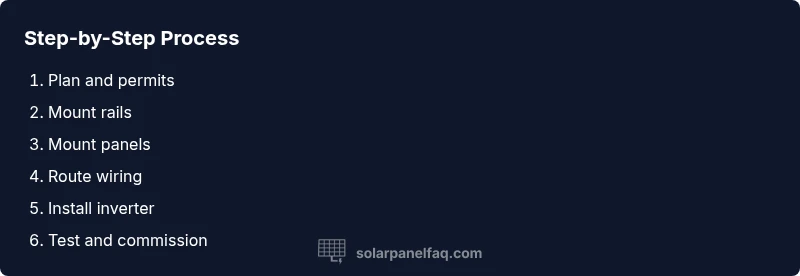
Steps
Estimated time: 2-6 hours
- 1
Plan and verify site
Before touching anything, measure shed roof space, orientation, and shade patterns. Verify local permitting requirements and HOA rules if applicable. Document the load you want to run (lights, outlets, and small tools) and choose a kit with capacity above that baseline.
Tip: Check for shade changes during the day and year-round; southern exposure is typically best in the northern hemisphere. - 2
Install mounting rails
Attach mounting rails to the roof or wall, following the kit instructions. Ensure rails are level and securely anchored to structural members. Seal any penetrations to prevent leaks.
Tip: Use rated anchors for your roof type (tile, asphalt, metal) and maintain proper clearance from edges. - 3
Mount the solar panels
Secure panels to the rails using the kit’s fasteners. Space panels evenly and avoid over-tightening to prevent frame damage. Leave room for wiring toward the inverter location.
Tip: Handle panels carefully; avoid scratching glass surfaces and protect edges during installation. - 4
Route wiring and install inverter
Run cable through weatherproof conduit to the inverter or microinverter, keeping lines tidy and protected. Install the inverter in a ventilated, dry area with easy access for maintenance and safety shutoffs.
Tip: Keep DC wiring separate from AC wiring to reduce interference and meet code requirements. - 5
Make final connections
Connect panel strings to the inverter/disconnect per the kit diagram. Install fuse or breaker as instructed and label the system clearly for future service.
Tip: Double-check polarity and secure all terminations; loose connections are a common source of issues. - 6
Test, inspect, and commission
Power up the system and verify voltage, current, and output with a multimeter or meter provided in the kit. Confirm safety clearances and ensure the system operates as expected before regular use.
Tip: Perform a slow ramp test and monitor any error codes; refer to manuals if an abnormal reading appears.
Frequently Asked Questions
Is a shed solar panel kit right for my property?
A shed solar kit is usually suitable for properties with adequate sun exposure and a stable shed roof. Evaluate your daily energy needs and local sun hours to determine if a kit can meet the load without overproduction. If you have shading or a small roof, you may need a smaller kit or a microinverter solution.
A shed solar kit works when your shed gets enough sun and the roof can support it; assess your daily usage and sun hours to choose the right size.
What is the first step to install a shed solar kit?
Begin with planning: determine load, available roof area, and permitting requirements. This helps you select a kit with appropriate capacity and mounting hardware before buying components.
Start with planning: assess load, space, and permits before purchasing the kit.
Do I need permits for shed solar installation?
Permit requirements vary by jurisdiction. In many areas, small solar installations on sheds may not require a full permit, but electrical work often does. Check with your local building department and utility for guidance.
Check your local rules; some places require permits for electrical work even if the shed itself doesn’t need a permit.
What maintenance is needed after installation?
Regularly inspect connections, clean panels to remove dust and debris, and monitor system performance. Inverters and batteries may have service intervals; follow the manufacturer’s recommendations.
Keep an eye on connections, clean panels, and monitor output regularly for best performance.
Can shed panels feed back into the home grid?
If you choose a grid-tied kit, the shed can feed excess power back to the home grid and you may benefit from net metering. Ensure proper safety disconnects and permit compliance.
Grid-tied setups can send extra power to the home; confirm proper wiring and permits.
How long do shed solar panels typically last?
Solar panels generally last many years with minimal efficiency loss. Inverters and balance-of-system components have shorter lifespans and may need replacement during the system’s life cycle.
Panels last for many years; inverters may need replacement sooner.
Watch Video
Top Takeaways
- Size the kit to your shed’s expected load
- Prioritize roof suitability and sun exposure
- Plan wiring and permits before starting
- Test and document system performance after installation
- Maintain safety as the top priority during every step