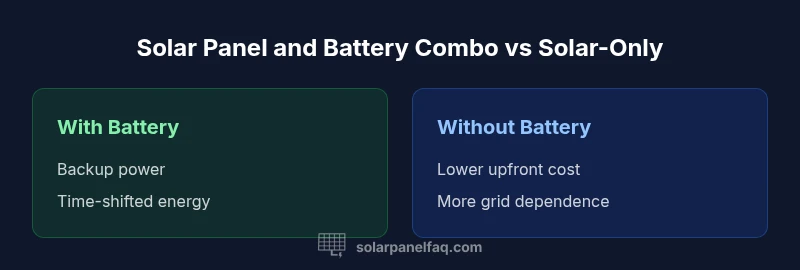
Solar Panel and Battery Combo: A Comprehensive Homeowner Comparison
A data-driven comparison of solar panel and battery combos versus solar-only setups, tailored for homeowners evaluating storage, grid dependence, and long-term value.


Solar panel and battery combo combines photovoltaic generation with on-site storage to power your home during the day and after sunset. For homeowners, it can boost energy independence and reduce grid reliance, especially in sunny climates. The tradeoffs are higher upfront costs and more complex siting and maintenance. This article compares the combo against solar without storage, guiding you toward the best fit.
What is a solar panel and battery combo?
A solar panel and battery combo refers to a system that couples photovoltaic modules with a home energy storage device. The main purpose is to convert sunlight into electricity and store excess energy for use later, reducing peak demand on the grid and providing backup power during outages. In practice, most residential setups include PV panels, a battery bank, an inverter, and a control system that manages charging and discharging. According to Solar Panel FAQ, a growing number of homeowners are choosing this combo to gain energy resilience. The core idea is straightforward: generate energy when the sun shines, store a portion for later, and draw from the battery when demand is high or production is low. Climate, roof orientation, household load, and local incentives all shape the exact configuration, but the objective remains consistent—more flexibility, more reliability, and the potential for better self-sufficiency. Remember that a battery is not a magic wand; sizing, maintenance, and safety checks matter as much as the hardware itself.
A typical setup includes four main components: PV modules, a battery bank, an inverter/charger (often a hybrid model), and a management system or smart controller. These pieces work together to ensure the right amount of energy is stored and dispatched based on real-time usage, weather forecasts, and utility rates. For homeowners evaluating a solar panel and battery combo, the key questions are how much energy you use daily, how long you want to stay powered during outages, and how you intend to charge the system—direct sunlight, net metering, or a hybrid approach. The goal is to align system capacity with your actual needs while considering future growth and potential incentives.
Comparison
| Feature | Solar panel and battery combo | Solar panel-only system |
|---|---|---|
| Storage capability | integrated storage and backup power | no built-in storage; relies on grid or external backup |
| Energy independence | high with battery backup | low; depends on the grid for most energy |
| System complexity | higher due to battery, inverter, and controls | lower; simpler electrical design |
| Upfront cost | higher due to battery and hardware | lower without storage hardware |
| Maintenance and lifecycle | battery health, cycle life, and replacement considerations | generally fewer moving parts; battery not included |
| Best use case | homes needing outages backup and peak shaving | grid-tied users seeking lower complexity and leaks of energy |
Strengths
- Increased energy independence and outage resilience
- Ability to shift solar energy use to cheaper hours
- Potential savings on peak-demand charges in some markets
- Flexibility to add capacity later as needs grow
Drawbacks
- Higher upfront costs and longer payback periods
- Battery degradation and eventual replacement costs
- Increased installation complexity and permit considerations
- Maintenance and monitoring requirements to protect stored energy
Battery-backed solar often wins for resilience-minded homeowners; panel-only remains attractive for cost-conscious buyers.
Choose a solar panel and battery combo if backup power and energy arbitrage matter more than upfront expense. If simplicity and lower initial cost are the priority, a solar-only system may be better and easier to maintain.
Frequently Asked Questions
What is the difference between a solar panel and battery combo and a standard solar system?
A solar panel and battery combo adds a storage component that lets you store excess daytime energy for use during evenings or outages. A standard solar system typically feeds energy to the home and the grid without built-in storage. The key distinction is whether energy can be stored for later use, increasing resilience and reducing grid dependence.
A solar panel and battery combo stores solar energy for later use, while a standard solar system usually relies on the grid after sunset.
Is a solar panel and battery combo worth it for a typical home?
It depends on factors like outage frequency, electricity rates, and daytime sun exposure. Storage adds resilience and can improve self-consumption, but it also adds upfront and ongoing costs. A careful load analysis and cost-benefit review helps determine if the investment aligns with your goals.
It can be worth it if you want backup power and better energy independence, but weigh costs and maintenance.
What battery chemistry is best for home storage?
Lithium-based chemistries are most common for home storage due to favorable cycle life and efficiency. Within lithium options, lithium iron phosphate and nickel-mmanganese-cobalt variants each have tradeoffs in cost, safety, and capacity. Your choice should balance longevity, temperature tolerance, and budget.
Lithium-based batteries are typical; iron phosphate offers safety and long life, while other lithium chemistries may favor higher energy density.
Can I install a solar panel and battery combo myself?
Installation involves electrical work, building codes, and safety considerations. While mounting PV panels can sometimes be DIY for simple setups, integrating storage and ensuring proper interfacing with the home electrical system usually requires a licensed professional.
Most people should hire a licensed installer for safety and code compliance.
How long do solar batteries last?
Solar batteries are designed for thousands of charge-discharge cycles, with actual life depending on chemistry, depth of discharge, and usage patterns. Expect some performance decline over the years, which may affect replacement timelines and warranties.
Battery life varies by chemistry and use; expect eventual degradation over many cycles.
What maintenance does a solar panel and battery combo require?
Regular inspection of solar panels for shading or dirt, battery health checks, and inverter monitoring are common maintenance tasks. Some systems include remote monitoring to alert you to issues early. Proper ventilation and temperature control help extend battery life.
Keep panels clean and monitor battery health; most issues are caught with remote monitoring.
Top Takeaways
- Assess daily energy use to size storage accurately
- Expect higher upfront costs with storage; plan for long-term savings
- Consider climate and outages when evaluating value
- Choose grid-tied storage to simplify permitting and maintenance
- Plan for periodic battery health checks and potential replacement