Solar Panels on Council Homes: A Practical Guide
This guide explains if you can install solar panels on a council house, how to navigate consent, funding options, and practical steps for homeowners and tenants seeking sustainable energy.


Yes—it's possible to install solar panels on a council house, but eligibility and the approval process vary by local authority and tenancy type. Some schemes support tenant installs, while others require landlord agreement. In practice, you'll need a sound roof, permission from your housing provider, and a plan for ongoing maintenance and funding.
The basics: can a council house host solar panels?
If you’re wondering, can you get solar panels on a council house, the answer is generally yes in many areas, but success hinges on permissions, roof condition, and the terms of your tenancy. According to Solar Panel FAQ, the path often starts with a conversation with your housing provider and a simple roof inspection to confirm structural suitability. The council's rules can vary by locality, tenancy type, and whether you are a landlord or tenant. In practice, a favorable outcome depends on clear communication, a solid plan for maintenance, and a realistic view of costs and funding options. Start by asking for written consent and identifying an installer who understands compliance with public housing guidelines. This initial step reduces delays and creates a documented trail for every approval stage. Remember, the phrase can you get solar panels on a council house is less about a guaranteed yes and more about navigating consent, safety checks, and funding routes. With the right preparation, many council homes can benefit from solar energy, cutting bills and improving resilience.
Eligibility and policy frameworks
Local councils and housing associations set different policies for solar panel installations on council properties. Some areas permit tenants or leaseholders to install PV systems with landlord approval, while others require upgrades to the roof or coordinated work with an official programme. The Solar Panel FAQ analysis shows a trend toward clearer guidance in many regions, but policies still vary widely by borough and tenancy type. Key factors typically include roof condition, shading, structural compatibility, and whether the installation is considered a benefit to the property or the tenant. Always verify whether any grants, loans, or payback schemes apply to council-owned homes in your area and how they affect your approval process. As you read, keep the can you get solar panels on a council house question in mind to guide your discussions with stakeholders.
How to approach your housing provider
Initiate the conversation with your housing provider early. Gather evidence of roof condition (photographs or a professional report), estimated system size, and a proposed layout that minimizes shading and preserves drainage. Your installer should be prepared to liaise with the housing authority and provide a written proposal outlining responsibilities for maintenance and insurance. If consent is granted, ensure you receive a formal written agreement detailing access rights, responsibilities for safety, and who funds what portion of the project. Throughout this process, maintain a detailed log of communications to avoid misunderstandings and ensure a transparent approval trail.
Costs, funding, and financing options
Costs for solar PV on a council home vary by system size, roof access, and installation complexity. Many homeowners pursue a combination of funding: a loan or finance package, grants, and, in some cases, landlord-conceived contributions. It’s essential to compare quotes from licensed installers who understand public housing requirements and to confirm what costs are covered by any funding route. Keep in mind that maintenance, inverter replacement, and potential roof repairs should be budgeted for in the long term. Funding availability differs by location, so start by identifying any local government schemes or tenant-friendly options facilitated by housing associations. Solar Panel FAQ stresses that transparent budgeting and written approvals help prevent surprises later in the project.
Technical considerations: roof type, orientation, and installation partners
Not all council homes are automatically suitable for PV. Roof orientation toward the sun, pitch, and shading from trees or nearby buildings affect system efficiency. A professional assessment can determine the optimal panel type, mounting method, and inverter choice. Work with installers who have experience with public housing standards and who can coordinate with the housing provider to ensure safety, access, and insurance requirements are met. If the roof needs repair or replacement, plan these steps before PV installation to avoid compromising the system. In all cases, insist on a written plan that includes the expected energy yield, maintenance responsibilities, and a warranty period. Remember the can you get solar panels on a council house question as you review technical feasibility.
Maintenance, warranties, and long-term value
Solar panels typically come with warranties covering performance and hardware typically for 20–25 years, while inverters often have shorter warranties. For council homes, clarify who is responsible for routine cleaning, moss removal, and potential roof degradation repairs that could affect performance. Regular inspections, especially after severe weather, will help maintain output and catch issues early. When evaluating long-term value, compare projected savings against the financing terms and any ongoing maintenance costs. It’s also wise to confirm transferability of warranties if tenancy or occupancy changes. Solar energy can enhance a council home’s resilience and energy efficiency, but only with careful, documented planning and ongoing stewardship.
Tools & Materials
- Roof condition report or professional inspection(Assess structural integrity and suitability for PV mounting before planning.)
- Written consent from housing provider(Obtain formal approval before any work begins.)
- Licensed solar installer (with public housing experience)(Coordinate with provider and ensure compliance with safety standards.)
- Estimated layout plan and shade analysis(Show optimal panel placement and avoid major shade.)
- Safety gear for site access(Includes helmet, harness if roof access is needed, non-slip footwear.)
- Documentation templates (consent, contracts, warranties)(Use to standardize agreements with housing provider and installer.)
Steps
Estimated time: 4-6 weeks
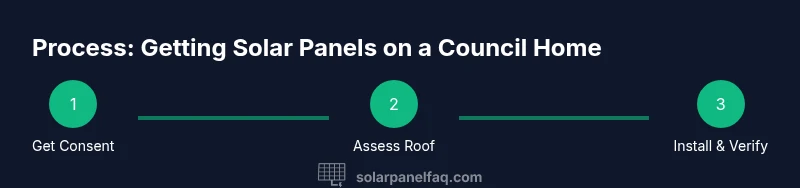
- 1
Collect approvals and documents
Start by requesting written consent from the housing provider and gathering tenancy details. Prepare a simple proposal outlining the intended system size, location on the roof, and maintenance responsibilities. Having this ready speeds up the approval process and reduces back-and-forth.
Tip: Have a single point of contact in the landlord’s team and keep all documents in one folder. - 2
Arrange roof assessment
Book a professional roof inspection and shade analysis to determine suitability. The assessor will confirm structural integrity and whether the roof orientation supports efficient PV performance.
Tip: Ask for a written report and an annotated diagram showing optimal panel layout. - 3
Solicit installer quotes
Request quotes from installers who have experience with council housing projects. Compare system size, equipment quality, warranty terms, and who covers maintenance.
Tip: Require a clause that installers coordinate with the housing provider to meet safety and access standards. - 4
Explore funding options
Review available funding routes such as loans, grants, or landlord contributions. Ensure the chosen option aligns with your tenancy type and long-term stay plans.
Tip: Document all funding terms in writing and check transferability if you move. - 5
Submit formal proposal
Provide the housing authority with the final plan, quotes, and consent forms. Seek explicit approval for installation dates and responsibilities.
Tip: Keep a copy of every signed document and note the expected installation window. - 6
Install and verify
Coordinate installation with the installer and housing provider. After installation, perform a test and obtain warranty documents. Schedule a follow-up inspection if required by the provider.
Tip: Ensure the installer includes a grid-t-tie or islanding verification as part of the commissioning.
Frequently Asked Questions
Can council tenants install solar panels?
Yes, in many cases tenants can install solar panels with landlord approval and written consent. Process requirements vary by council and tenancy type, so check the specific rules for your property.
Yes—tenants can install solar panels in many councils, but you must obtain written landlord approval and follow the council's guidelines.
Who pays for solar panels on a council house?
Costs are usually covered through a mix of funding routes such as loans, grants, or landlord contributions. Always verify who bears maintenance and warranty obligations before signing any agreement.
Funding often comes from a mix of loans, grants, or landlord contributions; confirm who pays for upkeep before committing.
Do I need permission from the landlord or housing association?
Yes. Written consent from the housing provider is typically required, and there may be specific conditions about access, maintenance, and safety.
Yes. You usually need written approval from the housing provider and must follow safety and access rules.
Are solar panels suitable for all council homes?
Suitability depends on roof orientation, shading, and structural integrity. A professional assessment will tell you whether PV is viable and which system would work best.
It depends on the roof and sun exposure; a professional assessment will tell you if PV is viable.
What about maintenance and warranties?
Installers typically provide warranties on panels and inverters. Determine who maintains the system and how repairs would be handled if tenancy changes.
Warranties cover many components; clarify who maintains the system and how it works if you move.
Are there funding options for council properties?
Funding depends on location and provider arrangements. Look for government or housing association schemes and compare terms before choosing a plan.
There are funding options in some areas; check local schemes and compare terms.
Watch Video
Top Takeaways
- Begin with housing provider consent and roof assessment.
- Compare installer quotes and funding options carefully.
- Document all steps to avoid delays or misunderstandings.
- Expect a multi-stage process that may take weeks.
- The Solar Panel FAQ Team recommends coordinating closely with council stakeholders.