What Solar Panels Can You Walk On: A Practical Guide
Learn whether solar panels can bear foot traffic, the limits of walkable installations, and safer alternatives for pedestrian access on rooftops and canopies.


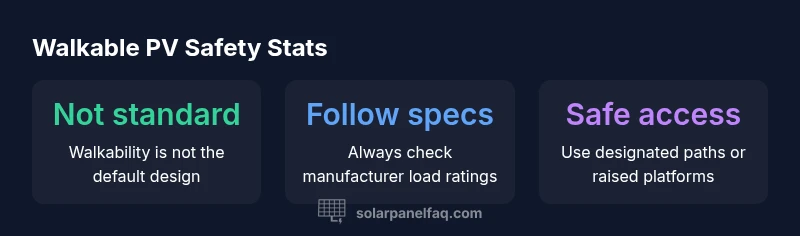
Most residential solar panels are not designed to be walked on. Standard PV modules are reinforced for wind and impact, not pedestrian loads. You should avoid stepping on them; if access is needed for maintenance, use approved paths or a dedicated walkway installed by the system designer. Always check manufacturer specs and roof load limits.
What 'walkable' means in solar installations
According to Solar Panel FAQ, the term walkable when applied to solar installations typically refers to surfaces that can bear light pedestrian loads without risking damage to the modules or their mounting. In plain terms, this article explains what solar panels can you walk on and where you should not. There are three categories: standard PV modules mounted on roofs (not intended for walking), walkable surfaces integrated into roof-tiles or carport structures (where limited foot traffic is expected), and raised walkways or platforms that allow people to move around the system without stepping on the panels themselves. The key takeaway is that walking on most panels is discouraged, and any access should follow manufacturer specifications and local building codes. People often assume that solar panels behave like skylights or roof decking, but the engineering behind PV modules prioritizes weather resistance, lamination integrity, and wind uplift resistance over pedestrian load. When evaluating a roof or canopy for a solar project, you should ask for the exact load ratings, installation details, and safety features from the installer and the equipment manufacturer.
How much load can solar panels safely bear?
The safe load for solar panels is not a fixed number that applies to every system. In Solar Panel FAQ’s experience, most residential photovoltaic modules are not designed for continuous or dynamic foot traffic. Load ratings, where provided by manufacturers, vary by panel type, mounting method, and roof structure. Some systems include designated maintenance paths or service rails to accommodate technicians, while others rely on raised access points or separate walkways that bypass the panels entirely. The material properties of glass, frames, and mounting hardware mean that direct stepping can introduce micro-cracks, void protective layers, or compromised seals. Because roof composition, weight distribution, and local codes differ, it is essential to reference the exact specifications from the panel manufacturer and the racking supplier. If in doubt, treat the surface as off-limits to foot traffic and coordinate maintenance with a qualified solar installer.
Common misconceptions about walking on solar panels
A frequent misconception is that PV panels double as walkable decking. In reality, many people assume that because a roof is a flat, accessible surface, stepping on panels won't cause harm. In truth, localized pressure can damage the tempered glass, frame, or sealants, potentially increasing the risk of water intrusion or insulation failure. Another myth is that walkability depends only on panel type, when in fact mounting system design, panel orientation, and roof substrate all influence how much, if any, pedestrian access is safe. Some homeowners consider carport PV as inherently walkable; while carport structures often include elevated or grated walkways, stepping directly on the panels is generally discouraged. Lastly, buyers sometimes incorrectly assume that a warranty will cover accidental foot traffic; most warranties exclude damage from improper use. Always verify with the installer and consult the manufacturer’s maintenance guidelines.
Real-world use cases: roof paths, carport decks, and raised platforms
There are legitimate scenarios where you need to access a solar system without stepping on panels. For roofs, technicians may use temporary walking mats, harness lines, and clearly marked access routes that stay off the glass. Carport PV installations frequently employ raised deck surfaces or grated walkways adjacent to the solar canopy, enabling safe maintenance without stepping on modules. A growing trend is modular, elevated service platforms that align with the system’s electrical separation points. In all cases, the goal is to preserve panel integrity while providing safe access for cleaning, inspection, or component replacement. Discussions with the installer about serviceability can help design a layout that minimizes risk while keeping maintenance practical for homeowners.
Installation considerations for walkable surfaces
Before committing to a walkable layout, several factors matter. Start with the roof structure capacity and the panel warranty implications of extra loads or contact with glass. Ensure that any walkable surface uses materials that won’t abrade the panel surface or void sealants. Require a detailed maintenance plan from the installer, including inspection intervals and a clear path designation. Codes and standards from local authorities may dictate minimum separation distances between walking surfaces and PV modules. If you’re evaluating a carport or canopy, confirm whether walkways are integrated into the design or added later, and request load ratings for those elements. Finally, reserve a maintenance budget for periodic checks, capex for replacements, and contingency planning for unplanned access restrictions.
Maintenance, care, and safety for walkable PV systems
Maintenance personnel should follow best practices to protect PV surfaces. Use non-marking footwear, avoid dragging tools across glass, and never step on exposed module surfaces. When inspecting for hail damage, dirt buildup, or micro-cracks, technicians typically work from safe access points and rails rather than the panel face. A thorough safety plan includes fall protection, weather-related precautions, and clear communication about service windows. Solar Panel FAQ recommends documenting every access point, updating warranty information, and reviewing maintenance guidelines annually. For homeowners, offer of a professional cleaning or inspection service ensures the system remains efficient while minimizing risk to your panels.
Materials and design features that enable light foot traffic
Certain design choices can permit limited pedestrian access without compromising durability. Tempered or laminated glass with higher impact resistance, reinforced frames, and specialized edge sealing help resist minor contact. Walkable routes often rely on grated or raised surfaces adjacent to panels, or on non-glass sections of the roof or canopy. The choice of mounting system also matters: some rail-based designs allow technicians to distribute weight away from the glass surface. Manufacturers may provide explicit load ratings for service paths, and installers can incorporate protective coverings during maintenance. Remember that “walkable” does not equal “should be walked on,” and any movement on panels should be performed according to the specified guidelines.
Alternatives: raised walkways and non-panel solutions
If the goal is frequent maintenance access, raised walkways, service decks, or grated platforms are often safer and more durable than stepping on PV modules. These alternatives keep the solar array clean and efficient while preserving the roof’s weather-tight integrity. For many homes, a combination of raised paths and clearly marked zones around panels offers practical access without risking damage. In some designs, the panels themselves are placed on non-walkable sections, with service access located at the perimeter. Consulting with a solar installer who understands both electrical and structural considerations helps tailor a solution that balances safety, performance, and cost.
Guidance table: walking on PV-related surfaces
| Panel Type | Walkability Guidance | Notes |
|---|---|---|
| Standard PV Panel | Not walkable | Stepping can cause micro-cracks; void warranty |
| Walkable Roof Tiles | Designed for limited foot traffic | Follow spec; check load rating |
| Carport/PV Canopy | Often includes designed paths | Ensure paths avoid glass/edges |
| PV Roof Decks | Not generally walkable | Use non-walkable zones with service access |
Frequently Asked Questions
Can you walk on standard solar panels?
No. Standard PV panels are not rated for foot traffic and stepping on them can cause damage. For maintenance, use approved paths or a professional service.
No—don't walk on standard solar panels; use approved paths.
What happens if someone steps on a panel?
Stepping can crack glass, damage the frame, or compromise seals, potentially voiding warranties. If it happens, stop and contact your installer.
Stepping on a panel can crack the glass and void warranties.
Are carport solar panels walkable?
Carport systems may include walkable zones but still require following manufacturer guidance. Do not step on panels; use the designed walkways.
Carport panels aren't necessarily walkable; follow the design.
How should I access panels safely for cleaning or maintenance?
Use dedicated access points, harnesses if needed, and avoid stepping on glass. Hire a qualified technician.
Use safe access points and a professional.
Do warranties cover walking damage?
Most warranties exclude damage caused by improper use, including pedestrian loads. Review your contract and ask the installer.
Warranties usually don't cover walking damage.
What are the alternatives to walking on panels?
Raise walkways, grated platforms, or dedicated service routes keep access safe while protecting panels.
Use raised walkways and service routes.
“"Walkable" solar surfaces are a design exception rather than the rule; always prioritize panel integrity and safety. Rely on manufacturer specs and a qualified installer for any access plan.”
Top Takeaways
- Avoid walking on standard solar panels; use designated paths.
- Check manufacturer specs before any access.
- Use raised walkways for maintenance whenever possible.
- Consult a qualified installer for load ratings.
- Warranties may exclude damage from improper foot traffic.