Why Solar Panel Burn: A Homeowner's Troubleshooting Guide
Learn why solar panel burn occurs, how to safely assess risks, diagnose symptoms, and follow practical troubleshooting steps to protect your home and solar system. Urgent safety guidance for homeowners.


If you notice a burnt smell, scorching marks, or discoloration on solar panels, you may be dealing with a dangerous burn condition. The most likely causes are overheating due to shading, dirt, or electrical faults. For safety, shut down the PV system at the main disconnect and call a licensed professional if you detect smoke or a strong burning odor.
Why "why solar panel burn" matters for homeowners
In the context of why solar panel burn, understanding the risk helps homeowners act quickly and reduce danger. According to Solar Panel FAQ, persistent signs of heat, smell, or discoloration are red flags that demand calm, methodical action. This guide is designed for homeowners who want clear, practical steps to assess risks, communicate with technicians, and prevent future incidents. By recognizing warning signals early, you can minimize property damage and protect family safety while maintaining system performance.
The moment you notice any unusual warmth, a burning odor, or melted enclosure, treat it as an urgent safety concern. Do not assume it’s a routine electrical issue—burns can indicate compromised insulation, degraded components, or faulty wiring. Solar Panel FAQ emphasizes safety first: power down, keep others away from the site, and call a licensed professional for a full assessment.
Common Causes of Solar Panel Burn
Solar panel burn can result from several factors that interact over time. The most common issues involve overheating (hot spots) caused by shading, soiling, or faulty connections. Electrical faults—such as loose DC wiring, degraded insulation, or damaged bypass diodes—are frequent culprits that can escalate quickly. Manufacturing defects or aging components also contribute, especially in older systems. In every case, early detection matters. Regular cleaning, inspection, and monitoring help catch problems before they become dangerous. If you notice scorch marks, melted plastics, or persistent warmth, treat it as an urgent safety sign and seek professional evaluation promptly.
Immediate Safety Actions If You Suspect Burn
Safety is non-negotiable when you suspect a solar panel burn. Immediately shut down the entire PV system at the main AC disconnect and, if accessible and safe, at the DC disconnect as well. Do not touch melted insulation, exposed wiring, or scorched components. Keep children and pets away from the area and avoid standing on roof surfaces. If you smell smoke or see flames, evacuate and call emergency services before contacting a licensed solar technician. After securing safety, document the signs (photos, timestamps) to share with the technician.
How to Diagnose Without Shocking the System
Diagnosis should be systematic and safety-driven. Start with external inspection: look for discoloration, melted plastic, charred connectors, or burnt smell around the inverter, combiner box, and wiring conduits. Check for water intrusion or corrosion at seals, junction boxes, and mounting hardware. Use a non-contact infrared thermometer or heat camera if available to identify hotspots across panels. Do not attempt live electrical tests; only a qualified professional should perform in-depth electrical diagnostics and component testing.
Step-by-Step Fixes for Common Causes
- Power down and isolate the system at the main disconnect. Verify both AC and DC sides are de-energized before touching any components. 2) Visually inspect for obvious damage: melted insulation, scorching marks, cracked glass, or damaged wiring. 3) Clean dirt, leaves, and debris from panels carefully with non-abrasive methods after ensuring power is off. 4) Examine the DC wiring, fuses, and disconnects for looseness or signs of overheating; tighten or replace as needed by a qualified technician. 5) Check the inverter and combiner box for abnormal heat or smells and no-load operation. 6) Schedule a professional inspection for thorough testing of bypass diodes, junction boxes, and module integrity. 7) Collect serial numbers and maintenance history to share with the tech for faster service.
Prevention Tips to Reduce Burn Risk
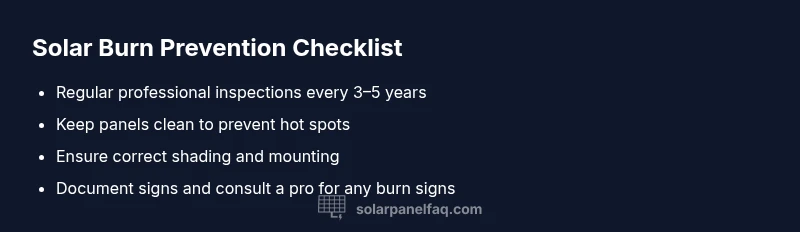
- Schedule regular professional inspections every 3–5 years, and after any severe weather event. - Keep panels clean and free from debris; dirt buildup can create hot spots in full sun. - Ensure proper mounting and shading management to avoid uneven heating. - Use qualified electricians for all electrical work; never bypass safety devices. - Install monitoring that alerts you to abnormal temperatures or performance drops.
When to Call a Pro
If you observe any signs of burning, smoke, or melting, contact a licensed solar technician immediately. Do not attempt high-voltage repairs yourself. A pro can perform thermal imaging, electrical testing, and component replacement with proper PPE and tools. After any burn event, ask for a written assessment and a recommended repair plan, including warranty considerations.
Steps
Estimated time: 45-60 minutes
- 1
Power down and confirm isolation
Locate the main AC disconnect and switch it off. If you have a DC disconnect, switch it off too. Confirm no voltage is present using appropriate testing equipment before approaching any hardware.
Tip: Use lockout/tagout practices and keep others away from the area. - 2
Assess safety and document signs
Look for visible damage, heat, or smells. Photograph scorch marks, melted plastic, or damaged wiring from a safe distance for the technician's reference.
Tip: Note the weather conditions; heat + sun often intensifies risk. - 3
Inspect for external damage and debris
With power off, inspect panels for cracks, discoloration, or debris causing hot spots. Gently remove leaves, bird droppings, or other obstructions from the panel surface.
Tip: Avoid leaning on panels or stepping on roofs; work from ground level when possible. - 4
Check visible wiring and connectors
Look for loose connections, frayed insulation, or melted conduit near the inverter or junction boxes. Do not attempt to repair wiring unless you are a licensed professional.
Tip: Keep a safe distance from any exposed conductors. - 5
Inspect the inverter and protective devices
Check for abnormal heat, unusual noises, or fault lights on the inverter. Verify DC fuses and breakers are intact and appropriately rated.
Tip: Document fault codes for the technician. - 6
Schedule professional testing and repairs
Arrange a full inspection with a licensed solar technician to perform thermal imaging, insulation tests, and component replacement as needed.
Tip: Ask about warranty implications and safe replacement parts. - 7
Restore operation only after approval
Do not re-energize the system until a certified professional confirms safe condition and all issues are resolved.
Tip: Keep a maintenance log for future reference.
Diagnosis: Visible burn signs, heat, or odor around solar equipment
Possible Causes
- highOverheating hot spots from shading or soiling
- highLoose connections or damaged wiring in DC circuits
- mediumDamaged bypass diodes or fuse inside the junction box
- lowAging components or manufacturing defects
Fixes
- easyPower down at the main disconnect and isolate the panel array before inspection
- easyInspect for visible damage and clean debris with system off
- mediumCheck DC wiring and fuses for looseness or overheating, only if trained
- hardSchedule professional evaluation for thermal imaging and advanced tests
Frequently Asked Questions
What are the warning signs of solar panel burn?
Watch for burning smells, smoke, scorch marks on panels or wiring, or unusually warm surfaces. These signs require immediate safety precautions and professional inspection.
Burn warnings include smell, smoke, scorch marks, or hot surfaces. Seek professional help immediately.
Can a burnt panel be repaired or should it be replaced?
Most burnt panels cannot be safely repaired. Replacement and thorough testing by a licensed technician are typically required.
Burnt panels usually need replacement and testing by a pro.
What immediate steps should I take if I notice signs of burn?
Shut down the system at the main disconnect, keep away from the area, and call a licensed technician for assessment and repair.
Turn off the system and contact a pro right away.
How can I prevent solar panel burns in the future?
Keep panels clean, ensure proper shading, and schedule regular professional inspections to catch issues early.
Keep panels clean and inspected, and manage shading.
Is it safe to touch or inspect the panels myself?
Do not touch damaged wiring or attempt high-voltage work. Only trained professionals should perform electrical inspections and repairs.
Avoid touching damaged wiring; call a pro.
Watch Video
Top Takeaways
- Power down before inspecting any burn signs.
- Burns are often electrical; avoid DIY fixes on high-voltage parts.
- Document signs and notify a pro promptly.
- Regular maintenance lowers burn risk and protects warranty.