How to Keep Solar Panels Clear of Snow
A practical, step-by-step guide to safely keeping solar panels free from snow, maximizing energy output, and protecting your roof during winter.


By following this guide, you will safely remove light to moderate snow from solar panels and keep them operating efficiently. We cover when to act, how to do it without damaging the panels or roof, and how to prevent snow buildup. Always consider weather conditions and personal safety; when in doubt, hire a professional.
Why Snow Impacts Solar Performance
Snow that rests on photovoltaic panels blocks sunlight and can hamper energy production, especially on overcast winter days. The resulting reduction in output is usually temporary, improving as snow melts or slides off, but repeated accumulation can reduce daily generation. According to Solar Panel FAQ, snow on the glass can reflect light and limit absorption, while shade on a roof can prolong snow coverage by keeping panels cooler. Factors like tilt angle, roof orientation, air temperature, and snow type determine how quickly panels shed snow. For homeowners, learning to assess conditions and decide when to intervene is essential for maintaining system performance and protecting your investment. Always consider safety first: working on a roof in winter carries fall risk, and attempting aggressive scrapes can scratch glass or damage frame components. If you feel unsure about safety or access, seek a professional assessment to avoid damage and ensure proper snow management strategies for your climate.
Safe, Effective Snow Removal Methods
Clear snow using tools designed for solar panels and operate from the ground when possible. Start from the outer edges and work toward the center with a long-handled, soft-bristle tool to avoid scratching the panel surface. Use a roof rake with a non-abrasive head or a plastic scraper specifically rated for PV modules, and never strike the glass. If weather allows, wait for a sunny interval to warm the surface, which helps melt light snow safely. In all cases, keep people away from the area below and avoid walking on the panels themselves. If a heavy accumulation is beyond your reach or safety comfort, contact a licensed professional to prevent damage or injury.
Tools, Safety, and Technique Variations by Roof Type
Roof type matters when selecting removal techniques. For pitched asphalt shingles, use a soft-bristle roof rake at a shallow angle to avoid lifting shingles. Metal roofs require cautious averaging to prevent gouging the panel frame; consider a longer reach tool to avoid stepping on the roof. For tile roofs, avoid direct contact with tiles to prevent breakage; a ground-based tool is preferred. Always wear safety gear, including a harness if you must work near the edge, and ensure your ladder is stable. Never use metal blades or ice-puts near PV modules, and avoid hot water or chemical de-icers that can damage seals.
When to Hire a Professional and Insurance Considerations
If you lack safe access, face icy conditions, or must perform work on a steep or high roof, it is prudent to hire a professional. A trained technician can remove snow without risking damage to panels, roof membranes, or electrical wiring, and can assess potential warranty implications. Check whether your homeowner’s insurance covers roof access work and whether your warranty requires professional snow removal. Document winter maintenance to support claims and ensure continued performance of your PV system.
Seasonal Planning and Maintenance to Minimize Snow Build-Up
Effective winter planning reduces snow-related downtime. Consider panel orientation and tilt to encourage shedding, and schedule regular inspections after major snow events. Clean, unobstructed gutters and downspouts help water runoff, and maintaining a clear snow path around the array reduces the chance of ice dam formation. For homeowners seeking authoritative guidance, refer to external sources such as government and university research on winter PV performance (see Authority sources). Authority sources: https://www.energy.gov/eere/solar, https://www.nrel.gov, https://www.epa.gov. (This section also serves to link you to trusted literature and policy discussions about solar energy safety and efficiency.)
Troubleshooting and Common Misconceptions
Misconception: Any amount of snow must be completely removed immediately. Reality: Light snow that melts quickly with sunlight can often be left to shed on its own. Misconception: Shoveling from the roof is safe for all roofs. Reality: Roof integrity and fall risk vary; never work from a ladder on a wet or icy surface. Misconception: Heat melts snow instantly. Reality: Excessive heat can damage seals and electrical components. Follow best practices: use non-abrasive tools, avoid sharp metal points, and prioritize safety over speed. If in doubt, pause and seek professional help.
Tools & Materials
- Safety harness and fall protection gear(Anchors rated for the roof and harness class suitable for work at height)
- Ladder with stabilizer(Use non-conductive ladder if working near electrical components)
- Roof rake with telescoping handle(Soft, non-scratch head designed for PV glass)
- Soft-bristle brush(Avoid metal bristles to prevent scratches)
- Non-scratch plastic scraper(Optional for stubborn patches, avoid glass damage)
- Goggles and insulated gloves(Weather-appropriate warmth and grip)
- Non-slip footwear(Grip is essential on icy surfaces)
- Water bottle and sunscreen(Hydration and sun exposure prevention when standing on a roof)
Steps
Estimated time: 60-90 minutes
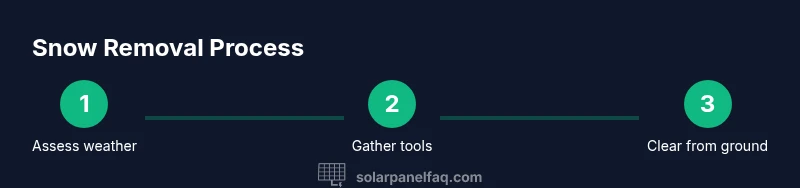
- 1
Assess weather and safety
Check forecast for calm, dry conditions. If there is glare, wind, or thawing ice, postpone. Ensure you can reach the panels from ground level or a stable ladder without risking falls.
Tip: Plan your approach with a partner who can stabilize the ladder and call for help if needed. - 2
Prepare your tools and safety gear
Gather a roof rake, soft brush, and protective gear. Inspect ladders and anchors for integrity. Put on gloves, eye protection, and non-slip boots before starting.
Tip: Test the rake’s head angle on a nearby surface to ensure it won’t damage the glass. - 3
Clear snow from the panel edges from ground level
Start from the periphery and work toward the center using long, gentle strokes to prevent pressure on the glass. Do not strike the glass directly; keep the rake at a distance.
Tip: Lengthen the handle to maximize distance and reduce reach over the edge. - 4
Address stubborn patches with care
For sticky patches, switch to a soft brush and lightly sweep. Do not use hot water, kick ice, or apply salts that can corrode seals and wiring.
Tip: Avoid reheating panels; heat can degrade protective coatings and seals. - 5
Reassess and recheck safety after snow removal
Step away from the roof, inspect surrounding area, and verify no ice or water is dripping onto walkways. If you walked on the roof, inspect for any displaced shingles or panel movement.
Tip: Document the process for future reference and warranty considerations. - 6
Post-maintenance inspection
Observe panel temperature and output during the next sunny period. If you notice irregularities in electricity generation, contact a professional to perform a systems check.
Tip: Schedule a periodic winter inspection with a certified technician.
Frequently Asked Questions
Is it safe to remove snow from solar panels myself?
Yes, if you can access the panels safely from the ground or with proper fall protection. Avoid icy conditions and never attempt risky climbs. Use non-scratch tools and stop if you feel unsafe.
Yes, you can remove snow yourself when conditions are safe and you have proper fall protection and non-scratch tools.
What should I avoid when removing snow from PV panels?
Avoid metal blades, hot water, and chemical de-icers. Do not step on panels or use aggressive plowing that can crack the glass or detach mounting hardware.
Avoid metal tools, hot water, and stepping on panels. Be gentle and patient.
How long does it take for snow to clear on its own?
Natural melting depends on sunlight, ambient temperature, and panel tilt. In moderate sun, light snow may melt within hours, but heavy accumulation can persist longer.
It depends on sun and temperature; light snow can melt in hours, heavy snow may take longer.
Will clearing snow affect my warranty?
Warranty terms vary by manufacturer. Generally, using proper tools and following safety guidelines minimizes risk, but consult your PV system manual or installer for specifics.
Warranty terms vary; check your manual or installer for guidance on snow removal.
When should I call a professional?
If you must work on a steep or icy roof, or if snow is heavily packed and difficult to remove safely, hire a licensed professional.
Call a pro if the roof is unsafe or the snow is heavily packed.
Are heated mats or de-icers recommended?
Heated mats are generally not recommended due to fire risk and wiring concerns. Rely on safe, manual removal or professional services when in doubt.
Heated solutions are usually not advised; stick with safe removal or professional help.
Watch Video
Top Takeaways
- Use proper safety gear and distance when removing snow.
- Prioritize safety over speed; call a professional for difficult jobs.
- Avoid risky methods that could damage panels or roof.