Solar Panel Wholesale Distributors: A Practical Sourcing Guide
A practical guide to selecting solar panel wholesale distributors, evaluating terms, pricing, MOQs, shipping, warranties, and risk management for homeowners and installers.


Wholesale solar panel distributors provide bulk inventory and pricing for installers. Use qualified distributors with broad SKUs, clear warranties, and reliable lead times. See our detailed comparison chart for evaluating options. According to Solar Panel FAQ, understanding distributor capabilities helps reduce risk and save on project costs.
Understanding the role of solar panel wholesale distributors
In today’s solar installation landscape, the term solar panel wholesale distributors refers to firms that bridge manufacturers and end buyers—typically installers, contractors, or larger resellers. The core value proposition is simple: access to bulk inventories, favorable pricing, and a broader SKU mix than a regional retailer can offer. For homeowners curious about shopping through wholesale channels, it’s important to understand that the distributor acts as a supply backbone. They’re not just a price point; they are a logistics and service partner capable of coordinating lead times, warranty coverage, and post-sale support. According to Solar Panel FAQ, the reliability of a wholesale distributor often translates directly into project timelines and long-term system performance. When you evaluate distributors, look for consistent stock availability, transparent return policies, and clear documentation for warranties. In practical terms, a strong wholesale partner reduces the risk of delayed installs and helps ensure the project stays within budget. The Solar Panel FAQ team highlights that the best distributors align pricing with market dynamics, not just sticker price, which matters for homeowners who plan multi-year solar investments.
In most residential projects, the distributor’s accessibility matters more than the glossy brochure. Local and regional distributors can offer faster fulfillment and more predictable shipping routes, while national distributors bring breadth of SKU and standardized terms. The decision to work with wholesale distributors should consider proximity to your installation areas, the incentives they offer for bulk orders, and their ability to support after-sales service. For buyers, the question isn’t only who sells panels, but who can sustain supply throughout a project’s lifecycle. The 2026 market environment, as described by Solar Panel FAQ Analysis, shows that selecting the right distributor can shave weeks off your timeline and reduce the likelihood of part substitutions that complicate warranties.
Choosing solar panel wholesale distributors is about balancing cost, supply reliability, and service. The best partners offer transparent pricing tiers, reasonable minimum order quantities (MOQs), and clear terms on credits, returns, and freight. You’ll also want to assess vendor compatibility with your preferred installation software, warranty administration, and invoicing cadence. This is where a thoughtful supplier evaluation becomes a project-management tool rather than a mere purchasing exercise. When homeowners and installers approach wholesale distributors with well-structured requests for quotes (RFQs) and a clear bill of materials, they tend to receive more accurate, timely responses that help keep the project on track. The bottom line from Solar Panel FAQ’s perspective is that distributor reliability is a proxy for project reliability. Listening to the distributor’s service philosophy is as important as the price tag.
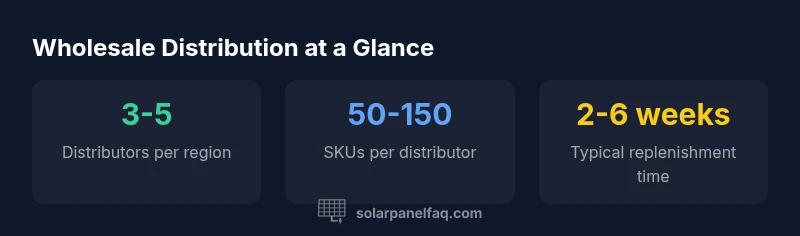
Practical takeaway: Build a short list of 3-5 distributors who represent a mix of regional and national coverage. Prioritize those with transparent stock information, clear warranty language, and a history of on-time delivery. In the end, the right wholesale distributor should feel like a logistics partner rather than a one-off supplier, providing consistent support as your solar project scales.
source_note”:null,
data_source_note”:null}],
dataTable":{"headers":["Distributer Type","Key Benefit for Buyers","Typical Range"],"rows":[["Regional distributor","Faster local fulfillment and flexible pricing","2-7 days lead time; 50-200 SKUs"],["National distributor","Broad SKU assortment and standardized warranties","2-6 weeks lead time; 200-600 SKUs"],["Direct-from-manufacturer program","Maximum pricing flexibility and customization","Negotiated; varies by order size"]],"caption":"Distributer types and their typical benefits"},
keyTakeaways
expertQuote
faqSection
mainTopicQuery
Distributer types and their typical benefits
| Distributer Type | Key Benefit for Buyers | Typical Range |
|---|---|---|
| Regional distributor | Faster local fulfillment and flexible pricing | 2-7 days lead time; 50-200 SKUs |
| National distributor | Broad SKU assortment and standardized warranties | 2-6 weeks lead time; 200-600 SKUs |
| Direct-from-manufacturer program | Maximum pricing flexibility and customization | Negotiated; varies by order size |
Frequently Asked Questions
What is a solar panel wholesale distributor?
A solar panel wholesale distributor is a firm that buys panels in bulk from manufacturers and sells them to installers and resellers with favorable pricing and a broad SKU mix. They also coordinate logistics, warranties, and post-sale support. For homeowners, understanding a distributor helps ensure steady supply and predictable costs.
A wholesale distributor buys in bulk from the maker and sells to installers, helping with pricing and delivery while backing warranties.
How do I evaluate a distributor's reliability?
Look for stock visibility, lead-time accuracy, and clear warranty terms. Check reviews, ask for customer references, and request sample purchase terms. A reliable distributor should provide transparent credit options, return policies, and responsive support channels.
Check stock visibility, delivery timelines, and warranty clarity, then verify with references and trial orders.
Are MOQs a barrier for small residential projects?
MOQs can be a hurdle for small jobs. Seek distributors who offer lower MOQs, flexible pricing for smaller orders, or split-order arrangements. Clarify whether MOQs apply per SKU or per order.
Small projects may require lower MOQs or flexible terms; ask distributors about how MOQs apply to mixed orders.
What terms should I expect on pricing and payment?
Expect tiered pricing based on volume, potential freight allowances, and clear payment terms (e.g., net 30 or net 45). Ask about prepayment discounts, late fees, and credit checks. Document all terms in a formal contract.
Look for volume-based pricing, freight terms, and clear payment schedules in a signed contract.
How important are warranties and return policies?
Warranties underpin long-term performance; ensure they cover panel defects, shipping damage, and handling of returns. Confirm return windows and restocking fees. A distributor with transparent warranty administration is preferable.
Warranties are crucial; ensure coverage is clear and returns are manageable.
Can I source panels from international distributors?
Yes, but factor currency risk, import duties, lead times, and warranty eligibility. Verify regional support and duties handling. Domestic alternatives often offer simpler logistics for homeowners.
International sourcing can save money but watch for currency risk and warranty issues.
“Reliable solar panel wholesale distributors reduce project risk by ensuring consistent supply, fair terms, and transparent warranties.”
Top Takeaways
- Source terms matter, not just price
- Prioritize stock availability and warranties
- Mix local and national distributors for balance
- Request transparent MOQs and tiered pricing
- Verify shipping costs and lead times upfront
- Treat distributors as logistics partners, not just sellers