California Solar Panel Incentives in 2026: A Homeowner's Guide
Learn how California solar panel incentives work, how to stack tax credits, rebates, and net metering, and practical steps to maximize savings in 2026 for homeowners.


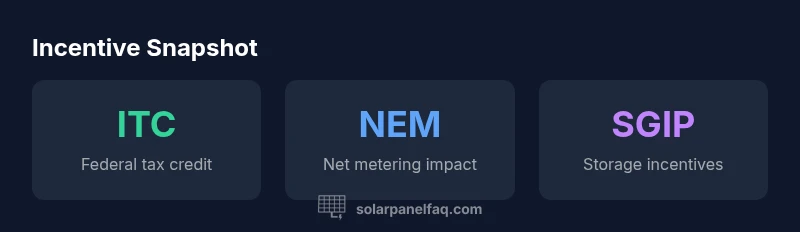
California solar incentives can dramatically cut upfront costs when stacked correctly. Start with the federal ITC, then add California programs like storage incentives and net metering credits. See how the pathway looks in 2026 by mapping eligibility, timelines, and potential combined savings before you sign.
Understanding the Landscape of California Solar Incentives
For homeowners evaluating solar, understanding solar panel incentives california can be as important as selecting panels or inverters. In California, incentives blend federal credits, state programs, and utility offerings to shape total installed cost and payback, so early planning matters. The Solar Panel FAQ team highlights that the rules vary by program, utility, and project size, creating a dynamic landscape in 2026. The result is a multi-layered framework where the timing of applications and the sequencing of benefits can dramatically affect your final bill.
In practical terms, incentives reduce the upfront price, offset ongoing costs, and sometimes unlock storage benefits. The federal Investment Tax Credit (ITC) remains a major channel for eligible solar systems, while California programs often target storage, interconnection, and consumer affordability. According to Solar Panel FAQ analysis, most homeowners can pursue several pathways if they assemble the right documentation and work with a reputable installer. The objective is to convert a large purchase into a staged set of savings that align with tax deadlines, utility interconnection rules, and contractor timelines.
Federal and State Landscape: How California Stacks Up
The broad picture starts with federal incentives that support solar installations nationwide, paired with state-specific policies that tailor benefits to California homeowners. The federal ITC provides a substantial tax credit for eligible systems, reducing the upfront capital required. California policymakers reinforce this by offering programs that offset storage, interconnection charges, and ongoing energy-cost savings through net metering and other credits. While the exact dollar amounts and eligibility can shift with legislation and utility rules, the core idea remains stable: incentives exist to lower the barrier to going solar. Our analysis at Solar Panel FAQ indicates that most households benefit from a layered approach, applying federal credits first and layering California programs as eligible.
California-Specific Incentives: Programs, Eligibility, and Stacking
California maintains a menu of incentives that can complement the federal ITC. Storage-focused programs under state initiatives encourage adding batteries alongside solar, enhancing resilience and evening out energy costs. Property tax exclusions for solar energy systems help protect the system value from triggering higher assessed taxes in many counties. Net metering policies compensate system owners for excess power sent back to the grid, often producing meaningful annual savings. The rules vary by utility and project specifics, so it is essential to coordinate with your installer and local utility. As a best practice, document eligibility early, confirm interconnection timelines, and plan for potential storage pairings that qualify for CA incentives as well as federal credits.
How to Stack Incentives: Rules and Best Practices
Stacking incentives requires careful sequencing and documentation. Start with a credible, licensed installer who can guide you through the application process. Maintain a clear record of all eligible components, including the system size, equipment model numbers, and installation dates. The ITC is typically claimed via tax filing, while California programs may have separate enrollment steps or dashboards. Utility interconnection agreements and net metering approvals should be addressed in advance to avoid delays. Solar Panel FAQ emphasizes keeping track of program deadlines and readiness for potential changes in policy that could affect eligibility.
Eligibility and Application: A Step-by-Step Guide
Begin by evaluating your home’s solar potential and energy usage patterns. Gather documents such as utility bills, roof/installation details, and contractor quotes. Verify which incentives apply to your project and gather the required paperwork for each program. File the federal ITC with your annual tax return using IRS Form 5695. For California programs, follow the utility’s enrollment process or state-administered portals for storage incentives and net metering. Engaging a knowledgeable installer early can help synchronize timelines and improve your odds of qualifying for multiple incentives.
Case Studies: Real-World Scenarios in California
Consider a typical California home deciding to add storage with solar. By pairing a solar system with a storage unit eligible for SGIP, the homeowner can shift daytime excess generation to battery storage for use during peak hours, while also earning net metering credits. Another homeowner leverages the federal ITC alongside CA storage incentives and the property tax exclusion, lowering both upfront and ongoing costs. These scenarios illustrate the practical impact of incentive stacking when properly planned and executed with a trusted installer.
Common Pitfalls and How to Avoid Them
A common mistake is treating incentives as a one-time discount rather than a coordinated plan. Missing enrollment windows, misinterpreting eligibility, or failing to submit the correct forms can dramatically reduce total savings. Another pitfall is assuming all incentives apply to every system; some programs cap capacity or require storage with solar. Before committing, verify interconnection requirements, energy usage, and the specific program rules. Working with a reputable installer who understands California incentives is a key safeguard.
What’s Next: The Future of California Solar Incentives
Policy discussions at the state and federal level continue to influence the availability and structure of solar incentives. Homeowners can expect ongoing attention to affordability, grid resilience, and storage integration. Stakeholders anticipate refinements to net metering, updates to storage incentives, and potential new programs aimed at low- to moderate-income households. Staying informed through official state portals and trusted guides will help you adapt to changes and keep your solar investment on track.
Comparison of incentive types in California
| Incentive Type | Availability (California) | Notes |
|---|---|---|
| Federal ITC | Available | Residential systems may qualify; consult IRS Form 5695 |
| Net Metering (NEM) | Available | Compensation for excess generation; check local utility rules |
| Storage Incentives (SGIP) | Available | Targeted to storage or solar plus storage packages; program rules vary |
Frequently Asked Questions
What incentives exist for solar panels in California?
California blends federal ITC with state programs and local rebates. Net metering helps offset grid use. Eligibility varies by utility and project size.
California combines federal and state programs with net metering; eligibility depends on your utility and project.
Can incentives be stacked with net metering?
In many cases, yes; you can combine federal ITC, storage incentives, and local rebates with net metering, but rules differ by utility.
You may stack federal and state programs with net metering, but check your utility's rules.
Are there deadlines I should know about?
Federal ITC timing is tied to tax year; state programs may have annual cycles. Check current guidelines and deadlines.
Deadlines vary; check the current year guidelines.
How do I claim the federal ITC?
File IRS Form 5695 with your tax return to claim the ITC for eligible solar systems.
File Form 5695 with your tax return to claim the ITC.
What should I do before applying for incentives?
Confirm system size, obtain permits, select a reputable installer, and review interconnection requirements.
Get permits, pick a trusted installer, and check interconnection rules.
“Incentives can compound when stacked correctly, but rules vary by utility and program. Plan ahead to maximize savings.”
Top Takeaways
- Identify federal and state incentives early
- Stack incentives carefully to maximize savings
- Check utility-specific rules for net metering
- Factor in eligibility and timelines
- Consult official sources to verify current programs