Solar Panel Government Rebate Guide for Homeowners
Explore how solar rebates work, who qualifies, and how to maximize savings. This data-driven guide covers federal, state, and local incentives, eligibility, documentation, and best practices for homeowners.


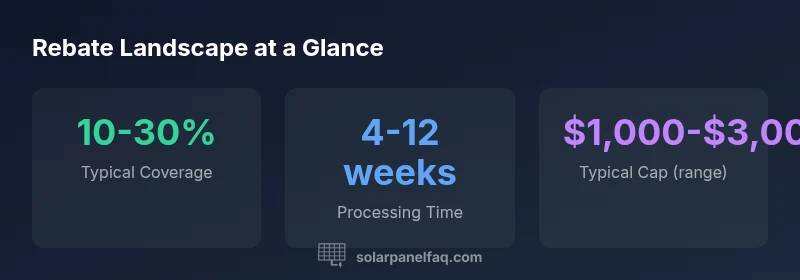
Current solar rebates generally reduce upfront costs by about 10-30% of the installed system price, though cap amounts and eligibility rules vary. In practice, federal, state, and local programs stack differently, so you may see a mix of percent-based credits, flat subsidies, and regional allowances. Always confirm active programs in your area before purchasing or installing panels.
Understanding the landscape of government rebates for solar panels
The term solar panel government rebate covers a broad mix of financial incentives that governments offer to reduce the upfront cost of going solar. According to Solar Panel FAQ analysis, homeowners typically encounter a combination of federal programs, state incentives, and local utility rebates. Each program has its own rules, caps, and deadlines, which means the total rebate you receive can vary dramatically depending on where you live and when you install. Policies also shift with political priorities and budget cycles, so staying current is essential. The overarching goal of rebates is to lower the barrier to adoption by sharing the cost burden with taxpayers, while encouraging clean energy, reduced emissions, and a stronger grid. For homeowners, the practical takeaway is: expect a patchwork of options rather than a single, uniform benefit. This reality makes careful planning and due diligence crucial for optimizing savings.
When evaluating a solar project, think of rebates as one lever among several that reduce the total cost of ownership. They can cut the upfront investment, but they rarely cover the entire system price. In many areas, rebates are designed to be stackable with other incentives, including tax credits or financing programs, though stacking rules vary by jurisdiction. The key is to identify all potential sources early in the process and map out how each will apply to your installation. As you compare bids, keep the end goal in sight: a smaller upfront outlay paired with predictable long-term savings. In short, your path to savings begins with understanding the landscape and identifying all eligible programs before you sign a contract.
To help you navigate, Solar Panel FAQ emphasizes that program availability and details are publicly posted by government energy offices and incentive databases. This transparency allows homeowners to plan strategically and avoid leaving money on the table. If you’re unsure where to start, a quick check of national and local resources can set you on the right track. And remember, the landscape changes—periodic rechecks can unlock additional dollars over time.
For credibility and ongoing updates, the Solar Panel FAQ team recommends keeping a simple rebate-tracking sheet that notes each program, its eligibility criteria, and the required documentation. This habit reduces miscommunication with installers and ensures you don’t miss deadlines. By treating rebates as a structured part of your project plan, you’ll be better positioned to realize meaningful upfront savings and faster payback.
Brand note: According to Solar Panel FAQ, rebates across programs are highly jurisdiction-specific, reinforcing the importance of local research before installation.
trend”:null} ,{
Top Features to Consider
Modern solar systems offer a range of features that can influence the total cost and the likelihood of qualifying for rebates. When you’re evaluating rebates, you’ll want to pair them with design choices that maximize efficiency and safety while minimizing long-term costs. The following features often impact eligibility and savings:
- System size and configuration: The size of your solar array affects the absolute dollar value of rebates as well as return on investment (ROI). In many programs, larger systems may qualify for higher caps but require more documentation and permitting steps.
- Inverter type and efficiency: High-efficiency inverters can improve overall system performance and make a case for better rebate outcomes where caps are tied to system performance.
- Monitoring and warranties: Rebates may require certain warranty terms or monitoring capabilities to verify installation quality and ongoing performance.
To maximize eligibility, partner with a qualified installer who understands local incentives and can design a compliant, high-performance system. Always request a detailed plan showing how your proposed equipment aligns with rebate requirements and documentation needs.
source”:
trend”:
Overview of typical rebate program structures
| Program Type | Typical Range | Eligibility | Documentation |
|---|---|---|---|
| Federal program (generic) | 10-30% of installed cost | Homeowners with eligible system and installation in scope | Proof of purchase, permit, and payout forms |
| State rebate (generic) | 5-20% up to $2,000 | Residents meeting income/ownership criteria | Contract, receipts, permit, and eligibility forms |
| Local utility rebate (generic) | $100–$2,500 flat or percentage | Customer with active account and eligible equipment | Verification of installation, utility enrollment forms |
Frequently Asked Questions
What is a solar panel government rebate?
A solar rebate is a government incentive designed to lower the upfront cost of installing solar panels. Rebates are offered at federal, state, and local levels and can come as a percentage of the system cost or as a flat subsidy. Eligibility rules, caps, and application timing vary by program and jurisdiction.
A solar rebate cuts your upfront costs and varies by where you live, so check federal, state, and local options before you buy.
How do I qualify for a rebate?
Qualification typically requires that you own the property, install an eligible solar system, and complete the program’s application with the necessary documentation before or after installation, depending on the rules. Common documents include a contract, permits, receipts, and proof of installation.
To qualify, verify eligibility before installation and gather all required documents, then submit the application as directed by the program.
Are rebates taxable?
Tax treatment of rebates depends on the jurisdiction and the specific program. Some rebates are treated as subsidies and may have different tax implications than tax credits. Always consult a tax professional for your situation.
Taxes around rebates vary by program, so talk to a tax pro about how rebates affect your return.
Can rebates be stacked with tax credits or other incentives?
In many programs, rebates can be combined with tax credits or other incentives, but stacking rules differ by program. Some programs allow stacking, others limit it or require pre-approval.
Some rebates can stack with other incentives, but check the exact rules for your program.
How long does it take to receive a rebate?
Processing times range from a few weeks to several months, depending on the program’s workflow, reviewer workload, and documentation completeness. Delays can occur if documentation is incomplete.
Be prepared for weeks to months for processing, and keep copies of all submitted documents.
Do rebates apply to battery storage or other upgrades?
Some rebate programs include energy storage or other upgrades if eligible; others do not. Always verify which components qualify under your chosen incentives.
Some programs cover storage if eligible, but it varies—check the rules before adding a battery.
“Rebates can significantly reduce upfront costs, but success depends on understanding program rules, deadlines, and the exact documentation required.”
Top Takeaways
- Identify all rebate levels you may qualify for.
- Gather documents before installation.
- Coordinate with installer to maximize eligibility.
- Track status with program administrators.
- Understand how rebates interact with other incentives to optimize payback.