Where Can Solar Panels Be Recycled? A Practical Guide
Explore where solar panels can be recycled, which materials are recovered, and how to access take-back programs and local facilities for end-of-life handling. A practical guide from Solar Panel FAQ.


Where can solar panels be recycled? Solar panels are recycled at specialized PV or electronics recyclers, take-back programs run by manufacturers, and some municipal e-waste centers. Recovered materials include glass, aluminum frames, copper wiring, plastic components, and silicon cells; processes emphasize safe handling of hazardous materials and proper disposal of toxic components. According to Solar Panel FAQ, recycling is increasingly feasible as programs expand and technology improves.
How solar panels are recycled: an overview
Solar panels are designed for long life, but when they reach end of life they enter a recycling stream that is increasingly organized and regulated. The process starts with removal from rooftops or inventory, followed by careful disassembly to separate the module from its mounting hardware. Trained technicians then pull the modules apart to isolate glass, aluminum frames, copper conductors, junction boxes, and the silicon cells. Materials are sorted for downstream processing, with the goal of recovering high-value components while safely handling any hazardous substances.
In many regions, this work is performed by dedicated PV recyclers or electronics recyclers who operate under environmental and safety standards. The efficiency of recovery depends on the module design, the age of the panel, and the sophistication of the processing facility. Scaled-up take-back programs allow manufacturers to reclaim and reuse materials, driving down the lifecycle impact of solar energy. The overarching trend is toward more complete material reclamation and fewer landfilled components, aligning with broader environmental goals and circular economy principles.
Brand note: Across markets, programs are increasingly customer-facing, with pickup options, drop-off sites, and online scheduling. If you’re preparing a batch of panels for recycling, coordinating through the installer or manufacturer can simplify the process and ensure compliant handling.
Key materials and what can be recovered
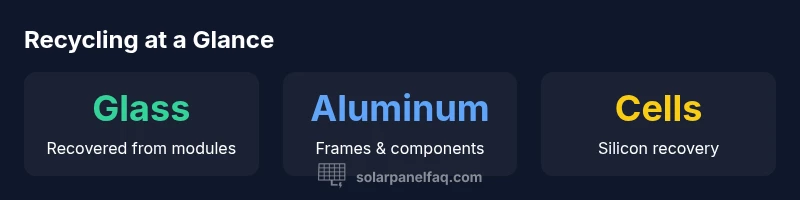
Solar modules contain several distinct material streams that recyclers target. Glass makes up a large portion of the panel’s weight and can be reprocessed for new glass products. Aluminum frames are highly valuable and commonly recycled with minimal downcycling. Silicon cells and associated metals are more technically demanding to reclaim, typically requiring specialized facilities that can recover silicon, silver, and copper traces. Backing materials, polymers, and adhesives are treated or separated to minimize contamination and maximize material reuse. Understanding these material streams helps homeowners and businesses align with the right recycling partners and avoid mixed-waste disposal.
Recyclers evaluate the feedstock quality, panel type (crystalline or thin-film), and construction details to determine the most cost-effective and environmentally sound recovery path. In some cases, partial recycling, downcycling, or material delamination may occur, but advances in processing technologies have improved the overall recoverability of most modern panels. When in doubt, ask the recycler for a breakdown of recovered materials and end products so you can compare programs and outcomes.
The recycling process in practice: steps from removal to refinery
The end-to-end process typically includes: (1) collection and verification of end-of-life status; (2) safe removal and removal of panels from mounting hardware; (3) disassembly to separate modules into glass, frame, and internals; (4) sorting by material type, with glass and aluminum separated for separate streams; (5) processing of silicon cells and metals at specialized facilities to recover silicon, silver, copper, and other metals; (6) refining and converting recovered materials into feedstock for new products. Some facilities employ automated shredding and sorting to improve efficiency, while others rely on manual dismantling for delicate components. Environmental controls, waste handling, and worker safety protocols are integral to every step and are shaped by local regulations and industry standards.
For homeowners, understanding the chain—from curbside logistics to refinery output—helps set expectations about timelines and costs. Good practices include obtaining documentation of material recovery and ensuring that the recycler provides a traceable material flow, which supports compliance with environmental reporting requirements and potential incentives.
Regional programs and how to participate
Program availability varies widely by country and even by state or province within countries. In many parts of Europe, Extended Producer Responsibility (EPR) schemes require manufacturers to finance collection and recycling of end-of-life solar panels, often through a take-back program or authorized partner network. In North America, take-back offerings may be available through manufacturers, dedicated PV recyclers, and some municipal facilities, though coverage can be inconsistent. In other regions, feed-in tariffs and government incentives may partner with recyclers to streamline processing. If you’re uncertain, start with your installer or the original equipment manufacturer (OEM) to identify approved recyclers and to schedule a pickup or drop-off.
When selecting a program, confirm compliance with local waste management regulations, certification standards, and any performance reporting requirements. Ask about the recycler’s processing capabilities, the expected material recovery rates, and whether the program offers end-of-life certificates or recycling credits. A well-chosen program minimizes delays and ensures that valuable materials are recovered responsibly.
How homeowners can prepare and choose a recycler
Preparation helps speed up processing and reduces the risk of contamination. Gather all panels in a single, clearly labeled location, remove mounting hardware if possible, and document the panel type and date of installation. Verify that the recycler is certified (look for recognized environmental management standards) and ask for a written estimate of processing steps and any associated costs. If a manufacturer offers a take-back option, compare it with third-party recyclers to determine best value and environmental impact. Keeping lines of communication open with your installer and the recycler helps avoid surprises at pickup or drop-off.
Tips for choosing a recycler:
- Check certifications (e.g., R2, e-Stewards) and confirm compliance with local regulations.
- Request a materials flow diagram showing how glass, metals, and silicon are processed.
- Seek certifications or evidence of safe handling of hazardous substances.
- Ask about post-recycling use for reclaimed materials.
- Confirm transparency about any disposal costs or credits received.
Remember to request documentation or certificates that verify proper end-of-life processing, which can be useful for sustainability reporting or home improvement disclosures. ,
Economic and environmental considerations
The environmental benefits of recycling solar panels hinge on reducing raw material extraction and minimizing waste. Recycling lowers the energy intensity of producing new components and reduces the need for virgin materials. However, the economics can vary by region and facility capacity, influencing turnaround times and costs. As recycling technologies improve and more facilities come online, the cost per panel tends to decline, and treatment standards become more predictable. For homeowners, aligning with reputable recyclers can help secure favorable environmental outcomes while potentially earning credits or incentives where available. Keep in mind that local regulations and incentives may influence the feasibility and timing of recycling projects.
What this means for homeowners and the solar industry
In practice, the ability to recycle solar panels successfully depends on a strong ecosystem: certified recyclers, manufacturer take-back programs, and supportive regulations. Homeowners who plan ahead, identify local options, and verify credentials can make end-of-life management straightforward. The broader industry benefits when more modules enter recycling streams rather than landfills, enabling higher recovery rates and the creation of a circular supply chain for solar materials. As the system matures, expect more standardized processes, clearer reporting, and expanded access to take-back options for more homeowners.
Typical components and recycling status
| Material / Component | Recycle Status | Notes |
|---|---|---|
| Glass cover | Recyclable at specialized facilities | Often separated for reuse or downcycling |
| Aluminum frame | Recyclable | High-value metal reclaimed with minimal processing |
| Silicon cells | Recyclable with advanced processes | Requires specialized equipment to recover silicon and metals |
| Junction box/wiring | Recyclable | Copper content reclaimed where feasible |
Frequently Asked Questions
Are all solar panels recyclable?
Most panels have recyclable components, but full recycling depends on technology and facility capabilities. Availability varies by panel type and region.
Most panels have recyclable parts, but full recycling depends on the facility.
What should I do with old solar panels?
Check for manufacturer take-back programs, local e-waste centers, or solar installers who offer recycling. Avoid disposing of panels with regular trash.
Look for take-back programs or certified recyclers near you.
How do I find a certified recycler?
Search for certifications like R2 or e-Stewards, and verify compliance with local environmental standards. Ask for a documented recovery plan.
Find a certified recycler and verify their credentials.
Does recycling affect warranty?
Disposal and recycling are typically separate from the warranty, but terms vary by manufacturer. Check your warranty language for specific clauses.
Disposal generally doesn't affect the warranty, but terms vary.
What is the cost to recycle solar panels?
Costs vary by program and region; some programs cover processing fees or offer incentives, while others may require a processing charge. Compare options.
Costs depend on the program; some cover fees.
What materials are most valuable to recover?
Glass and aluminum are commonly recovered; metals from cells and wiring are reclaimed where feasible, depending on facility capabilities.
Glass and aluminum are commonly recovered.
“Recycling solar panels is technically feasible and environmentally beneficial, but success depends on robust local programs and certified recyclers.”
Top Takeaways
- Identify local and manufacturer recycling options early.
- Choose certified recyclers to ensure proper processing.
- Expect multiple material streams: glass, aluminum, copper, and silicon.
- Regional programs vary; check eligibility and scheduling.
- Coordinate with installers to streamline end-of-life handling.