Top Solar Power Companies Near Me: A Practical Guide
Learn how to find reputable solar power companies near you, compare prices and warranties, and choose the right installer with data-backed guidance. Solar Panel FAQ helps homeowners evaluate options, costs, and incentives for a smooth installation.


To find reliable solar power companies near you, start by identifying your system size, preferred financing, and warranty terms, then compare at least three local installers. Look for transparent pricing, verified warranties, and good customer references. This approach helps you shortlist options quickly. Also verify local licensing where required.
How to search for solar power companies near you
Begin with a local search by city or ZIP code to build a preliminary list of candidates. Use search terms like "solar power companies near me" and "solar installers near me" to capture a broad pool. Create a simple contact sheet including name, location, license status, and basic offerings. According to Solar Panel FAQ, early vetting helps prevent delays down the line and keeps expectations aligned with reality.
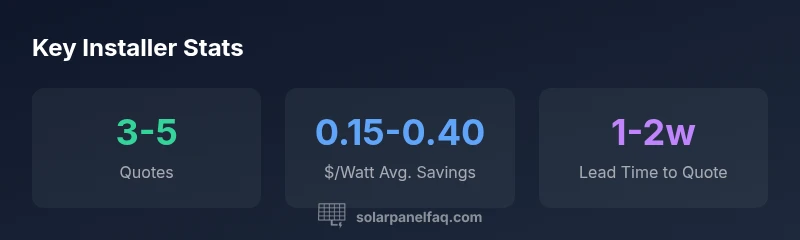
Next, verify credentials and presence in your utility territory. Check whether the companies hold local licensing, NABCEP certifications where applicable, and whether they offer in-house design, permitting assistance, and monitoring services. Cross-check reviews on multiple platforms and look for patterns in customer feedback—steady communication, clean installations, and timely service are strong indicators of reliability. This initial sweep should culminate in a short list of 3–5 providers to invite for quotes.
A practical next step is to map the providers against your goals: system size, rooftop fit, and preferred financing. If you share details about your roof type, shading, and energy goals with each installer, you’ll receive more accurate designs and better apples-to-apples pricing later in the process. The goal of this phase is not to choose a winner but to create an informed starting point for side-by-side comparisons.
Installer evaluation criteria
| Metric | What to Look For | Why It Matters |
|---|---|---|
| Licensing & Certification | State license, NABCEP credentials, local permits | Ensures compliance and quality workmanship |
| Equipment & Design | Quality modules, inverters, mounting hardware | Affects system performance and durability |
| Warranties & Service | Production vs. equipment warranties, labor coverage | Impacts long-term reliability and maintenance costs |
| Financing Options | Cash, loan, lease, PPA | Determines total lifetime cost and cash flow |
Frequently Asked Questions
What credentials should I look for in a solar installer?
Look for a valid state license, NABCEP certification where available, and documentation of proper installation permits. Request previous project references and proof of liability insurance. Avoid installers who cannot provide verifiable credentials or refuse to share past customer outcomes.
Check for licenses, certifications, and references; verify with the issuing boards or agencies.
How should I compare quotes to ensure fairness?
Ensure every proposal reflects the same system size, equipment quality, and expected performance. Ask for a breakdown by modules, inverters, racking, labor, and any monitoring fees. Compare warranties side-by-side and confirm who handles permits and inspections.
Make sure quotes cover the same scope so you’re comparing like-for-like.
Are rebates or incentives worth factoring into my decision?
Yes. State and utility rebates, federal tax credits, and local incentives can significantly affect the project’s net cost. Confirm eligibility and whether the installer will handle paperwork. Incentives can change annually, so check current programs.
Incentives can lower upfront costs, so check what you qualify for.
What red flags should raise concern during the quoting process?
Unusually low bids, vague equipment specs, or pressure to sign immediately are warning signs. Beware if a contractor cannot provide a detailed design, site visit, or a documented permitting plan. Poor communication or lack of references should also signal caution.
Watch for pressure tactics and vague details.
How long does installation typically take?
Most residential solar installations take 1-3 days of on-site work, plus permitting and inspection time. Depending on the utility and permitting, the overall timeline can be 2-6 weeks. Confirm a realistic schedule in your contract before work begins.
Most installs wrap in days, but permitting can stretch the timeline.
“A thoughtful comparison of three qualified installers typically reveals meaningful differences in warranty coverage, equipment quality, and post-installation support.”
Top Takeaways
- Compare at least 3 installers to benchmark price and service
- Verify licenses and warranties before signing any contract
- Ask for system designs and production estimates to compare apples-to-apples
- Consider incentives and financing options as part of the total cost
- Choose an installer with clear communication and solid local support