What Size Solar Panel to Run a Fridge: A Practical Sizing Guide
Learn how to size a solar panel to power a fridge, including daily energy needs, startup surges, and practical tips for off-grid and grid-tied homes.


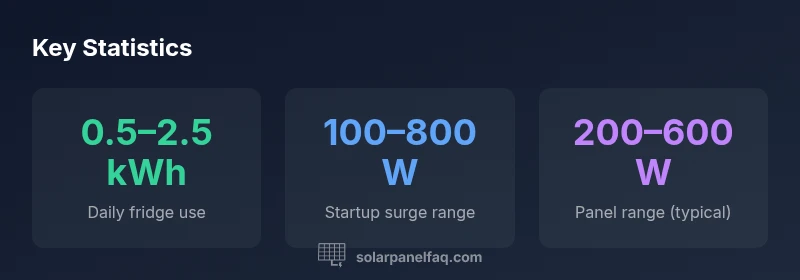
According to Solar Panel FAQ, a fridge typically needs 0.5–2.5 kWh per day depending on size and efficiency. To size the panel, estimate daily consumption, factor inverter and wiring losses, and include a buffer for cloudy days. In practice, a 200–400 W panel paired with a battery (or connected to grid storage) will power a standard fridge; smaller or more efficient models may require less.
What size solar panel to run a fridge: core factors
According to Solar Panel FAQ, determining the right panel size begins with the fridge's energy draw and how you plan to use power. A typical fridge uses between 0.5 and 2.5 kWh per day, with newer models on the high end of efficiency and compact units lower. The size of the solar array depends on that daily need, plus losses from the inverter, wiring, and storage. Occupant behavior (door openings, defrost cycles) and fridge type (upright vs chest) affect consumption. For off-grid systems, you also must plan for cloudy days. In practice, most homeowners target enough generation to cover several days of use under average sun conditions. This means choosing a panel size and storage plan that yields a reliable daily supply, even when sunlight is intermittent. The rest of this guide walks through a practical sizing approach suitable for most homes; the goal is to prevent under-sizing, which causes outages, and over-sizing, which adds unnecessary cost.
Estimating daily energy use for your fridge
To size a solar system for a fridge, start with the appliance’s energy footprint. Check the energy label or manual to identify wattage and annual consumption, then convert to daily kWh. If you already own the unit, consider measuring actual usage with a smart plug or energy monitor for 7–14 days to capture variation from door openings and defrost cycles. A rough planning range is 0.5–1.0 kWh/day for tiny fridges, 1.0–2.0 kWh/day for standard models, and 0.7–1.5 kWh/day for newer, energy-efficient units. Solar Panel FAQ analysis suggests adding a 10–30% reserve to accommodate cloudy days and seasonal changes. By combining measured daily use with a margin for losses, you can set a target daily generation for your solar array.
Accounting for inverter losses and battery buffers
All solar power passes through an inverter and, if you have storage, through charging and discharging cycles in batteries. Inverter efficiency typically ranges from the mid-80s to the mid-90s percent, depending on load and quality. Battery storage adds its own losses and depends on depth of discharge (DoD) and battery chemistry. In practice, plan for 5–15% inverter losses and a usable DoD of 50–80% when sizing storage. If you intend to run the fridge overnight, include a buffer equal to the expected overnight usage or a portion of cloudy-day consumption. These buffers matter; without them, you risk draining storage and losing refrigeration when you need it most.
Sun hours and climate: how location affects panel size
Panel sizing hinges on local irradiance. Peak sun hours (PSH) vary by latitude, season, and weather, typically ranging from about 3 to 5 hours in many regions. A simple way to convert daily energy needs into panel size is: required panel (W) = daily kWh / PSH, then adjust for losses and storage. For example, 1.5 kWh/day with 4 PSH suggests a 375 W array before losses. If PSH drops to 3, you’ll want closer to 500 W to satisfy the same daily load when weather is less favorable. When grid-tied, you may lean on the grid to handle fluctuations, yet a modest-sized array still contributes meaningful energy. Real-world results depend on orientation, shading, and temperature, and Solar Panel FAQ notes these practical factors as common sources of deviation.
Off-grid vs grid-tied considerations
Off-grid systems must couple the fridge’s daily needs with a storage plan that covers nights and cloudy spells. Grid-tied configurations reduce the need for large storage because excess generation can feed back to the grid, but you still must size the array to meet daily use and comfort during poor sun days. For a typical fridge, a mid-range array of 200–400 W paired with batteries can sustain daily operation in many climates, while more efficient or smaller units may perform well with 150–300 W if sunny days are plentiful. The key is to validate assumptions with local sun data and your actual usage profile.
Practical sizing examples for fridge types
Mini/compact fridge: These units are common in apartments or dorms and often use 0.5–1.0 kWh/day. They typically pair with a 200–300 W panel and a small battery bank (2–4 kWh) for overnight support. Standard-sized fridges (roughly 350–500 L) use about 1.0–2.0 kWh/day and pair with a 300–400 W panel and a 4–6 kWh storage bank for reliable day-night operation. For larger chest freezers or multi-door fridges that push 1.5–3.0 kWh/day, expect 400–600 W panels and 6–10 kWh of storage. Use these ranges as starting points and tailor to your climate, usage, and budget.
Step-by-step sizing workflow you can follow
- Determine your fridge’s average daily energy use (kWh/day) using labels or measured data. 2) Decide if you’ll operate off-grid or grid-tied, and estimate whether you need nighttime power. 3) Convert daily kWh to required panel size using your local peak sun hours and factor in inverter/battery losses (use the ranges above). 4) Add a storage buffer if going off-grid; adjust for weather patterns and independence requirements. 5) Validate with a simple day-by-day plan and, if possible, real-world testing with a small solar setup before committing to a larger investment.
Common pitfalls and tips to optimize performance
- Underestimating daily use due to door openings or defrost cycles can leave you without refrigeration. Always add a buffer.
- Ignoring shading, orientation, and temperature effects can drastically lower real-world output. Use a slightly oversized array to compensate.
- Skipping storage for off-grid systems leads to interrupted cooling. A battery bank that aligns with your daily use makes a big difference.
- When possible, choose higher-efficiency fridges or energy-saving settings to reduce daily consumption and panel requirements.
Fridge sizing scenarios by appliance type
| Fridge Type | Estimated Daily Use (kWh) | Recommended Panel Size (W) | Notes |
|---|---|---|---|
| Mini/compact fridge | 0.5–1.0 | 200–300 | Efficient small units |
| Standard fridge (350–500 L) | 1.0–2.0 | 300–400 | Common household model |
| Chest freezer / large fridge | 1.5–3.0 | 400–600 | Higher energy demand |
| Efficient modern models | 0.7–1.5 | 250–350 | Best efficiency option |
Frequently Asked Questions
How many watts does a typical fridge need to run?
Fridge running power varies by model, but most mainstream fridges draw tens to a hundred watts during operation, with higher startup surges. Use measured daily energy to size panels rather than relying on running watts alone.
Fridges usually run on tens to around a hundred watts, but startup can surge higher. Measure daily energy to size your system.
Do I need a battery to run a fridge on solar?
If you’re off-grid, yes—batteries store energy for nighttime and cloudy days. Grid-tied systems can rely on the grid for buffering, but a small battery can improve reliability and reduce grid draw.
Yes, for off-grid you’ll typically need a battery; grid-tied setups can work with little or no storage depending on grid access.
Can I power a fridge with a single small solar panel?
A single small panel is unlikely to reliably power a fridge day and night, especially with storage losses and cloudy days. A modest array plus storage or grid support is usually required.
A single small panel usually isn’t enough for reliable fridge operation unless you rely on constant sunny days and battery support.
How many sun hours do I need per day?
Peak sun hours vary by location, typically 3–5 in many places. Use PSH in your area to size the array and always add storage for nights and cloudy days.
Most places get 3–5 peak sun hours a day, but check your area for exact numbers.
What about defrost cycles and door openings?
Defrost cycles and frequent door openings increase daily energy. Size your system with a margin to cover these fluctuations.
Defrost and frequent opening can raise daily energy use, so size with some extra margin.
“Sizing a fridge with solar isn’t about a single number; it’s about aligning your daily load with available sun and adding buffers for weather and aging equipment.”
Top Takeaways
- Estimate daily fridge energy first and add a buffer
- Account for inverter and storage losses in sizing
- Use local sun hours to determine panel wattage
- Off-grid requires storage, grid-tied allows grid buffering
- Prefer energy-efficient fridge models to minimize panel needs